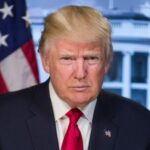
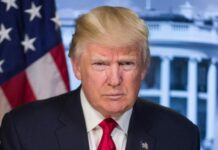
President Donald Trump encountered a mixed reception during his appearance at the US Open men’s singles final on September 7, 2025, marking his first visit to the event in nearly ten years. His presence at Arthur Ashe Stadium in New York led to heightened security measures, resulting in extended delays that caused many fans to miss the beginning of the match between Carlos Alcaraz and Jannik Sinner.
Trump attended as a guest of Rolex, a tournament sponsor, despite his administration’s recent implementation of a 39% tariff on Swiss goods. Accompanying him were high-ranking officials including Attorney General Pam Bondi, Treasury Secretary Scott Bessent, White House Press Secretary Karoline Leavitt, along with Jared Kushner and his daughter Arabella Kushner.
The match’s start time was postponed by 37 minutes due to Secret Service security protocols, which caused significant congestion at stadium entrances. Attendees reported lines extending nearly to the entrance of the Flushing Meadows complex, with security measures perceived as more rigorous than those at airports.
When Trump made a brief appearance in the half-empty venue, he received a mix of whistles and boos. The response grew more negative during the national anthem when he was shown on video boards, prompting another round of boos with some cheers. The most significant negative reaction occurred after the first set, as Trump appeared on the large screen and was met with loud jeers and whistles from the 24,000-capacity crowd.
The United States Tennis Association (USTA) issued a directive to broadcasters before the final, asking them to “refrain from showcasing any disruptions or reactions to the president’s attendance.” However, some broadcasters, including ABC and ESPN, chose not to adhere to this request, allowing the crowd’s reactions to be audible in their coverage.
Former British tennis player Laura Robson ignored the USTA’s directive while serving as a courtside reporter for Sky Sports, commenting on the crowd’s response to Trump’s appearance. Tennis legend Martina Navratilova criticized the security arrangements on social media, noting frustration that the stadium was still half-empty well into the match due to the prolonged entry process.
The security protocols impacted not only the spectators but also the players, as both Alcaraz and Sinner had to arrive at the venue earlier than usual to comply with the additional security measures, potentially affecting their pre-match routines.
Despite the visible and audible negative response from many attendees, Trump described his reception positively when speaking to reporters upon his return to Joint Base Andrews. He mentioned that he enjoyed the experience and found the fans to be great, noting he had anticipated a more difficult reception from what he termed a “somewhat progressive” audience.
The president acknowledged that attending such events has become “a little bit more difficult” in recent years. Trump had been a frequent US Open attendee for many years but had not returned since September 2015, when he was loudly booed at a quarterfinals match shortly after launching his first presidential campaign.
The USTA defended its security arrangements, stating that they communicated with ticket holders on Friday, Saturday, and Sunday morning to warn of potential delays and encourage early arrival. The organization also advised attendees to use public transit when possible. A USTA spokesperson noted their efforts to make the security process as seamless as possible while accommodating Secret Service requirements.
The controversy surrounding broadcast coverage sparked a debate about media censorship and democratic expression. Critics argued that the USTA’s request represented an inappropriate attempt at censorship, while supporters of the broadcasters’ decision to air the crowd reaction emphasized the importance of reflecting an authentic public response to political figures.
The incident highlighted the ongoing polarization surrounding Trump’s public appearances. The US Open represented a departure from his typical appearances at more supportive venues such as UFC events and select college football games. The tennis tournament, held in the historically Democratic state of New York, provided a different demographic setting than Trump’s usual sporting event choices.
A White House official confirmed that any request for censorship of crowd reactions did not originate from the administration itself. The USTA maintained that asking broadcasters to avoid showcasing disruptions was part of their regular policy, though critics pointed out that the organization had previously allowed extensive coverage of other disruptions, including climate protesters and various fan disturbances throughout the tournament’s history.
At the Washington Commanders vs. Detroit Lions NFL game on November 9, President Trump received boos from the crowd when his image appeared on the stadium’s big screen late in the first half, as well as during his introduction at halftime and when he led the “Oath of Enlistment” for service members on-field. The boos were particularly pronounced in the Washington D.C. area, a region with strong Democratic leanings, and highlighted how his presence at major sporting events has become a point of contention. Trump remained composed; he watched the game, made comments to reporters (“I’m a little bit late,” he told them), and appeared on-air for about ten minutes with Fox Sports, calling some of the action.