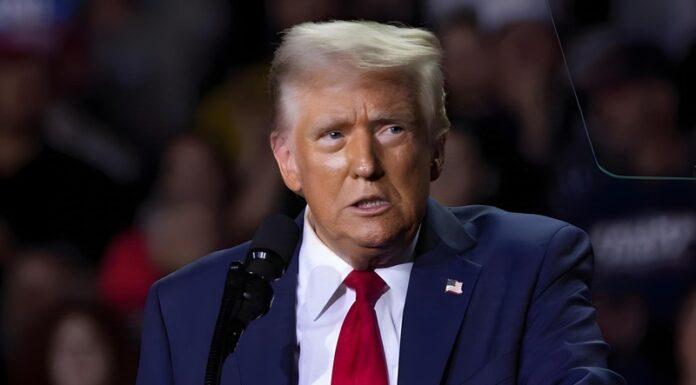
President Donald Trump created uncertainty aboard Air Force One on Sunday, November 30, 2025, when he told reporters he would not comment on his phone call with Venezuelan President Nicolas Maduro, only to immediately confirm that the call did occur. This incident highlighted the inconsistent messaging from the president as tensions between Washington and Caracas increase.
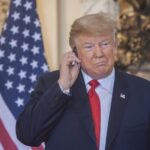
When a reporter inquired whether he had spoken with Maduro, Trump initially replied, “I don’t want to comment on it,” but then added, “The answer is yes.” This moment, captured during Trump’s flight back to Washington, D.C., from his Mar-a-Lago, Florida, holiday stay, gained attention from those noting the president’s quick reversal.
The reporter continued to press for details, and Trump again declined before offering some information about the call. According to a New York Times report, the call included discussions on a possible in-person meeting between the two leaders, though Trump did not provide specifics on the conversation’s content.
This exchange occurred against the backdrop of an escalating U.S. military presence in the Caribbean Sea. In recent weeks, the Trump administration has deployed approximately 15,000 troops and over a dozen warships, including the USS Gerald R. Ford, to waters near Venezuela.
This significant military buildup has raised concerns about a potential direct conflict between the two nations, particularly as Trump has frequently criticized the Maduro regime in his public remarks.
Trump has labeled Maduro as the head of the Cartel de los Soles, a label used by the administration when it classified the organization as a terrorist group. This characterization is central to the administration’s rationale for military operations in the region, though the campaign has sparked debate about its legal basis under both U.S. and international law.
On Monday, December 1, 2025, Trump met with his national security team to discuss strategy concerning Venezuela, among other topics. Secretary of State Marco Rubio participated in the meeting as the administration faces increasing scrutiny over its military operations targeting suspected drug-smuggling vessels. The strikes have reportedly resulted in at least 83 Venezuelan deaths.
One particularly controversial incident occurred on September 2, 2025, involving a second strike on a drug boat. White House press secretary Karoline Leavitt confirmed Monday that the follow-up strike happened, noting that Admiral Frank M. “Mitch” Bradley ordered the second attack. Two survivors from the initial strike were killed in the subsequent assault. The White House maintains that Bradley “worked well within his authority and the law directing the engagement to ensure the boat was destroyed and the threat to the United States of America was eliminated.”
Defense Secretary Pete Hegseth has faced allegations that he gave a verbal order for the second strike. However, Trump stated Sunday that Hegseth denied issuing such an order and that he wouldn’t have wanted a second strike to occur. The White House has also denied that Hegseth issued the kill order, placing responsibility with Bradley, who led the operation.
Congressional committees have opened investigations into the boat strikes, with lawmakers from both parties expressing concerns about potential war crimes. Senate Armed Services Committee Chairman Roger Wicker and Ranking Member Jack Reed announced they would conduct thorough oversight to ascertain the facts. House Armed Services Committee leaders have similarly pledged bipartisan efforts to gather a complete account of the operations.
Senator Tim Kaine raised specific concerns about the legal implications of targeting survivors, suggesting such actions could violate international law if reports are accurate. The scrutiny reflects broader unease about the administration’s military strategy in the Caribbean and the legal frameworks used to justify lethal force against suspected drug traffickers in international waters.
Adding to the complexity, Trump closed Venezuelan airspace on Saturday, which some observers interpreted as preparation for potential military action. However, the president told reporters Sunday not to read too much into the move, offering little clarity about his intentions regarding Venezuela. The mixed signals have left lawmakers and international observers uncertain about the administration’s ultimate objectives.
The potential diplomatic opening with Maduro represents a rare opportunity for engagement between Washington and a Venezuelan government isolated by U.S. sanctions and hostility for years. Whether such discussions will materialize remains unclear, particularly given the ongoing military buildup and Trump’s refusal to rule out land operations in Venezuela. The president’s shifting statements about the Maduro call reflect the uncertain nature of U.S. policy toward the South American nation as military and diplomatic tracks seem to proceed simultaneously.
As the situation unfolds, the Trump administration faces pressure to clarify its legal justification for Caribbean operations while managing congressional oversight and international concerns regarding the scope and nature of military actions in the region.