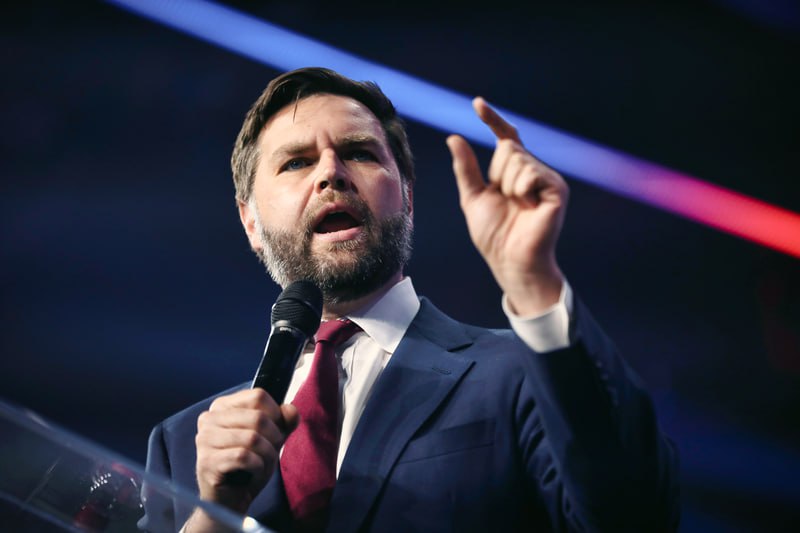
Vice President JD Vance made waves on Tuesday, Dec. 16, 2025, when he openly acknowledged being a conspiracy theorist after White House Chief of Staff Susie Wiles labeled him as such in a revealing “Vanity Fair” feature. Speaking at an event in Allentown, Pennsylvania, at Lehigh Valley International Airport, Vance responded to questions about Wiles’ characterization with surprising candor rather than defensiveness.
“Sometimes I am a conspiracy theorist, but I only believe in the conspiracy theories that are true,” Vance told reporters at the Pennsylvania economy event. The vice president’s pro-Trump audience cheered his admission, with some observers noting awkward groans and grins when the question was first posed.
The comments came in response to a two-part “Vanity Fair” feature released Tuesday morning, in which Wiles gave 11 interviews to journalist Chris Whipple. In those conversations, the chief of staff said Vance had been a conspiracy theorist for a decade and described his transformation from a Never Trumper to a MAGA devotee as politically motivated. Wiles specifically noted that his shift was sort of political and coincided with his Senate campaign.
Despite the potentially damaging characterization, Vance mounted a spirited defense of Wiles during his Pennsylvania appearance. The vice president praised her as the best chief of staff President Donald Trump could ask for, emphasizing her loyalty to the president. “Susie Wiles, we have our disagreements. We agree on much more than we disagree, but I’ve never seen her be disloyal to the President of the United States,” Vance said. He described her as someone who never contradicts the president’s directives behind the scenes, qualities he characterized as extremely rare in the halls of power.
The Vanity Fair feature created immediate fallout within the Trump administration. Wiles herself quickly moved into damage control mode, calling the article a disingenuously framed hit piece on social media. She claimed significant context was disregarded and much of what she and others said about the team and the president was left out of the story.
The article included more than just comments about Vance. Wiles also said Trump has an alcoholic’s personality. She made observations about several other administration officials, including FBI Director Kash Patel, Dan Bongino, Secretary of State Marco Rubio, and Press Secretary Karoline Leavitt. Wiles also described someone as an odd duck in her interviews.
Trump himself weighed in on the controversy, defending Wiles despite not having read the article. The president acknowledged that Wiles’ assessment of his personality was accurate, confirming he has an addictive personality and explaining why he abstains from alcohol. Trump told reporters he does not drink alcohol and has often said that if he did, he would have a very good chance of being an alcoholic.
The president dismissed the “Vanity Fair” piece, calling the facts wrong and describing it as the work of a misguided interviewer. Trump said Wiles has done a fantastic job as chief of staff and praised her performance in the role. He claimed the article was purposely misguided, though he admitted he does not read “Vanity Fair” and had not reviewed the feature himself.
Vance used the controversy to criticize mainstream media, suggesting administration officials should give fewer interviews to such outlets. He acknowledged that he and Wiles have disagreements but emphasized they agree on much more than they disagree. The vice president said he had not read the article but was comfortable addressing the conspiracy theorist label publicly.
The feature included photos of Vance and other top officials who participated in interviews with Whipple. Vance posed for the spread and described Wiles to the magazine as a facilitator who works to make Trump’s vision come to life. The vice president’s willingness to participate in the feature, only to later criticize the publication, drew attention from political observers.
Wiles’ extensive cooperation with Vanity Fair over multiple months raised questions about media strategy within the White House. The chief of staff’s decision to participate in 11 interviews represented an unusually high level of access for such a senior administration official.
Vance concluded his Pennsylvania remarks by wrapping up questions about the article, choosing not to address Wiles’ comment about his shift to MAGA being politically expedient. The vice president’s event focused primarily on the economy, with the ‘Vanity Fair” controversy becoming an unexpected sidebar to his scheduled remarks.