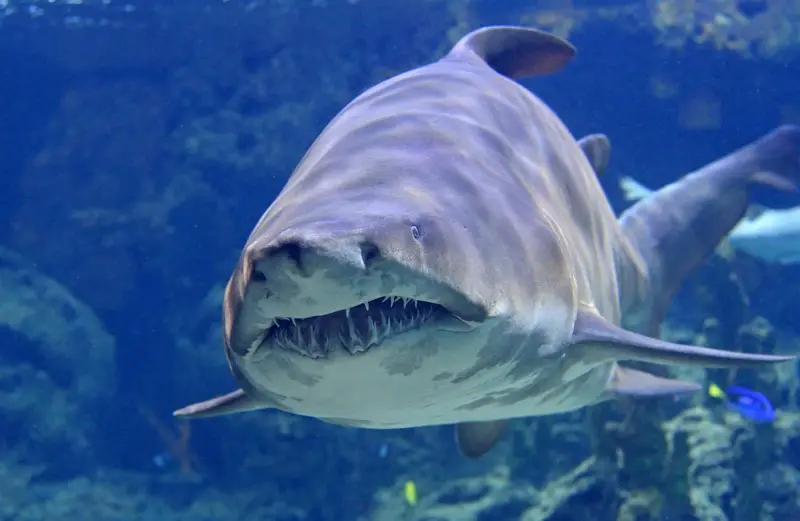
A woman was killed and a man critically injured when a shark attacked both swimmers at Kylies Beach in Crowdy Bay National Park, New South Wales, Australia, on Thursday, Nov. 27, 2025. The incident occurred at approximately 6:30 a.m., sending shockwaves through the coastal community located 224 miles north of Sydney.
Emergency services rushed to the remote beach after receiving reports that two people in their mid-20s had been bitten by a shark. The victims, later identified as Swiss nationals Livia Muhlheim, 25, and Lukas Schindler, 26, were European tourists visiting the area. The Swiss consulate released a statement confirming their nationality.
Despite immediate assistance from bystanders on the beach, Muhlheim died at the scene. Schindler sustained serious leg injuries and was airlifted to John Hunter Hospital in Newcastle, where his condition was initially listed as critical but later stabilized. Medical personnel and law enforcement officials credited the quick thinking of a beachgoer who fashioned a makeshift tourniquet for the injured man before paramedics arrived.
Paramedic Josh Smyth emphasized the importance of the bystander’s intervention during a press conference. “I just really need to have a shoutout to the bystander on the beach who put a makeshift tourniquet on the male’s leg which obviously potentially saved his life and allowed New South Wales Ambulance paramedics to get to him and render first aid,” Smyth told reporters.
Police Chief Inspector Timothy Bayly addressed the media, providing limited details about the circumstances surrounding the attack. He confirmed that police would work alongside experts to determine the species of shark responsible for the incident.
Marine experts suspect a large bull shark, estimated to be approximately three meters long, was likely involved in the attack. Bull sharks are among the species most commonly linked to attacks in Australian waters, alongside great whites and tiger sharks. Authorities deployed five SMART drumlines—specialized baited hooks suspended from floats—off Kylies Beach in an attempt to locate and capture the shark.
According to reports, the couple may have been filming dolphins when the incident occurred. Police are reviewing GoPro footage to piece together the exact sequence of events. Schindler, who had recently become a certified scuba instructor, reportedly attempted to rescue Muhlheim after the attack, managing to tow her approximately 50 meters back to the beach despite suffering severe leg injuries himself.
Gavin Naylor, director of the University of Florida’s shark research program and manager of the International Shark Attack File database, noted the exceptional rarity of such an incident. He explained that while individual shark attacks are uncommon, a single shark attacking two people simultaneously is virtually unheard of.
Beaches throughout the area were closed to swimmers indefinitely following the attack. The closure extends north of the attack site as authorities monitor shark activity using drumlines and other surveillance methods. Crowdy Bay National Park is popular among tourists and locals for beach camping, fishing spots, and hiking tracks, making the incident particularly concerning for the regional tourism industry.
The attack has deeply affected the local shark attack survivor community. Dave Pearson, founder of the Bite Club—a peer support group for shark attack survivors—was himself attacked by a bull shark in 2011 at Crowdy Head, just 14 kilometers from Thursday’s incident. Pearson’s organization, which now counts 600 members worldwide, provides emotional support to those affected by shark encounters. He reported receiving numerous calls and messages from concerned Bite Club members following the news.
Pearson plays a role in New South Wales’ Shark Incident Response Team, which visits communities after fatal or serious shark attacks to provide support and resources. The Department of Primary Industries and Regional Development announced that mental health support would be made available to those affected by the Kylies Beach attack through various organizations, including the Rural Adversity Mental Health Program, Bite Club, Surfing NSW, and Surf Life Saving NSW.
The incident marks another addition to Australia’s history of shark encounters. In September 2025, a shark fatally mauled a surfer off a Sydney beach, with only sections of the victim’s surfboard recovered from the scene. Police prepared a formal report on Thursday’s attack for the coroner, while NSW authorities continue investigating the circumstances that led to this rare double shark attack.