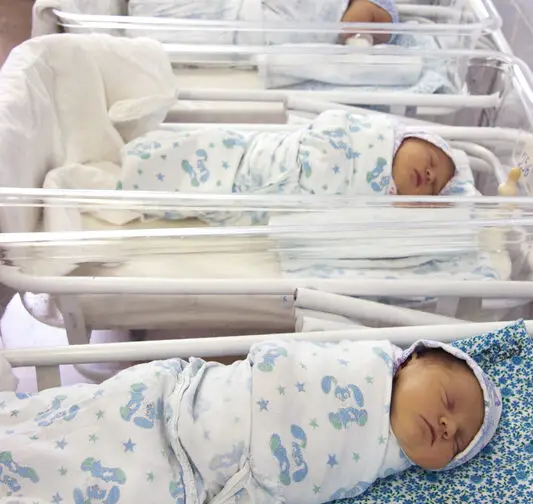
Two senior doctors at a Siberian maternity hospital were arrested on charges of negligence and causing death through negligence after nine newborns died at the facility, according to Russia’s Investigative Committee.
The chief physician and the acting head of intensive care at Novokuznetsk Maternity Hospital No. 1 in Novokuznetsk, Russia, Vitaly Kheraskov and Alexei Emily, were taken into custody on January 14, 2026. The video showed a man being escorted in handcuffs by authorities.
The babies died between January 4 and January 12, 2026, during Russia’s New Year holiday. Russia’s Investigative Committee said in a statement that the doctors “failed to organize and provide medical care” to the infants.
The hospital is located in Novokuznetsk, a city of 500,000 people in the Kuzbass region of Siberia. Between December 1 and January 11, a total of 234 children were born at the facility, according to the local health ministry.
At the time of the incident, 17 babies were in serious condition in the hospital’s intensive care unit. Of those 17 critical infants, 16 were premature. All 17 had severe intrauterine infection, and some babies had extremely low birth weight.
A forensic probe into each death is underway to determine the exact causes. The hospital received at least five warnings between August and November from health authorities, and inspections showed a lack of medicine at the facility.
The hospital stopped accepting patients, citing a high rate of respiratory infection. The other maternity hospital in Novokuznetsk remains open.
Russian doctor Pavel Vorobyov questioned why no action was taken earlier in the process. “When nine people have died and everyone is silent, something very strange is going on,” Vorobyov said.
The case has drawn significant political attention in Russia. Valentina Matvienko, the speaker of Russia’s upper house of parliament, called the incident a tragedy that must never be repeated.
Pro-Kremlin lawmaker Yana Lantratova addressed the broader implications of the deaths on social media, saying that allowing several infants to die in one maternity hospital in such a short period during a time of demographic crisis is a crime against the country.
The Kuzbass region governor ordered an inspection of all regional maternity hospitals following the incident. The directive came as part of a broader response to address concerns about the quality of care at maternity facilities throughout the region.
The case has highlighted chronic staff shortages and funding gaps in Russia’s medical system. Reports indicated the hospital was short of dozens of staff members, though the hospital has denied these claims about staff shortages.
Svetlana Petrenko, a spokeswoman for Russia’s Investigative Committee, confirmed the charges against the two doctors. The investigation continues as authorities work to determine the full extent of what went wrong at the facility in Novokuznetsk.
Russia has long struggled with uneven healthcare quality across its vast territory. While major cities like Moscow and St. Petersburg often have world-class medical facilities, regional hospitals in more remote areas frequently face challenges, including outdated equipment, insufficient staffing, and limited access to modern medicines and treatments.
The situation in Novokuznetsk reflects broader systemic issues within Russia’s healthcare infrastructure. Maternity hospitals in particular have faced scrutiny in recent years over standards of care, with rural and regional facilities often operating under significantly more constrained conditions than their urban counterparts.
Intrauterine infections, which all 17 of the critically ill babies reportedly had, can result from various bacterial or viral pathogens. These infections can be transmitted from mother to child during pregnancy or delivery and pose serious risks, particularly to premature infants whose immune systems are not fully developed. Proper infection control protocols, adequate staffing, and availability of appropriate medications are crucial for preventing and managing such complications in neonatal intensive care units.
Extremely low birth weight babies, defined as those weighing less than 1,000 grams or about 2.2 pounds at birth, require highly specialized care and monitoring. These infants are at significantly increased risk for numerous complications, including infections, respiratory distress, and developmental problems. Their survival and health outcomes depend heavily on the quality of neonatal intensive care they receive in the critical hours and days after birth.
The fact that the hospital received multiple warnings from health authorities between August and November raises questions about oversight and accountability within Russia’s healthcare system. When regulatory bodies identify deficiencies but facilities continue operating without making necessary corrections, it can create dangerous situations for vulnerable patients.
The timing of the deaths during Russia’s extended New Year holiday period may also be significant. Medical facilities often operate with reduced staff during holiday periods, which can strain resources and potentially impact the quality of care, especially in units requiring intensive monitoring like neonatal intensive care.
Russia’s demographic challenges have been a priority for the government, with declining birth rates and population loss presenting long-term economic and social concerns. This context makes incidents like the one in Novokuznetsk particularly sensitive politically, as they undermine public confidence in the safety of medical care during pregnancy and childbirth.
Criminal charges of negligence and causing death through negligence in Russia can carry significant penalties. If convicted, medical professionals can face substantial prison sentences, particularly in cases involving multiple deaths. The charges indicate that investigators believe the deaths were preventable and resulted from failures in professional duty rather than unavoidable medical complications.
The decision to close the hospital to new patients reflects the seriousness of the situation and the need to address the underlying problems before resuming normal operations. With the other maternity hospital in Novokuznetsk remaining open, expectant mothers in the city still have access to maternity care, though the closure has likely increased pressure on the remaining facility.
The regional investigation into all maternity hospitals in the Kuzbass region suggests authorities are concerned this may not be an isolated incident. Such comprehensive reviews typically examine staffing levels, equipment condition, medication supplies, infection control procedures, and overall standards of care to identify potential problems before they result in patient harm.