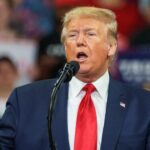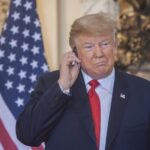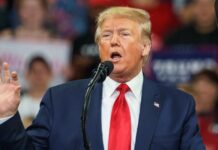
Gunfire erupted in Caracas, Venezuela, on Monday night, January 5, near the presidential palace, hours after President Donald Trump declared he was personally in charge of running the South American nation following the weekend capture of former Venezuelan leader Nicolás Maduro.
Videos verified by news outlets showed what appeared to be anti-aircraft fire lighting up the night sky over the capital. Venezuelan officials said police fired at drones flying without permission near the Miraflores presidential palace, and that no confrontation occurred. A White House official told the media that the U.S. was not involved in the gunfire incident.
The confusion came amid heightened tensions in Caracas following Saturday’s dramatic military operation that brought Maduro to U.S. soil. When asked by NBC News who would be the top person running Venezuela, Trump responded: “Me.”
The military action, dubbed Operation Absolute Resolve, involved approximately 150 aircraft and began at 2 a.m. on Saturday, January 3. Delta Force, the U.S. Army’s elite special operations unit, carried out the mission to capture the 63-year-old Maduro and his wife, Cilia Flores, 69. The operation targeted multiple locations around the Venezuelan capital.
Maduro and Flores were seized just steps from his high-security Ft. Tiuna military compound. The couple arrived on U.S. soil at Stewart Air National Guard Base in Newburgh, New York, on Saturday. They are being held at the Metropolitan Detention Center in Brooklyn, New York, and face federal charges related to drug trafficking and working with organizations designated as terrorist groups.
On Monday, January 5, Maduro appeared in federal court in Manhattan. Appearing before a judge, he pleaded not guilty to the charges. Maduro told the court through a Spanish interpreter that he is the president of the Republic of Venezuela. He wore an orange shirt and beige trousers during the hearing and was seen with shackles on his feet.
The judge warned Maduro that his public statements could be used against him in court. His lawyers are preparing to challenge the jurisdiction of U.S. courts and have described his arrest as a military kidnapping that violates international law.
Venezuelan officials reported that 40 Venezuelans were killed during the U.S. strikes, including soldiers and civilians. Cuba, a close ally of Venezuela, said that 32 Cubans were killed during the operation, describing them as military or intelligence personnel who were serving at the request of Venezuelan counterpart agencies. The Cuban government declared two days of national mourning following the losses.
Trump acknowledged that approximately half a dozen U.S. service members were injured during the operation, though no American troops were killed. The injured personnel included those aboard an aircraft that was hit but remained flyable.
Following Maduro’s removal, Vice President Delcy Rodríguez was sworn in as interim president by Venezuela’s parliament. Taking the oath at the National Assembly, she said she was acting “in the name of all Venezuelans.” Rodríguez criticized what she called the kidnapping of Maduro and his wife, and called for dialogue and cooperation with the U.S. under international law.
Trump said the U.S. would run Venezuela temporarily during the transition period. He explained that large U.S. oil companies would be involved in rebuilding the country’s oil infrastructure, which he described as badly broken and neglected for years. Trump revealed he had alerted oil companies about the operation before it commenced, but did not notify members of Congress in advance.
Secretary of State Marco Rubio signaled on Sunday, January 4, that the U.S. does not plan to directly govern Venezuela on the ground, despite Trump’s comments. Rubio said the administration would continue to enforce what he called an oil quarantine as part of a plan to influence policy in the country.
Venezuelan opposition leaders responded to the dramatic developments with mixed messages. María Corina Machado released a statement Saturday calling for Edmundo Gonzalez Urrutia, whom the U.S. recognized as the winner of the 2024 election, to be recognized as the legitimately elected president and to assume power over the government and military.
Gonzalez Urrutia himself said in a social media video on Sunday that Maduro’s removal was “an important step but not enough.” He argued that normalization could only be achieved after the release of all political prisoners and when the will of the people expressed in the election is respected without ambiguity.
The military operation had been in the works for months, according to military officials. Intelligence gathering was extensive, with officials working to understand Maduro’s movements, living arrangements, travel patterns, and daily routines. The buildup included positioning numerous warships in the Caribbean region.
Maduro faces an indictment that accuses him of leading a corrupt government that leveraged its power to protect and promote illegal activity, including drug trafficking. The charges allege he partnered with violent drug traffickers and narco-terrorists to bring cocaine into the U.S., using go-fast vessels, fishing boats, container ships, and planes from clandestine airstrips.
Nicolas Ernesto Maduro Guerra, Maduro’s son, is also being charged in connection with the illegal trafficking of cocaine, according to an unsealed Department of Justice indictment.
The Venezuelan diaspora in South Florida celebrated the news with large gatherings in Doral, Florida, home to one of the largest Venezuelan populations in the United States. Crowds gathered at a longtime community meeting spot, where people hugged, sang, and waved flags. Chants of “Libertad” echoed through the streets as demonstrators sang both the U.S. and Venezuelan national anthems.
Trump also issued warnings to other regional leaders in the aftermath of the operation. Speaking to reporters on Air Force One on Sunday night, he accused Colombian President Gustavo Petro of being involved in drug trafficking and suggested that military intervention similar to what occurred in Venezuela could be directed at Colombia as well.
Petro rejected the accusations on social media, saying his name does not appear in court records. “Stop slandering me, Mr. Trump,” Petro wrote, adding that threatening a Latin American president who emerged from armed struggle was not appropriate.
International reaction to the operation has been mixed. The operation marks an extraordinary assertion of U.S. military power in Latin America and raises significant questions about international law, sovereignty, and the role of military force in addressing drug trafficking and authoritarian governance. Venezuela holds the world’s largest proven oil reserves, a factor Trump has repeatedly emphasized in his public statements about the country’s future.
The administration’s involvement in directly managing another nation’s affairs represents a significant departure from traditional U.S. foreign policy approaches in the region.
The legal proceedings against Maduro and Flores are expected to take several months. Both are seeking to remain in custody at the Brooklyn detention facility rather than pursuing bail at this stage. The couple used headphones during their court appearance to follow proceedings in Spanish through an interpreter.
The Monday night gunfire in Caracas added to the uncertainty surrounding Venezuela’s immediate future. Local residents near the presidential palace reported clearly hearing gunshots in the area. Security personnel later said the situation returned to normal after they fired at an unidentified drone near the palace, though reports indicated that confusion and miscommunication between different security units deployed in the capital contributed to the incident.