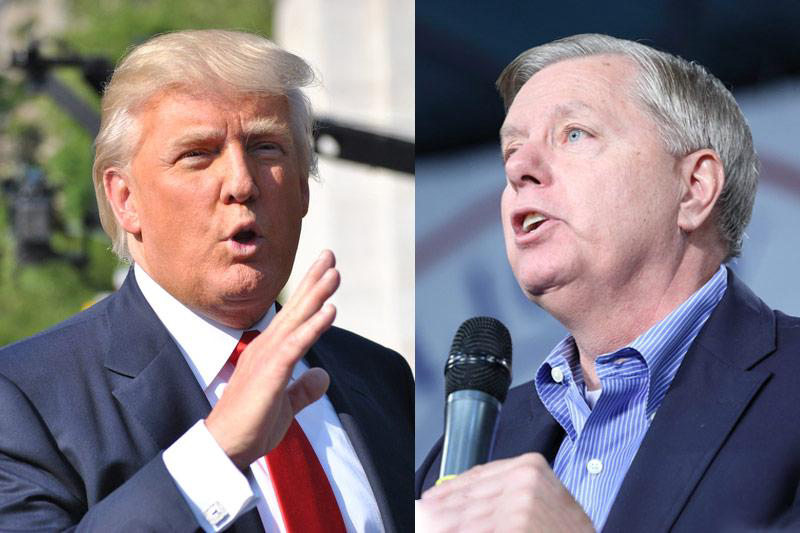
Republican Senator Lindsey Graham called on President Donald Trump to assassinate Iran’s Supreme Leader Ali Khamenei during a Fox News appearance on Sunday, January 11, 2026, as tensions escalate between Washington and Tehran amid ongoing anti-government protests that have left thousands dead.
The South Carolina senator’s extraordinary public call for the assassination of a foreign leader came as protests that began in late December 2025 have spiraled into what may become one of the deadliest government crackdowns in recent Iranian history. The demonstrations initially focused on economic grievances but have evolved into broader challenges to Iran’s clerical leadership.
Death toll estimates vary widely, with reports indicating thousands of people may have been killed in the government’s response to the protests. At least 10,681 people have been arrested, according to activists tracking the situation. Iranian authorities have reported that 109 security personnel have been killed during the unrest.
The Trump administration has signaled it may intervene militarily in Iran. White House Press Secretary Karoline Leavitt told reporters this week that while diplomacy remains the president’s first option, Trump “is unafraid to use the lethal force and might of the United States military if and when he deems that necessary.”
“Air strikes would be one of the many, many options that are on the table for the commander-in-chief,” Leavitt said.
Trump posted on social media on Wednesday, January 14, telling protesters that help was on the way. The president has not specified what form this assistance might take, though he has previously threatened military action if Iran violently suppresses the demonstrations.
On Wednesday, Trump stated that he had been told by sources “on the other side” that the killing in Iran was stopping and there was no plan for executions.
The situation remains fluid and difficult to verify due to an internet blackout, cutting off most communication between Iran and the outside world. The blackout has made it nearly impossible to independently confirm casualty figures or the current status of the protests.
One protester, 26-year-old Erfan Soltani, was arrested on Thursday. Reports later indicated the execution had been postponed. The rushed proceedings drew international condemnation and highlighted the speed with which the Iranian government has moved to punish protesters.
Trump announced a 25% tariff on Monday, January 12, 2026, targeting any country doing business with Iran. The economic measure represents one of several tools the administration is deploying short of direct military intervention. The State Department also urged Americans to leave Iran, citing the escalating protests and increased security measures.
The possibility of U.S. military action comes as American military posture in the Middle East has shifted significantly since last year. The U.S. previously bombed three Iranian nuclear sites at Fordow, Natanz, and Isfahan in June 2025. A 12-day war between Iran and Israel lasted from June 13 to June 24, 2025. However, the USS Gerald Ford, the Navy’s largest aircraft carrier, has since been deployed to the Caribbean rather than remaining near the Middle East.
Despite the carrier’s absence from the region, the United States maintains approximately 10,000 troops at Al Udeid airbase in Qatar, the largest U.S. military contingent in the Middle East. Some personnel at the base were advised to leave by Wednesday, though the reason for the directive remained unclear.
The airspace over Iran was closed at 5 p.m. ET Wednesday to most flights, with only international flights to and from Iran with special permission allowed to operate. The closure heightened speculation about potential U.S. military strikes.
An Iranian official contacted Trump’s special envoy Steve Witkoff last weekend, proposing diplomatic talks. Trump stated that Iran had called to negotiate. However, the president has not ruled out taking military action before any potential meeting takes place.
Iranian Foreign Minister Abbas Araghchi described the protests as a “terrorist war.” He told foreign diplomats in Tehran that the situation was under control and internet access would be restored, though the blackout continued.
Graham’s call for assassination represents an unusually explicit statement from a sitting U.S. senator regarding regime change in Iran. While American officials have long opposed Iran’s theocratic government, publicly calling for the killing of a foreign head of state breaks with typical diplomatic norms. The Supreme Leader holds ultimate authority in Iran’s political system, overseeing both civilian and military leadership.
The senator’s comments come as the Trump administration weighs its options for responding to the crackdown. Military analysts note that while the U.S. maintains significant strike capabilities in the region, any attack on Iran would likely provoke retaliation against American forces and potentially Israeli targets. Iran has demonstrated its ability to strike regional U.S. bases, having attacked Al Udeid during last year’s conflict.
The protests represent one of the most significant challenges to Iran’s government in recent years. What began as demonstrations against economic conditions and inflation has evolved into calls for fundamental political change. Protesters have demanded an end to clerical rule, directly challenging the authority of Khamenei and the system established after the 1979 Islamic revolution.
Iranian state television has broadcast footage of pro-government rallies in Tehran and other cities, showing crowds waving Iranian flags and chanting support for the supreme leader. The government has framed the protests as foreign-sponsored riots rather than legitimate domestic grievances, a narrative repeatedly emphasized by officials in Tehran.
As the situation develops, the Trump administration faces decisions about how far to go in supporting Iranian protesters. The president’s promise that “help is on its way” has created expectations among demonstrators while setting up a potential confrontation between Washington and Tehran. Whether that help takes the form of military strikes, cyber operations, further economic pressure, or some combination remains to be seen.