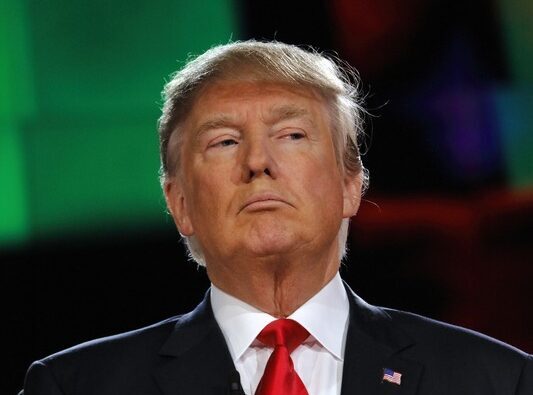
President Donald Trump raised concerns about the upcoming midterm elections and threatened military intervention in Minneapolis during a wide-ranging interview with Reuters published on Wednesday, January 14, 2026, as tensions escalated between federal immigration enforcement and Minnesota officials.
The 79-year-old president told Reuters, “we shouldn’t even have an election” when discussing November’s midterm contests, expressing frustration about the historical pattern of presidents’ parties losing congressional seats during such elections. Trump emphasized his administration’s accomplishments and questioned the need for the electoral process.
Speaking from the Oval Office, Trump warned he could invoke the Insurrection Act against Minnesota if state and local officials do not comply with federal immigration enforcement operations. The threat came after a second shooting in Minneapolis within a week involving federal officers conducting Immigration and Customs Enforcement (ICE) activities.
A federal officer shot a person who authorities said fled a traffic stop and attacked the officer along with two other individuals. The incident occurred one week after Renee Good, a 37-year-old mother of three, was fatally shot by an ICE agent.
The Department of Homeland Security claimed Good attempted to run over law enforcement officers, but local officials disputed this account. Minnesota Governor Tim Walz issued a sharp rebuke of the federal law enforcement presence, characterizing the situation as “a campaign of organized brutality against the people of Minnesota by our own federal government.”
Walz urged residents to “protest loudly, urgently, but also peacefully.” Minneapolis Mayor Jacob Frey called on ICE to “get the f— out” of Minneapolis, stating the current situation is “not sustainable.”
Deputy Attorney General Todd Blanche escalated the confrontation by accusing both Walz and Frey of terrorism. Blanche promised to stop the Democratic officials “by whatever means necessary,” calling his statement “not a threat” but “a promise.” He blamed the Minnesota governor and Minneapolis mayor for “encouraging violence against law enforcement.”
Trump previously threatened to invoke the Insurrection Act last summer during protests in Los Angeles over the administration’s immigration crackdown and National Guard deployment. The 1807 law authorizes military use on U.S. soil for specific purposes but has not been enacted for decades.
President George H.W. Bush last implemented the law in 1992 during the Los Angeles riots at the governor’s request. The act has not been used without coordination with a governor since the 1960s. Throughout its history, the Insurrection Act has been invoked in response to 30 crises, according to the Brennan Center for Justice.
Presidents Dwight D. Eisenhower and John F. Kennedy used the act to desegregate schools following landmark Supreme Court decisions. The law permits the president to deploy federal forces to suppress insurrections within states under certain conditions.
During the Reuters interview, Trump also addressed other policy matters. He dismissed a Reuters/Ipsos poll showing only 17 percent of Americans support his plan to absorb Greenland, calling the survey “fake.” The president spoke about his desire to acquire the territory but provided no specific timeline or method.
Trump remained “noncommittal” about future plans regarding Iran while promising assistance to Iranian protesters. He suggested the killing is stopping in the country, but offered no concrete policy details.
The president mentioned a criminal probe into Federal Reserve Chair Jerome Powell, though he provided limited information about the investigation’s nature or scope. Trump’s comments about the Federal Reserve chair added to ongoing tensions between the White House and the independent central banking system.
Throughout the interview, Trump demonstrated his approach to policy decisions, indicating he follows his gut instincts on major issues. The president emphasized his confidence in his administration’s direction despite polling showing limited public support for certain initiatives, saying, “A lot of times, you can’t convince a voter. You have to just do what’s right.”
The Minneapolis situation represents a significant escalation in the administration’s immigration enforcement efforts. Federal agents conducting ICE operations have encountered resistance from local and state officials who view the tactics as excessive and dangerous to community safety. Nearly 3,000 federal immigration agents have flooded the Twin Cities, more than the combined police forces of Minneapolis and St. Paul.
Minnesota officials maintain their position that federal enforcement activities have created an untenable situation requiring immediate resolution. The standoff between state authorities and the Trump administration shows no signs of de-escalation as both sides harden their positions.
Republican Party officials have largely remained silent on Trump’s comments about potentially canceling midterm elections, while the threat to deploy military forces domestically has drawn concern from civil liberties organizations. The Brennan Center for Justice has historically tracked uses of the Insurrection Act and its implications for federal-state relations.
As tensions continue in Minneapolis, both federal and state officials face pressure to resolve the crisis without further violence. Walz proclaimed January 9, 2026, to be “Renee Good Day.” The outcome of this confrontation may set precedents for how immigration enforcement operations proceed in cities and states that resist federal directives.