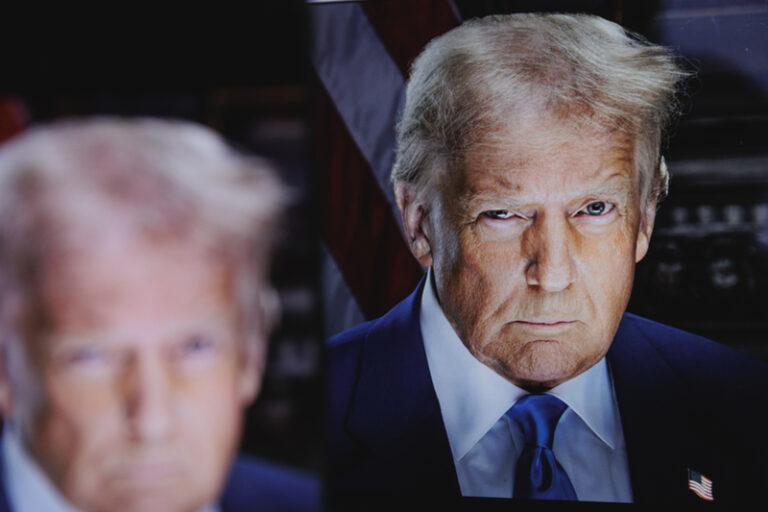
President Donald Trump launched a vitriolic attack on late-night television host Stephen Colbert on Christmas Eve, calling him a “pathetic trainwreck” and demanding that CBS “put him to sleep now” in a series of posts on Truth Social that drew widespread criticism for their timing and threatening tone.
The 79-year-old president posted the attacks on Truth Social early Christmas Eve, targeting the 61-year-old host of “The Late Show” hours before the holiday. Trump wrote that Colbert had no talent and insisted that CBS should put him to sleep now.
The Christmas Eve tirade extended beyond Colbert to include broader threats against broadcast television networks. Trump questioned whether broadcast licenses should be terminated for networks providing negative coverage of his administration and the Republican Party, then answered his own question, saying yes to terminating licenses.
The timing of Trump’s outburst appeared particularly notable given that CBS aired a rerun of the Dec. 8 episode of “The Late Show with Stephen Colbert” on Christmas Eve.
Trump’s escalating rhetoric against television networks has raised concerns about press freedom and the limits of presidential power over broadcast media. While the Federal Communications Commission cannot directly cancel broadcasting licenses for major TV networks such as ABC, CBS, and NBC, it does have authority over their local affiliate stations. This distinction became significant in September when “Jimmy Kimmel Live” was taken off the air for a week after Kimmel made a joke about the MAGA reaction to a controversial incident.
The broader context of Trump’s Christmas Eve media attacks includes recent controversies at CBS News. The network spiked a “60 Minutes” story on Sunday about the Trump administration deporting Venezuelan migrants to a megaprison in El Salvador. The story would have examined the controversial deportation policy involving the CECOT facility.
Sharyn Alfonsi, the reporter behind the spiked “60 Minutes” segment, expressed concerns about the decision’s implications in internal communications. “If the standard for airing a story becomes ‘the government must agree to be interviewed,’ then the government effectively gains control over the 60 Minutes broadcast,” Alfonsi said. She warned that such standards would transform the program “from an investigative powerhouse to a stenographer for the state.”
Bari Weiss was reportedly the person behind the decision to pull the investigative segment. The incident has sparked debate among journalists about network independence and the willingness of major media outlets to pursue critical coverage of the administration.
Trump’s attacks on Colbert come five months after CBS announced the cancellation of “The Late Show.” Colbert’s contract is set to end in May, though the show currently continues airing episodes through that date.
The president’s Christmas Eve posting spree also included broader criticisms of late-night television programming across multiple networks. Trump asked his 11 million followers on the platform, “Who has the worst Late Night host, CBS, ABC, or NBC???” He claimed late-night hosts have high salaries, no talent, and low ratings.
Trump’s activity on Truth Social has drawn attention in recent weeks for its volume and intensity. On the evening of December 1, continuing into the early morning of December 2, the president posted 160 times in less than five hours, a pattern that has sparked discussion about his communication strategy and time management. The marathon posting session included attacks on political opponents, self-congratulatory messages, and conspiracy theories shared across the platform.
The president’s attacks on media personalities and broadcast networks represent a continuation of his long-standing criticism of mainstream media coverage. Throughout his political career, Trump has frequently characterized negative coverage as unfair and has suggested that broadcast licenses could be at risk for networks that he perceives as biased against him and his supporters.
Legal experts note that the president’s ability to influence broadcast licensing directly is limited by First Amendment protections and the FCC’s status as an independent regulatory agency. However, the appointment of sympathetic commissioners and the indirect pressure that presidential rhetoric can create have raised questions about potential chilling effects on journalism.
The Christmas Eve attacks also come amid a broader pattern of threats directed at public figures who draw Trump’s criticism. Elected officials, journalists, and other public figures have reported receiving threatening messages following presidential social media posts that single them out for criticism. This pattern has raised concerns about the potential consequences of heated political rhetoric from the nation’s highest office.
Trump’s suggestion that CBS should put to sleep Colbert’s program drew particular criticism for its ominous phrasing, with some interpreting the language as unnecessarily threatening. The use of such rhetoric on Christmas Eve, traditionally a time associated with messages of peace and goodwill, amplified the reaction from critics who viewed the timing as particularly inappropriate.
The ability of a sitting president to directly address millions of followers at any hour, without traditional gatekeepers or editorial oversight, represents a significant shift from previous eras of presidential communication.
The 79-year-old president’s prolific use of social media continues to shape political discourse and media narratives. The Christmas Eve attacks on Colbert and broadcast networks exemplify how presidential social media activity can dominate news cycles and generate controversy even during traditionally quiet holiday periods.