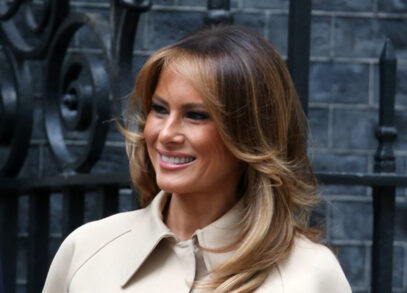
On Friday, February 13, 2026, First Lady Melania Trump delivered a highly unusual Valentine’s Day message, turning a military ceremony at Fort Bragg and Pope Army Airfield in North Carolina into a 250‑year civics presentation—complete with disco music and midterm‑election overtones.
The ceremony recognized United States Army Special Forces who took part in January’s high‑profile mission to seize Venezuelan leader Nicolás Maduro and transport him to the U.S. to face drug‑trafficking charges. What started as a solemn tribute soon shifted into a far more unconventional program.
Instead of offering traditional Valentine’s greetings, the first lady chose a patriotic theme. “To our great armed forces of the United States stationed all over the world, I have a nostalgia-filled message: Happy Valentine’s Day,” Melania Trump told the gathered troops and their families.
Her remarks focused on the longstanding tradition of wartime correspondence, linking centuries-old love letters with modern military service. She highlighted how such letters have long represented the bond between national duty and family devotion, describing this combination of love for country and love for family as “uniquely American.”
Her decision to frame Valentine’s Day through military history struck many as unconventional. The use of the term “nostalgia”—suggesting longing for the past—made the message feel more like a tribute to earlier eras than a contemporary celebration of romance. Instead of modern sentiments, the first lady delivered what resembled a history lecture infused with patriotic themes.
Notably missing from her Valentine’s comments was any reference to her husband, President Donald Trump. She ended her speech by inviting the president to the stage, calling him “our leader who maintains a mission of peace through strength.” He greeted her with a kiss on the cheek before beginning his remarks.
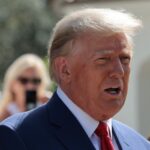
President Trump’s address quickly shifted the tone. After praising the troops for showcasing “the full military might” of the United States and assuring them that “your commander in chief supports you totally,” he transitioned into political themes. Standing beside Republican Senate candidate Michael Whatley—the former RNC chairman running for North Carolina’s open Senate seat with Trump’s endorsement—the president encouraged service members to back the GOP in the coming midterms.
“You have to vote for us,” Trump said, pointing to his administration’s move to restore the Fort Bragg name. Defense Secretary Pete Hegseth had reinstated the name in February 2025, though now in honor of World War II hero Roland L. Bragg instead of Confederate General Braxton Bragg. Congress had mandated the renaming of bases honoring Confederate officers in 2021—a measure Trump vetoed during his first term before Congress overrode it with bipartisan support.
“If we don’t win the midterms, they’ll take it off again. They’ll take it off again. You can’t let that happen,” he warned.
The event wrapped up with the Village People’s “Y.M.C.A.” blasting through speakers as attendees danced while the president and first lady remained on stage. The lively finale turned what began as a solemn military recognition into something closer to a campaign rally with a Valentine’s‑Day twist.
The first lady’s visit to North Carolina came two days after she visited The Children’s Inn at the National Institutes of Health (NIH) in Bethesda, Maryland, on Wednesday, February 11. There, she participated in holiday‑themed crafts and spoke with young patients undergoing treatment for rare and serious illnesses. It was her fourth visit to the NIH facility, following trips in 2018, 2019, and 2020 during the first Trump administration.
The Office of the First Lady described her Fort Bragg speech as highlighting the balance between patriotism and family. According to official statements, Melania Trump has long been a strong supporter of the U.S. military and wished to honor service members’ courage and resilience.
Maduro’s capture on January 3 marked a major military milestone. Operation Absolute Resolve deployed more than 150 aircraft from 20 bases, with U.S. special forces extracting the Venezuelan leader from a compound in Caracas. Maduro and his wife were taken to New York City, where they pleaded not guilty to multiple drug‑trafficking charges in federal court.
The first lady’s decision to emphasize historical military correspondence instead of modern romantic themes—or references to her husband—surprised many observers, though it suited an evening that served multiple roles: recognizing a major special‑forces mission, offering a holiday message to troops, and providing a platform for political advocacy ahead of the midterm elections.
As military families departed Pope Army Airfield after the celebration, they left with an unusually memorable Valentine’s experience—one that blended wartime history, modern military accomplishments, campaign-style messaging, and disco-era pop music into a single event.