An airstrike by Pakistan on a drug rehab hospital in Kabul killed at least 408 people and wounded over 265 on the night of Monday, March 16, 2026, Afghan officials said, making it the deadliest single event since cross-border hostilities between the two nations escalated in February.
The strike devastated much of the Omid Addiction Treatment Hospital, a 2,000-bed facility near Kabul’s international airport, at about 9 p.m. local time, triggering huge fires that trapped patients and staff as people who had just broken their Ramadan fast fled. Pakistan denied hitting civilian sites, saying it conducted precision strikes against military targets and terrorist infrastructure.
Ahmad, a 50-year-old patient at the center, watched in horror as flames engulfed the 25 people in his dormitory. He was the sole survivor.
“The whole place caught fire. It was like doomsday,” Ahmad told Reuters.
Health officials say the hospital was treating roughly 3,000 patients from across Afghanistan when the strikes occurred. The center is a crucial resource in a country where millions face drug addiction after years of conflict and economic collapse, with the additional factor of Afghanistan’s long history as a major opium producer.
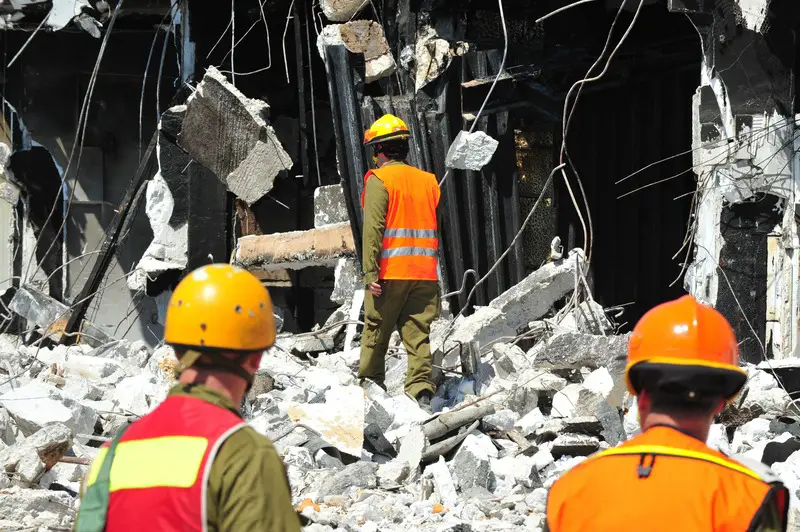
Anti-aircraft guns opened fire at 9 p.m. as jets flew overhead, continuing for about an hour until emergency teams could access the damaged complex. Responders discovered charred walls, collapsed structures, and bodies trapped under rubble.
Omid Stanikzai, a 31-year-old security guard at the facility, described chaos as military units around the hospital fired at incoming aircraft. He said the bombing followed clashes between Taliban forces and the jets, producing a blaze that spread rapidly through the compound.
Taliban Interior Ministry spokesman Abdul Mateen Qanie reported 408 people killed and over 265 injured in the attack. Emergency, an Italian NGO working in Afghanistan, received three bodies and treated 27 wounded people from the strike.
Ambulance driver Haji Fahim transported at least eight bodies to a nearby hospital over five hours. By Tuesday morning, rescue teams were still pulling victims from the debris.
Families gathered outside the destroyed facility searching for loved ones. Baryalai Amiri, a 38-year-old mechanic whose brother had been admitted 25 days earlier, said officials shared little information about survivors or fatalities.
Taliban spokesman Zabihullah Mujahid condemned what he called Pakistan’s violation of Afghan territory, labeling the strike a crime against humanity and saying it hit innocent civilians and addicts in breach of international law.
Pakistan’s information ministry categorically rejected the claims. Information Minister Attaullah Tarar said his military carried out precision strikes only on infrastructure used by the Taliban regime to support what Islamabad calls terror proxies, dismissing Afghan allegations as “entirely baseless.”
The assaults were part of Operation Ghazab lil-Haq, launched by Pakistan in late February after it reported what it described as unprovoked attacks by Afghan Taliban fighters. Pakistan also said it struck targets on Monday in Nangarhar Province in eastern Afghanistan.
Cross-border fighting between Afghanistan and Pakistan intensified in October, eased briefly following a Qatar-mediated ceasefire, and resumed on February 26. The U.N. mission in Afghanistan said on March 13 that at least 75 civilians had died since then, and Monday’s hospital strike sharply increased that toll.
Some 115,000 people have been displaced by the clashes, according to the U.N. Refugee Agency. The World Food Programme said Sunday it would deliver food to more than 20,000 displaced Afghan families, warning that ongoing instability could push millions toward hunger.
Michael Kugelman, a South Asia senior fellow at the Atlantic Council, said prospects for de-escalation appeared slim. China’s special envoy spent a week mediating between the two sides, urging an immediate ceasefire, while Saudi Arabia, Turkey, and Qatar — who helped broker the October ceasefire — continued pushing for a new halt to hostilities.
On Wednesday, March 18, both Pakistan and Afghanistan announced a temporary pause in fighting at the request of Saudi Arabia, Turkey, and Qatar, ahead of the Eid al-Fitr holiday. Pakistan’s Information Minister Tarar said the pause would take effect at midnight Wednesday local time and run through midnight Monday, warning operations would immediately resume if Pakistan faced any cross-border attack or terrorist incident inside its borders. Afghan spokesman Zabihullah Mujahid issued a matching announcement shortly after.
The Taliban banned all narcotics in April 2022, including opium poppy cultivation, resulting in an estimated 95 percent decline in opium production by 2023, the U.N. Office on Drugs and Crime says. Thousands struggling with addiction have since been sent to the country’s under-resourced, overcrowded treatment centers.
As rescue efforts continued on Tuesday, teams uncovered more bodies beneath collapsed sections. Personal items—pillows, shoes, clothing—were strewn amid the wreckage. In some dormitories, bunk beds remained against walls while ceilings were blown away, leaving rooms exposed to the sky.