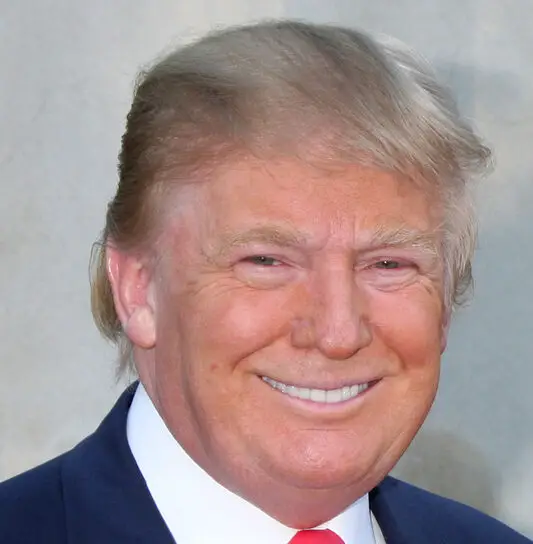
The Economist’s provocative cover illustration of a shirtless President Donald Trump riding a polar bear through Arctic terrain continues to circulate online, having captured public attention during one of the most turbulent periods in recent American history.
The British magazine released the cover on January 22, 2026, warning that US allies must prepare for potential isolation in a world where NATO may no longer exist. The cover came after days of Trump threatening to take over Greenland, sparking tensions between the US and its European allies.
Matt Stopera, a Deputy Editorial Director at BuzzFeed who has worked at the outlet since the George W. Bush administration, highlighted the viral cover image that dominated online conversation.
Social media users wasted no time weighing in on the magazine’s artistic choice. “Could be the motto for his whole life,” wrote one internet user in response to the cover’s imagery. Others simply declared it “Accurate” and “Perfect!”
The cover’s resurgence comes at a volatile moment for the Trump administration, now grappling with a war in Iran, soaring gas prices, and a government shutdown that has thrown air travel into chaos. Average fuel prices are now $3.84 a gallon, up 31% from a month ago. Oil prices have surged to $107.40 per barrel amid the Middle East conflict.
More than three weeks into the U.S. and Israel’s war with Iran, it remains unclear how or when the conflict might end. The United States and Israel launched strikes against Iran on February 28, sparking swift retaliation with attacks across the region. The Iranian government has effectively closed the Strait of Hormuz, a vital waterway through which approximately 20% of the world’s crude oil and natural gas typically passes.
President Trump, inaugurated on January 20, 2025, faces mounting scrutiny over the war’s conduct and its lack of clear objectives. Iran expert Karim Sadjadpour noted that Trump “said that that took him by surprise when Iran started to attack the Persian Gulf countries or close down the Strait of Hormuz,” adding that the war began as a “war of choice” with no imminent threat.
The Economist’s cover appears designed to comment on Trump’s approach to foreign policy and international cooperation. The magazine warned that European powers must be ready for a world without NATO, or at the very least, the USA is no longer a reliable ally.
On January 21, 2026, Trump reversed his position at the Davos conference, pledging not to use force or tariffs to annex Greenland after weeks of threatening Denmark and other European nations. Trump announced he had formed “the framework of a future deal” with NATO Secretary General Mark Rutte regarding Greenland and the entire Arctic Region.
The administration’s relationship with NATO has grown strained during the Iran conflict. No close ally has come forward with immediate help. Britain is flat-out refusing to be drawn into the war. European Union foreign policy chief Kaja Kallas stated Tuesday, “This is not Europe’s war. We didn’t start the war. We were not consulted.”
Meanwhile, NATO air and missile defense installations in Turkey have intercepted multiple Iranian ballistic missiles, with the first interception occurring on March 4, 2026, and a third missile shot down near Incirlik Air Base on March 13. The incidents highlight the complex web of military involvement, even as formal NATO support for the war remains limited.
For Americans, the most immediate concerns hit closer to home. One month into the partial government shutdown, hundreds of Transportation Security Administration (TSA) workers going without full pay have quit, while others have taken unscheduled time off, prompting travel headaches. Travelers face long airport security lines, with wait times occasionally stretching to nearly two hours at major airports, including Atlanta and Houston.
Acting Deputy TSA Administrator Adam Stahl delivered a stark warning: “If this continues, it’s not hyperbole to suggest that we may have to quite literally shut down airports, particularly smaller ones, if call-out rates go up.” DHS reports that 366 TSA officers have quit their jobs since the shutdown began in February.
The Economist, known for its often provocative cover illustrations, has a long history of using visual satire to comment on political figures. Past covers have featured world leaders in symbolic poses designed to capture the magazine’s editorial perspective on current affairs. This latest cover achieved the kind of viral spread that publishers dream of in the digital age.
As the Iran war grinds on with no end in sight, gas prices climb, and airport lines snake through terminals, Americans continue finding dark humor in satirical political commentary—a brief moment of levity amid otherwise grim headlines.