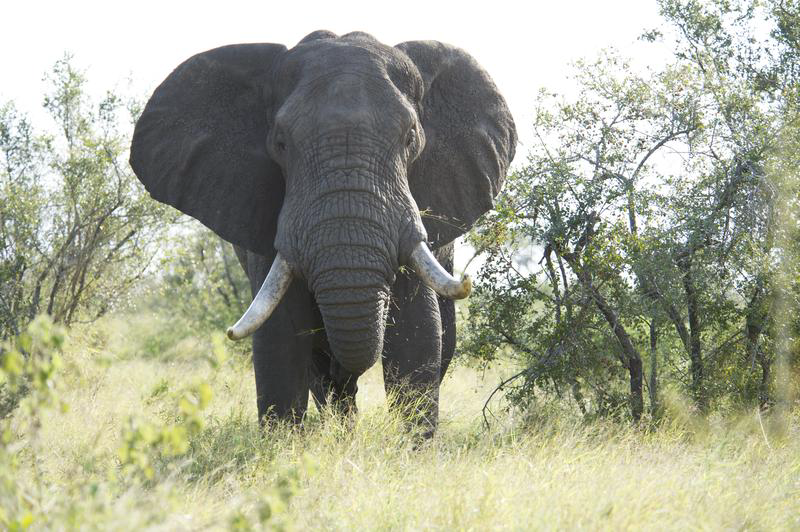
A 17-year-old college student returning home was fatally trampled by a wild elephant in southern India, prompting widespread protests as locals demanded stronger measures to address rising human-wildlife clashes that have caused hundreds of deaths in recent years.
Pooja, a first-year pre-university student at St. Michael’s Composite PU College in Madikeri, had just gotten off a bus near her residence in Bettathuru village in Karnataka’s Kodagu district when an elephant suddenly charged at her from behind at around 5:30 p.m. on Saturday, February 28, 2026.
The attack happened in mere moments. Pooja’s mother, Devaki, heard her daughter scream and ran toward her, but the assault ended before she could reach her. Her father, Changappa (also called Girish in some accounts), had briefly stepped away to park his motorcycle. Upon returning, he found his daughter lying in a pool of blood, severely injured by the elephant’s forceful charge.
Pooja was taken to the Government Hospital in Madikeri, but doctors were unable to save her. A postmortem examination was conducted soon afterward. The sudden death of the teen devastated the close-knit village and fueled anger over what residents believe is ongoing government inaction regarding increasing wildlife attacks.
The tragedy spurred immediate protests. On Sunday, villagers joined farmer groups and Bharatiya Janata Party workers to block National Highway 275 for more than two hours. Traffic came to a halt for kilometers along the Mysuru-Bantwal route as demonstrators demanded swift action from the government to stop further fatalities.
Madikeri Deputy Conservator of Forests Abhishek met Pooja’s family at the hospital and assured them that efforts would be made to capture the elephant responsible. “The Rapid Response Team has rushed to the spot and efforts are underway to drive the elephant back into the forest,” he told reporters. The Karnataka government later announced compensation of Rs 20 lakh, or about $22,000, for the grieving family.
The incident highlights a long-standing and dangerous issue in Karnataka. Forest department records show that wild animals have killed 254 people across the state in the last five years, including 42 deaths in 2024–25 alone. Roughly 70 percent of these fatalities were caused by elephants, tigers, and leopards—species increasingly coming into contact with expanding human settlements, farms, and infrastructure.
Kodagu lies at the forested intersection of Karnataka, Tamil Nadu, and Kerala, where traditional elephant migration routes now frequently overlap with villages. Locals reported that earlier in February, another youth returning from work at a resort was seriously injured in a similar elephant attack on the same stretch of road, narrowly escaping death. As human and wildlife territories continue to collide, risks grow for students, laborers, and farmers.
The human-wildlife conflict issue is not limited to Karnataka. In early January, a single male elephant caused widespread panic in Jharkhand, killing at least 22 people over roughly ten days in the forested West Singhbhum district before evading capture. The attacks, beginning January 1 in the Chaibasa and Kolhan regions of the Saranda forest belt—one of Asia’s largest sal forests—mainly targeted villagers protecting their crops at night near forest edges.
Official figures reveal the scale of the problem. Jharkhand has recorded about 1,270 human deaths from elephant attacks over the past 18 years, while nearly 150 elephants have also died in conflict-related events—making it one of India’s most hazardous areas for human-elephant encounters.
The growing conflict comes as India’s elephant population faces troubling trends. In October 2025, a DNA-based census by the Wildlife Institute of India estimated the wild elephant population at 22,446. This marks a decline from the 27,312 counted in 2017, although experts caution that the new methodology means these numbers “are not directly comparable to past figures” and should serve as a new baseline.
Residents of Bettathuru and nearby villages say they have repeatedly alerted authorities to increasing elephant movement near homes, but claim officials act only after lives are lost instead of implementing preventative steps. Community leaders are calling for stronger patrolling, physical barriers, deployment of elephant tracking technology, improved early-warning systems, and better coordination across government departments.
Pooja’s death has deeply shaken the area. Neighbors described her as a bright, gentle student with hopes of continuing her studies. She had recently completed her annual exams on February 19 and was staying with her mother, who works as a cook at a nearby ashram school. Her loss adds to the growing list of young lives claimed in the ongoing struggle between conservation and community safety.
Forest Department officials said they are keeping track of elephant activity in the region and have begun work to move the animals back to forested areas. They also promised that the victim’s family would receive all assistance according to government guidelines.
As Bettathuru grieves, the tragedy has renewed urgent calls for a balanced strategy that protects India’s endangered wildlife while safeguarding vulnerable communities living along forest borders. Residents hope that concrete and sustained action will finally be taken to avoid similar incidents, sparing other families from the heartbreak now faced by Pooja’s loved ones.