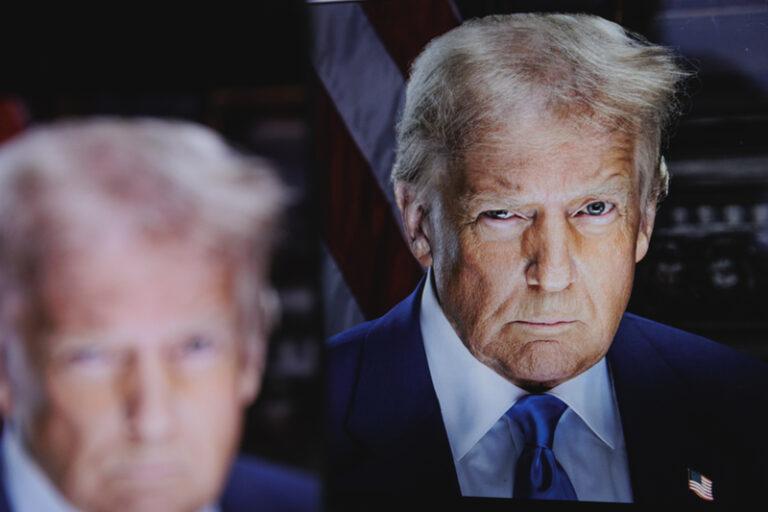
President Donald Trump has intensified speculation about serving a constitutionally barred third term, telling a crowd at the Port of Corpus Christi, Texas in late February 2026, “Maybe we do one more term. Should we do one more? Do one more term. Well, we are entitled to it.”
Days earlier, during his State of the Union address on February 24, Trump rehashed his debunked claim that Democrats stole the 2020 election, saying the current term “should be my third term.”
Then, on March 22, Trump kept the drumbeat going by sharing a post on his Truth Social platform bearing the caption, “3RD TERM FOR TRUMP AS A REWARD FROM STOLEN ELECTION.” The flurry of comments has renewed debate over whether the president’s repeated references to extending his time in office are genuine intent — or deliberate provocation.
The constitutional barrier is clear. The 22nd Amendment, ratified in 1951, explicitly states that “no person shall be elected to the office of the President more than twice.” Amending the Constitution would require a two-thirds vote in both chambers of Congress, followed by ratification by three-quarters of all states — a near-impossible political undertaking by 2028. Legal experts note that while Trump has suggested there are “methods” to circumvent the restriction, any such path would face near-certain rejection by the courts and election officials.
Trump has floated the idea of additional terms since his first presidency. During a 2020 rally in Nevada, he told supporters that after winning four more years, “we’ll negotiate, right? Because we’re probably entitled to another four after that.” Since returning to office in January 2025, the comments have grown more frequent.
At a January 2026 speech to House Republicans, Trump joked that he was “not allowed” to run again, calling the prospect “a constitutional movement.” That same month, he acknowledged at a Las Vegas rally the idea of serving “three times or four times” before walking it back.
Trump ally Steve Bannon has been among the loudest voices pushing a third term, stating publicly that Trump “will run and win again in 2028” and that allies are “working” on ways to make it happen despite constitutional limits. In February 2026, Bannon further stoked controversy by calling for ICE agents and military troops to be deployed at polling stations ahead of the 2026 midterm elections to prevent what he falsely characterized as stolen elections — a proposal that would violate federal law.
Meanwhile, reports emerged of right-wing activists drafting an executive order that would grant the president broad authority over voting rules, including potentially banning mail-in ballots and voting machines — though the White House indicated the draft was not under consideration.
Not all Republicans are on board. Senate Majority Leader John Thune has dismissed the possibility, telling reporters that a third term would require “a change in the Constitution” and suggesting Trump may simply be baiting his critics. Tennessee Rep. Andy Ogles has introduced a resolution to amend the 22nd Amendment, though it has gained no significant traction. Public polling tells a similar story: a recent survey found that 70 percent of Americans reject the idea of Trump serving a third term, and his overall approval rating has hovered around 41 percent.
The two-term tradition dates back to George Washington, who voluntarily stepped down after two terms in 1796. The precedent held for 144 years until Franklin D. Roosevelt won a third and fourth term during the Great Depression and World War II. Roosevelt’s death months into his fourth term in 1945 prompted Congress to formalize term limits, resulting in the 22nd Amendment.
If Trump were inaugurated for a third term in January 2029, he would be 82 years old — the oldest person ever to begin a presidential term.
Election law experts suggest the third-term talk, whatever its intent, may serve a strategic purpose: preventing Trump from being seen as a lame-duck president whose political influence fades as 2028 approaches.
Trump himself has sent mixed signals. In a May 2025 interview, he said he wants to be “an eight-year president” and hand power to “a great Republican” to carry his agenda forward, naming Vice President JD Vance and Secretary of State Marco Rubio as possible successors. Whether the more recent comments represent a shift in thinking — or simply red meat for his base — remains unclear.