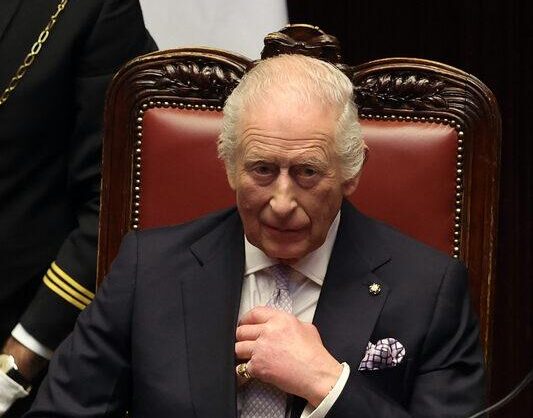
Buckingham Palace has revealed that King Charles and Queen Camilla will embark on a momentous state visit to the United States later this month, representing the first occasion a sitting British monarch has traveled to America in close to 20 years and the king’s first official journey to the nation since taking the throne.
The royal pair will journey to Washington, D.C. from April 27 to 30, 2026, upon President Donald Trump’s invitation to honor the 250th anniversary of American independence. Their itinerary features a state dinner at the White House on April 28 and a momentous address by the king to both chambers of Congress—a distinction last given to a British monarch when Queen Elizabeth II addressed US lawmakers in 1991 after the Gulf War.
The Palace confirmed the visit would “celebrate the historic connections and the modern bilateral relationship between the UK and the US.” The revelation arrives at a politically charged time, as Trump’s administration conflicts with conventional European allies regarding the continuing Iran conflict and Britain’s rejection of joining American military operations.
President Trump revealed the state dinner arrangements on Truth Social, noting that “this momentous occasion will be even more special this year, as we commemorate the 250th Anniversary of our Great Country.” The president has preserved friendly personal connections with King Charles despite openly condemning Prime Minister Keir Starmer and the UK’s position on the Strait of Hormuz.
Trump told GB News last week: “He is a friend of mine, he is a great gentleman. As you know, he honored me and our country.”
The scheduling of the revelation prompted surprise in diplomatic communities, arriving merely hours after Trump delivered another attack against Britain on Truth Social. The president criticized the UK for refusing to take part in strikes against Iran, directing British leaders to “build up some delayed courage” and cautioning that “the USA won’t be there to help you anymore, just like you weren’t there for us.”
The visit constitutes a major diplomatic achievement. Queen Elizabeth II last conducted a state visit to the United States in 2007 during the Bush administration. King Charles traveled to the country 19 times as Prince of Wales, but this signifies his first state visit as monarch.
After the Washington activities, King Charles will journey alone to Bermuda while Queen Camilla returns to the UK. The Bermuda journey will create history as the first visit by a sitting king to the British Overseas Territory. Charles formerly visited Bermuda in 1970 as Prince of Wales, while Queen Elizabeth II last journeyed there in November 2009.
Not all observers regard the royal visit positively. During a live transmission on Channel 5’s “Storm and Alexis,” presenter Alexis Conran questioned whether the trip was “too risky for the king”—a question that ignited passionate discussion among viewers and guests worried about potential confrontations over Prince Andrew’s past associations. Liberal Democrats leader Ed Davey termed the visit “a humiliation” and blamed Prime Minister Starmer for displaying “a staggering lack of backbone.”
The state visit develops against a setting of the most profound divide in transatlantic relations in decades. European allies have resisted Trump’s combative stance toward Iran, and almost half of the British public opposed the visit in a YouGov poll administered in March. Britain’s refusal to permit US aircraft to utilize British bases for offensive operations has especially angered the president, who has consistently criticized Starmer’s government, at one juncture stating the Prime Minister is “not Winston Churchill.”
Despite the strains between Washington and London, Trump and King Charles have sustained amicable personal relations. The president is understood to regard the royal family in something approaching reverence, and advisers on both sides of the Atlantic seem to be relying on that feeling enduring during the present diplomatic storms.
The 250th anniversary of American independence offers the official justification for the visit, but political analysts on both sides of the Atlantic will observe carefully to determine whether the royal trip can ease recent friction—or whether it transforms into another flashpoint in the declining US-UK relationship.