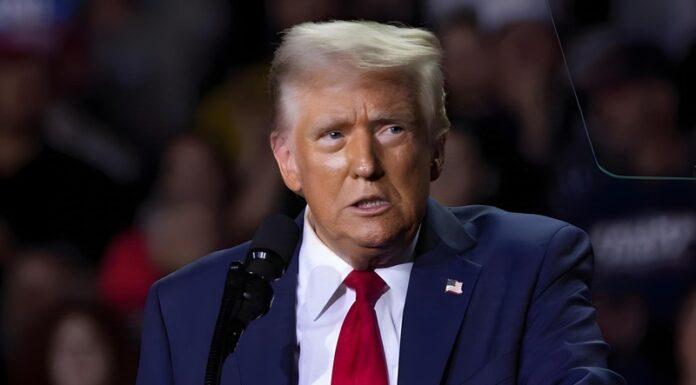
President Donald Trump has triggered intense responses following his assertions regarding King Charles, alleging the British sovereign privately endorses American military operations in Iran—a stance that sharply conflicts with British Prime Minister Keir Starmer’s resolute resistance to the military engagement.
These controversial statements come merely three weeks ahead of King Charles and Queen Camilla’s planned state visit to the United States scheduled for April 27–30, 2026, an excursion that observers of the royal family now characterize as among the most sensitive diplomatic undertakings of his monarchy.
In an interview with The Telegraph, the 79-year-old president maintained that the 77-year-old monarch would have approached the Iran matter differently from Britain’s present administration. “I think he would have taken a very different stand [on the war against Iran] but he doesn’t do that. I mean, he’s a great gentleman,” Trump said.
Buckingham Palace quickly acted to separate the king from Trump’s portrayal. A palace source informed the Daily Beast that “the King is above politics”—an emphatic reinforcement of the royal family’s traditional political impartiality.
This declaration highlights the delicate circumstances King Charles currently faces as he readies himself to visit Washington during heightening friction between the Trump administration and NATO partners regarding the Iran situation. Prime Minister Starmer has resolutely resisted expanded military operations in the Middle East, informing Parliament that the U.K. was “not involved in the initial strikes against Iran” and will “not join offensive action now.” This position has generated an uncommon public division in the historically robust U.S.-U.K. partnership, with Trump announcing that Starmer is “no Winston Churchill.”
TalkTV host and royal authority Samara Gill, appearing on the Sun’s Royal Exclusive show, characterized the forthcoming visit as conceivably the most substantial test of Charles’ tenure as monarch. She cautioned that the king must perform “diplomatic gymnastics” to manage the situation, observing that Trump “listens to no one” except, possibly, the monarch himself.
Notwithstanding the dispute, Trump has voiced only praise for the British monarch, describing him as “a wonderful and brave man” and highlighting their enduring connection. The two leaders convened during Trump’s historic second state visit to Windsor Castle on September 17, 2025, where Charles received him with complete royal ceremony—featuring 1,300 military personnel, 120 horses, and an elaborate state banquet.
Trump’s favorable sentiments toward King Charles may have produced unforeseen ramifications for Canada. According to a new book by British journalist Robert Hardman titled “Elizabeth II: In Private. In Public. The Inside Story,” Trump’s regard for the king potentially disrupted his ambition to annex Canadian land.
The publication, currently being serialized in the Daily Mail, details exchanges between Hardman and Trump in December at Mar-a-Lago in Florida. Throughout their conversation, Trump disclosed he was chiefly focused on annexing Canadian territory immediately above the U.S. border but seemed to rethink his position when reminded that King Charles functions as Canada’s head of state.
Trump questioned Hardman about whether Canadians still acknowledged the king, evidently uninformed of Charles’ constitutional position as king of Canada. Upon learning that Charles continues as Canada’s monarch, Trump criticized Canadian politicians but appeared to withdraw from his annexation statements. The 79-year-old president admitted that he probably couldn’t deal with Canada, and its long history, in the three-and-a-half years he had left in office.
Hardman documented that this constituted “the closest I had heard to an acknowledgement that, as long as Canada had the King, Trump was not going to usurp him.”
Trump’s most recent criticism toward Canada emerged in March when he revealed intentions to collaborate with Michigan Governor Gretchen Whitmer to “save The Great Lakes from the rather violent and destructive Asian Carp.” In that Truth Social statement, he mentioned “the future Governor of Canada, Mark Carney,” resurrecting an insult he previously directed at former Prime Minister Justin Trudeau and generating renewed anxieties about his territorial aspirations.
King Charles presented Canada’s throne speech in May, representing only the third instance in the nation’s history that a reigning monarch executed that function, the prior occasions being Queen Elizabeth II in 1957 and 1977. Throughout his address, he obtained an exceptional standing ovation after declaring that “the True North is indeed strong and free,” language broadly understood as a subtle message to Trump about Canadian sovereignty.
The April visit will constitute Charles’ inaugural state visit to America as king, although he has journeyed to the U.S. 19 times before. The schedule comprises a state banquet at the White House and an address to a joint meeting of Congress on April 28, the first by a British monarch in over three decades. Congressional leaders have positioned the invitation as an occasion to “reaffirm” the special relationship between the two nations.
Democratic Rep. Ro Khanna of California sought a private meeting between the king and survivors of Epstein, a request Buckingham Palace rejected, referencing ongoing police investigations in the U.K. involving Andrew Mountbatten-Windsor and former Ambassador to the United States Peter Mandelson related to Jeffrey Epstein. Khanna has subsequently cautioned publicly that refusing the meeting “diminishes the credibility of the monarchy for future generations.” Andrew was released pending investigation and Mandelson was released on bail.
As the visit nears, the 77-year-old king confronts an exceptional challenge: upholding his constitutionally mandated political neutrality while managing arguably the most turbulent era in U.S.-U.K. relations in decades. With Trump perceiving him as a potential ally and the British government steadfastly opposed to expanded military action in Iran, Charles will require every measure of diplomatic expertise to safeguard the special relationship while avoiding the political conflict. Following the Washington visit, Queen Camilla will return to the United Kingdom while Charles travels to Bermuda — his first visit to the British Overseas Territory as reigning monarch.