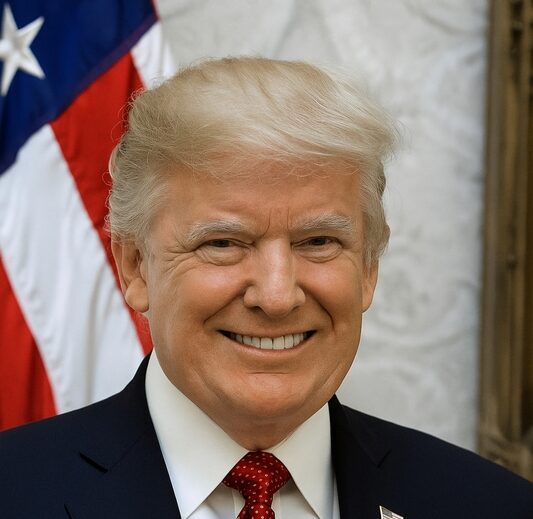
President Donald Trump has placed Cuba at the forefront of his international policy priorities, consistently stating the Communist-controlled nation will be “next” after U.S. armed forces operations in Venezuela and Iran, while confidential diplomatic discussions between Washington and Havana persist in private.
The intensifying language has prompted analysts to wonder if the Trump administration desires authentic regime change, a controlled political transition, or merely expanded opportunities for American commercial enterprises on the island located just 90 miles from Florida’s coastline.
During remarks at the Future Investment Initiative summit in Miami on March 27, Trump discussed his administration’s recent armed forces achievements before turning attention to Cuba. “I built this great military. I said you’ll never have to use it but sometimes you have to use it. And Cuba’s next, by the way. But pretend I didn’t say that.”
The remarks came after the U.S. military’s apprehension of Venezuelan President Nicolás Maduro on Jan. 3, and the assassination of Iranian Supreme Leader Ali Khamenei in combined U.S.-Israeli operations on Feb. 28. Trump has become progressively bolder in his declarations, informing journalists on Air Force One, “Cuba’s going to be next.”
Secretary of State Marco Rubio, whose parents emigrated from Cuba, has articulated the administration’s goals more directly. Rubio testified to Congress in January, “We would love to see the regime there change.” In March, he stated that Cuba’s leadership “don’t know how to fix it, so they have to get new people in charge.”
The Trump administration has been suffocating Cuba’s economic system through a petroleum blockade that specialists say has driven the island to its most critical condition since the Soviet Union’s dissolution. The approach escalated after the cessation of petroleum deliveries from Venezuela following Maduro’s capture, leading to island-wide electrical failures throughout Cuba.
The blockade revealed indications of irregular implementation in late March, when a Russian vessel transporting approximately 700,000 barrels of petroleum arrived at the Matanzas port without U.S. interference. The White House indicated the delivery did not signify a systematic shift in penalties policy and that subsequent determinations would be evaluated individually. Trump, speaking on Air Force One, minimized the occurrence, saying: “Cuba’s finished.”
Notwithstanding the confrontational stance, both administrations have verified active discussions. Cuban President Miguel Díaz-Canel recognized in March that conversations are taking place but remain “still far from an agreement.” Cuba’s deputy foreign minister, Carlos Fernández de Cossío, portrayed the deliberations as both earnest and delicate, while maintaining that regime change is “absolutely” off the table.
The matter of what “taking Cuba” truly signifies has split observers and potentially the administration as well. Paul Hare, who functioned as British ambassador to Cuba from 2001 to 2004, recognized rival groups within Trump’s circle—some prepared to negotiate arrangements with current leadership for commercial entry, others demanding total regime change.
Christopher Hernandez-Roy, senior fellow and deputy director of the Americas Program at the Center for Strategic and International Studies, said “regime management” constitutes the sole practical alternative. He observed that Cuba’s authority framework has persisted for almost seven decades and demonstrates proficiency at suppression, rendering it a more challenging objective than Venezuela.
Lawrence Gumbiner, a professional diplomat who directed the U.S. Embassy in Havana during Trump’s first term, provided an alternative analysis. He proposed Trump perceives Cuba as untapped ground for American commercial ventures after six decades of financial inactivity, with possibilities encompassing maritime services, transit systems, hospitality, and building development.
Gumbiner forecasted any resolution would entail financial liberalization initially, with fresh Cuban leadership functioning under substantial U.S. influence. He likened the prospective framework to the position currently occupied by Venezuelan Vice President Delcy Rodríguez, cautioning the signal would be unmistakable: cooperate or experience repercussions.
The Cuban government has resisted Washington’s demands. Deputy Foreign Minister Fernández de Cossío informed NBC’s “Meet the Press” that Cuba’s armed forces remain “prepared” for any U.S. hostility, observing that the planet’s most formidable nation has devoted almost seven decades to attempting to dismantle Cuba’s governing structure and been unsuccessful.
Cuban President Díaz-Canel took over the presidency from Raúl Castro in April 2018, establishing himself as the first individual since 1976 outside the Castro lineage to officially govern the nation. Nevertheless, numerous observers regard Díaz-Canel as a symbolic leader, with the Castro dynasty retaining substantial authority in the background through the armed forces conglomerate GAESA, which dominates approximately 60 percent of Cuba’s financial system.
Hernandez-Roy described removing Díaz-Canel’ as chiefly emblematic, observing “he’s not the person that actually wields the power in the country, but it would be seen as a symbolic win by the United States.”
As deliberations persist and Trump’s language escalates, the destiny of the island territory remains uncertain. Rubio informed Fox News in February that the administration would “have more news on that fairly soon,” implying substantial developments may be forthcoming in the intricate confrontation between Washington and Havana
The most definitive indication of advancement occurred on April 3, when Cuba freed more than 2,000 detainees, presenting the action as a compassionate measure for Easter. Analysts at The Guardian interpreted the liberation as a probable sign of continuing secret deliberations between the two administrations.