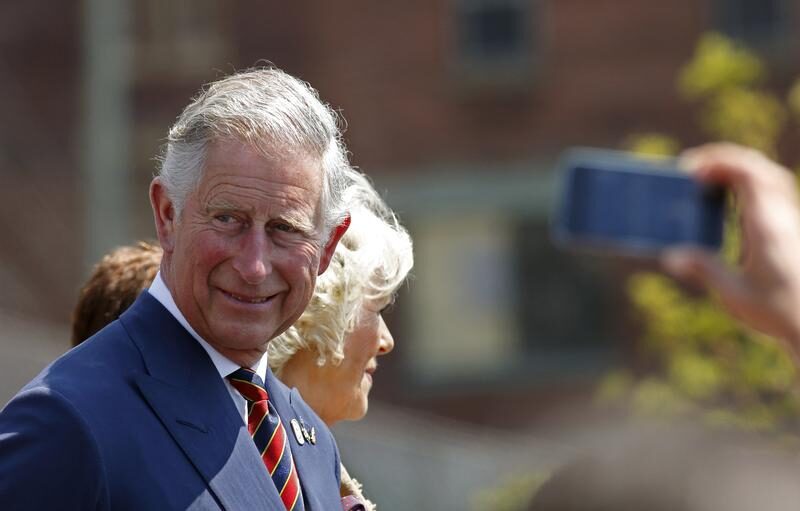
A British monarch walked into the White House and roasted the sitting American president over a half-billion-dollar ballroom project — and the administration responded by calling him one of history’s greatest kings.
During his April 28, 2026, address to a joint meeting of Congress, King Charles III drew a standing ovation from both parties when he highlighted how the Magna Carta appears in at least 160 Supreme Court cases as the foundation for limiting executive power through checks and balances. The speech pointedly defended democratic institutions, the rule of law, and international alliances in what many interpreted as an implicit criticism of the Trump administration.
Vice President JD Vance and House Speaker Mike Johnson sat behind the 77-year-old king as he addressed lawmakers in the House Chamber.
War of 1812 Reference Delights Observers
But Charles saved his sharpest barbs for the state dinner that evening. Standing before Trump and assembled guests, the king called the White House “the heart of your democracy” before noting with a wry smile that he couldn’t help but observe the “readjustments” to the executive mansion following the president’s Windsor Castle visit last year.
“I am sorry to say that we British, of course, made our own small attempt at real estate redevelopment of the White House in 1814,” Charles quipped, drawing laughter with his reference to the Burning of Washington, when British forces torched the executive mansion during the War of 1812. Observers on both sides of the Atlantic delighted in the jab.
The comment took direct aim at Trump’s decision last year to demolish the East Wing to construct a sprawling new ballroom. The project’s budget has exploded from an initial $200 million estimate to at least $400 million, with some senators now suggesting the final cost could reach $500 million.
The king wasn’t finished. He later fired back at Trump’s January remarks in Davos, where the president told European leaders they’d be “speaking German and a little Japanese” if not for American intervention in World War II. “Dare I say that if it wasn’t for us, you’d be speaking French,” Charles told the president, invoking Britain’s pre-Revolutionary War battles with France for continental dominance.
Security Arguments Drive Ballroom Funding Push
The royal needling came as the ballroom controversy reignited following the White House Correspondents’ Association Dinner shooting on April 25. Republican Sens. Lindsey Graham, Katie Britt, and Eric Schmitt introduced the White House Safety and Security Act to secure $400 million in federal funding, with Trump and his allies now arguing the ballroom is essential for presidential security.
“This is not about Trump. It’s about the presidency of the United States,” Graham told reporters. Schmitt cited “military stuff” and a Secret Service annex planned beneath the ballroom as justification.
The taxpayer funding push has fractured Republican unity. Trump originally promised private donors would fund the project entirely. Sens. Josh Hawley and Rick Scott have publicly balked at using federal dollars. “I don’t know why you would do it with taxpayer money if it’s all funded. We have $39 trillion in debt. Maybe we ought to stop spending money,” Scott said.
Rand Paul introduced separate legislation to authorize the ballroom’s construction without allocating new taxpayer dollars, framing it as congressional approval rather than a funding vehicle.
The Justice Department moved aggressively to clear legal obstacles. Assistant Attorney General Brett A. Shumate wrote to lawyers for the National Trust for Historic Preservation, which had sued over the East Wing demolition, demanding the group drop its lawsuit by Monday morning and warning the government would otherwise seek to dissolve a court injunction blocking construction. “Put simply, your lawsuit puts the lives of the President, his family, and his staff at grave risk,” Shumate wrote.
The National Trust refused, formally declining to dismiss the case. On April 27, the D.C. Circuit Court of Appeals lifted Judge Leon’s injunction entirely, allowing above-ground construction to resume while the court conducts an expedited review scheduled for June 5, 2026.
Protocol Mishaps and Diplomatic Stumbles
Trump appeared oblivious to the king’s digs. While Charles addressed Congress on April 28, the administration’s official social media accounts posted a photo of Trump and Charles together, captioned “TWO KINGS. 👑,” a tone-deaf flourish given the “No Kings” protests roiling American politics.
Trump himself had told CBS’ “60 Minutes” just two days earlier, “I’m not a king, if I was a king, I wouldn’t be dealing with you.”
At the state dinner, Trump praised Charles’ “fantastic” speech and credited the king with something he’d never managed: getting Democrats to stand and applaud. By Thursday, as the four-day state visit concluded, Trump lavished the monarch with praise: “He’s a great king, the greatest king by the way.”
The visit was riddled with protocol stumbles. At Arlington National Cemetery on Thursday, a U.S. servicemember was photographed holding the Union flag upside down, traditionally a distress signal, directly behind the royal couple. Earlier, officials in Washington had displayed 15 Australian flags by mistake, and the state dinner menu featured a chocolate gâteau despite Charles’ well-documented dislike of chocolate.
Critics also zeroed in on Trump’s chief of protocol, Monica Crowley, who reportedly failed to curtsey upon Charles’ arrival. Trump further complicated matters by publicly sharing what he claimed were private remarks from the king about the Iran war, prompting swift damage control from Buckingham Palace.
The visit produced at least one tangible diplomatic result: Trump lifted tariffs on Scotch whisky as a gesture of goodwill toward the British monarch following the conclusion of the trip.
For all the chaos, Charles departed having delivered something rare in modern Washington: a polite reminder, dressed in royal humor, that the direct descendant of George III now stands as an unlikely defender of the republic his ancestor lost 250 years ago.