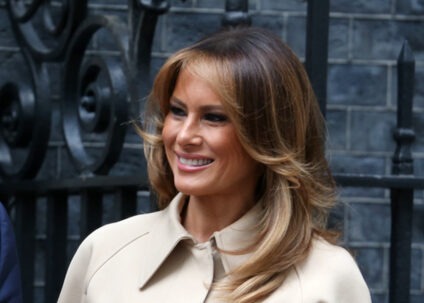
First Lady Melania Trump opposed several major White House renovation projects championed by President Donald Trump during his second term, but her objections were consistently overruled, according to a book published June 23, 2026.
“Regime Change, Inside the Imperial Presidency of Donald Trump,” written by New York Times reporters Maggie Haberman and Jonathan Swan, chronicles the friction between the president and first lady over interior design decisions and large-scale construction plans. The book draws on more than 1,000 interviews, including an hour-long conversation with the president in which he disputed some specifics but left the broader narrative unchallenged.
Separate Bedrooms and Competing Visions
President Trump and First Lady Melania Trump occupy separate bedrooms in the White House, the book reveals, and disagreements over décor spilled into both private and public spaces. Following the January 2025 inauguration, the president removed furnishings and decorative pieces his wife had selected for shared areas, including items from the Center Hall, to use in his own quarters. When staff members flagged the conflict, he ignored their concerns, according to Haberman and Swan.
One notable casualty of the couple’s competing tastes was a large gold-leaf-framed mirror Melania had placed as the centerpiece of the Queens’ Bedroom during Trump’s first term. In March 2026, the president relocated it to the Rose Garden colonnade, where it became known among visitors and staff as the “selfie mirror.”
The East Wing Ballroom and Demolition
President Trump’s $400 million ballroom project created significant tension behind closed doors. The first lady raised concerns about the size and location of the proposed structure, but demolition of the East Wing proceeded anyway, beginning in October 2025 and wrapping up by late October. The East Wing had housed the Office of the First Lady, the White House movie theater, and the presidential bunker. Melania Trump told associates the project was not her idea and distanced herself from it, the authors wrote. White House officials described the ballroom as “a bold, necessary addition” and said it is entirely privately funded. In October 2025, the administration released a donor list that included major corporations such as Amazon, Apple and Google.
White House staff found themselves caught between the dueling preferences of the president and first lady as they tried to navigate the competing visions, according to Haberman and Swan.
Rose Garden Clash and Compromise
The Rose Garden became another battleground. Melania Trump had redesigned the space during her husband’s first term, introducing a limestone border and white and pastel roses in what the authors called “one of her proudest achievements.” When President Trump proposed paving over the garden entirely, the first lady objected. The couple ultimately reached a compromise: stone tiles were installed over the grass, but her rosebushes stayed. Speaking at the paved Rose Garden in May 2026, President Trump publicly confirmed the disagreement, saying he had taken “a little heat” from Melania and quoting her as asking, “Darling, what did you do with my grass?”
Gold-Laden Oval Office Makeover
The first lady’s minimalist preferences clashed sharply with her husband’s ornate Oval Office redesign. On Independence Day 2025, Melania Trump walked into the Oval Office during a meeting with Speaker of the House Mike Johnson and openly expressed her distaste for the gold-laden décor, the book recounts. President Trump acknowledged to Johnson that she preferred a more understated aesthetic but defended his gilded flourishes, insisting the Oval Office looked better that way. The president personally applied gold decorations using superglue, a hands-on touch that surprised no one familiar with him, according to the authors.
A Portrait of Diverging Tastes
“Regime Change, Inside the Imperial Presidency of Donald Trump” paints a picture of a first lady with strong design expertise and clear opinions who was repeatedly overruled by a president equally committed to reshaping the White House according to his own preferences. While Melania Trump favored continuity and restraint, President Trump embraced spectacle and gold.