Carlos Alberto Solari, the singer-songwriter known across Argentina simply as “the Indio” and revered as one of the most influential voices in the country’s rock history, died of a hemorrhagic stroke on Friday, June 5, 2026, at his home in the Parque Leloir area of Ituzaingó, a provincial town roughly 33 kilometers (about 20 miles) west of Buenos Aires. He was 77.
Solari was discovered near an indoor pool at his residence by his caregiver, who pulled him out and called for emergency assistance, according to a police report. A preliminary autopsy linked his death to Parkinson’s disease, which he had battled for at least a decade. Prosecutors confirmed there was no drowning.
The family announced plans for a public funeral on social media so fans nationwide could say goodbye to the man many consider the conscience of Argentine rock.
“We will mourn as is fitting, listen to his songs and, above all, take care of one another, as he taught us to do,” the family statement read.
A Countercultural Icon Is Born
As the frontman of Patricio Rey y sus Redonditos de Ricota — universally known as Los Redondos — Solari became a countercultural touchstone for generations of disaffected Argentines. The band rose to prominence as the country emerged from the bloody military dictatorship of 1976-83 and stumbled into a fragile democracy marked by newfound freedoms, instability and hyperinflation in the 1980s.
By the 1990s, as then-President Carlos Saúl Menem opened Argentina to a consumerist frenzy fueled by free-market reforms, Solari’s classic rock anthems, punchy dance tunes and famously cryptic lyrics gave voice to a spirit of rebellion against the excesses of capitalism and what he viewed as the corrosive influence of foreign powers.
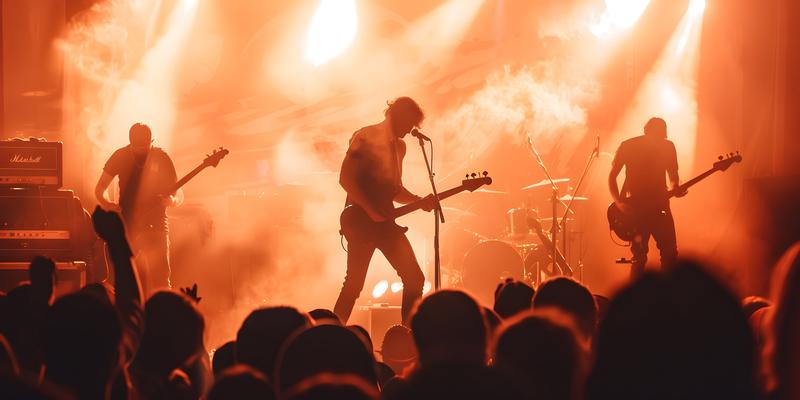
Los Redondos released 10 studio albums between the 1970s and 2000s, eschewing major record labels to safeguard their artistic independence — a decision that only deepened their mystique. The band broke up in 2001, but Solari hardly faded. Starting in 2004, he led Indio Solari y los Fundamentalistas del Aire Acondicionado, releasing five solo albums that mixed mainstream rock with electronic influences and drew hundreds of thousands of fans to parks and stadiums across Argentina. Still creating in his final years despite his illness, he collaborated with Argentine rapper Wos on the song “Quemarás,” released in March 2024, and in May 2026 received an honorary doctorate from the University of Buenos Aires — his last public recognition.
Parkinson’s, Tragedy and Retirement
At a massive concert in 2016, Solari publicly revealed his Parkinson’s diagnosis to a stadium of stunned fans.
“Mr. Parkinson is nipping at my heels. But here I am,” he told the crowd, which went wild. He later retired from touring, speaking candidly in interviews about the disease’s debilitating effects.
The sheer scale of his concerts occasionally turned tragic. Two people were crushed to death at his March 11, 2017, gig in La Colmena, in the city of Olavarría, Buenos Aires province — a disaster that prompted painful debates in Argentina about crowd safety at mass gatherings.
His themes — criticism of consumerism, capitalism and state repression — resonated far beyond music. He aligned himself with the Grandmothers of Plaza de Mayo, the prominent activist group that has sought to find grandchildren stolen and illegally adopted during the 1976-83 dictatorship, and his songs were embraced as protest anthems by successive generations.
A Nation in Mourning
Within hours of the news, fans began streaming to Solari’s home in Ituzaingó, many bearing flowers and wearing T-shirts printed with his nickname. Thousands more filled a large plaza in downtown Buenos Aires to mourn, commune and sing his hits late into the night. People wept. Strangers hugged.
The public farewell that followed was on a scale rarely seen in Argentine history. On June 7, 2026, his family opened the Polideportivo José María Gatica in Avellaneda as a viewing venue, with queues stretching more than seven kilometers at their peak. Official estimates put the total number of mourners at over one million, with around 500,000 passing through the viewing room during the nearly 18-hour vigil. The family closed the doors in the early hours of June 9, releasing a statement that read: “Everyone who had the chance to come and say goodbye, did. Now the rain sends us all home, to keep grieving inside and to remember him as he was: human, infinite.”
Among them was Eros Ruarte, 19, who said his mother broke the news to him on Friday morning.
“I said, no, mom, you can’t say that. I couldn’t believe it, that the Indio had died. … He is the biggest idol in the world. I grew up listening to him,” Ruarte said from the impromptu wake, describing the scene. “I heard his songs from my mom, my uncle.”
Tributes poured in from politicians, artists and soccer stars, including a statement from the Argentine Soccer Association noting that chants drawn from Solari’s lyrics had long echoed in stadium stands.
Former President Alberto Fernández remembered the rocker as a defining cultural force. “His human commitment, his dignity as an independent musician, and the profound social and cultural phenomenon that Los Redonditos de Ricota generated deserve to be remembered,” he wrote.
Cristina Fernández de Kirchner, the former president currently serving a corruption sentence under house arrest, also paid tribute, joining a chorus of voices crediting Solari with inspiring society as a whole to doubt, to question and to think critically.
Solari is survived by his wife, Virginia Mones Ruiz, and their 25-year-old son, Bruno. The family has asked fans to channel their grief into the rituals the Indio himself prized most: gathering, singing and looking after each other.
For millions of Argentines, his lyric “just living costs you your life” sounded on June 9 like something closer to prophecy than poetry — a final wink from a man who spent half a century daring his country to listen harder.