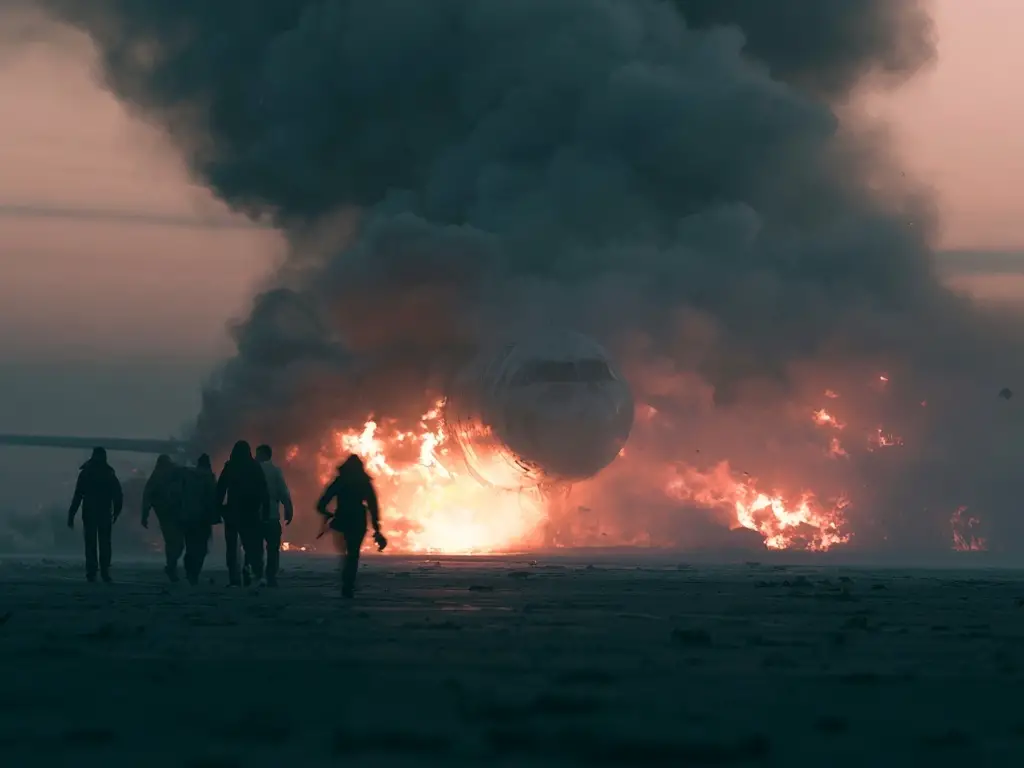
A Papua separatist group claimed on Thursday, July 2, 2026 that its fighters shot and killed an American pilot in a remote Indonesian village, setting his aircraft ablaze and leaving seven passengers stranded at an airstrip reachable only by air — with an initial evacuation attempt already turned back by bad weather.
A spokesman for the West Papua Liberation Army, known by its Indonesian acronym TPNPB, said fighters fatally shot Nicholas F. Goselin and torched a plane operated by PT AMA, an Indonesian airline, in Balinggama village. Indonesia’s Directorate General of Civil Aviation confirmed the aircraft was carrying one pilot and seven passengers, and said contact with airstrip personnel went dark after Goselin reported that the plane had landed. The U.S. Embassy offered no immediate comment.
Evacuation Stalled by Weather and Terrain
An evacuation team dispatched on Thursday was forced to turn around due to poor weather conditions, military spokesman Lt. Col. Wirya Artadiguna said. A second attempt on July 3 by a 10-man operation recovered Goselin’s body, which will be turned over to the U.S. Embassy in Jakarta. The site presented a severe logistical challenge: there is no road access to Balinggama village, and the area can only be reached by air.
The Indonesian military said the seven passengers — all indigenous Papuan civilians, including three women — were unharmed. Papua police spokesperson Yusuf Sutejo said officers were still working to independently verify the condition of the pilot and the passengers, with the rugged terrain complicating every step of the response.
The Indonesian military flatly denied that the plane had been used to ferry troops. But TPNPB spokesman Sebby Sambom insisted the aircraft had violated the separatist group’s ban on civilian flights in areas it designates as operational zones, and alleged that civilian planes have routinely been used to move Indonesian military personnel and supplies into the remote interior.
Separatists Blame Three Governments and the U.N.
Sambom said Goselin was killed because the aircraft continued flying despite explicit warnings from the group. He also called on Indonesian President Prabowo Subianto to open international negotiations over the conflict and urged the United Nations to facilitate talks among the Indonesian government, the TPNPB, and Papuan representatives. The TPNPB warned it would continue targeting civilian aircraft it believes are supporting military operations in the region.
Sambom said the pilot’s death resulted from longstanding inaction by Jakarta, Washington, the Netherlands, and the United Nations in resolving a conflict that has now stretched across 64 years.
His call for international mediation reflects a conflict that separatists say has produced mass civilian displacement and deaths alongside the military toll. Papua, a former Dutch colony, was absorbed into Indonesia in 1969 under a United Nations-sponsored ballot that has been widely condemned as a sham, laying the foundation for a struggle that has never fully subsided.
A Pattern of Attacks on Foreign Pilots
Foreign pilots operating in Papua’s isolated interior have become a deliberate target for separatist fighters. In February 2023, separatist forces kidnapped New Zealand pilot Philip Mark Mehrtens while he was flying for Susi Air, an Indonesian aviation company. Mehrtens was held captive and ultimately freed in September 2024.
The violence has not relented since. In August 2024, TPNPB gunmen stormed a helicopter shortly after it landed in a remote village in the Mimika district and shot and killed its pilot, Glen Malcolm Conning, who flew for PT Intan Angkasa Air Service. The indigenous Papuans Conning had been transporting were released unharmed.
Insurgency Deepens Across the Province
The broader conflict between Indigenous Papuans and Indonesian security forces has escalated sharply over the past year, with dozens of combatants, security personnel, and civilians killed. The insurgency has persisted across the province’s rugged highlands and dense jungle for decades, fueled by longstanding grievances over political autonomy, resource extraction, and allegations of human rights abuses by Indonesian forces — claims Jakarta has consistently disputed.
The killing of Goselin marks the latest episode in what separatists have framed as a deliberate strategy against aircraft they view as instruments of Indonesian military operations. Whether the claims surrounding his flight can be independently verified remains unclear.