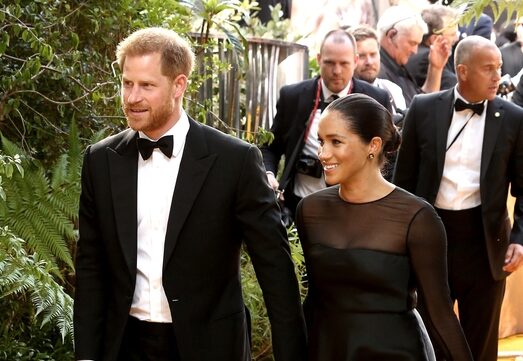
Prince Harry is pressing ahead with plans to bring Meghan Markle and their two young children to the United Kingdom next week, but the trip remains uncertain after British authorities declined to provide the family with police protection outside the walls of royal residences — a dispute his team says strikes at the heart of what constitutes genuine security.
Harry’s spokesman confirmed on Monday, June 29, 2026, that the duke is still working to make the visit happen, saying he “continues to explore every available option to enable the visit to proceed safely and to give his children the opportunity to enjoy the UK.” The planned early-July trip would be the first time the Sussex family has traveled to Harry’s homeland together since September 2022, and it would mark Princess Lilibet’s first trip back to Britain since 2022, when she attended Queen Elizabeth II’s Platinum Jubilee celebrations as a one-year-old. Prince Archie, seven, has not been back since that same 2022 visit, when Prince Harry and Meghan brought the children to Britain together for the last time before this planned trip.
Security Gap at the Center of the Dispute
The sticking point is specific and consequential. King Charles III offered the family accommodation at an unnamed royal residence, which would carry its own security detail. But Harry’s team has made clear that lodging is beside the point. His spokesman told USA TODAY that the real question is whether protection extends across every phase of the visit — not just when the family is behind palace gates.
The planned five-day trip includes both private engagements and at least two public appearances at which Meghan would join Harry, as well as events tied to the Invictus Games and Harry’s charity patronages. The 2027 Games are scheduled to be held in Birmingham, and the visit is intended in part to promote them. Harry’s team has pointed to that public-facing itinerary as precisely why blanket security is essential. His spokesman said secure housing alone is since threats are tied to individuals rather than locations.
At the core of the legal and bureaucratic tangle is the Royal and VIP Executive Committee, known as Ravec, the body that determines security provisions for senior royals and other public figures. Harry’s team has argued for years that the threat to the duke has not been adequately assessed and that the protection offered to him falls short of what the risk warrants. The independent Risk Management Board review that Ravec itself called for last November has still not taken place, and Harry’s spokesman said it is therefore difficult to understand how the proportionality of current arrangements can credibly be maintained without that independent assessment. The UK government, for its part, said its arrangements would be rigorous and proportionate but declined to elaborate, citing long-standing policy against disclosing security specifics.
Harry’s security was downgraded in 2020 when he and Meghan surrendered their working royal status. He subsequently lost a legal challenge over his police protection and, last year, lost an appeal in a UK court over the level of coverage he and his family are entitled to while in Britain. It was during those prolonged court battles that Archie and Lilibet did not travel to the UK and did not see King Charles — their grandfather. Harry did make solo trips back; he met his father last September, a visit widely seen as a tentative step toward reconciliation. Harry has not seen the king since.
High Stakes for Meghan’s Brand
Beyond the security dispute, the trip arrives at a fraught moment for Meghan personally and professionally. Her As Ever lifestyle brand, which she launched in April 2025, has faced relentless scrutiny in recent months. Reports have circulated that her popularity among American consumers slipped in the first three months of 2026, and one outlet claimed she could be sitting on a $5 million jam issue if perishable products — jams, teas, flower sprinkles — fail to sell before they expire at the end of next summer. A Sussex spokesperson dismissed any suggestion of financial difficulties or looming bankruptcy as entirely false and based on speculation, saying As Ever maintains a strong customer base and has a pipeline of future products in development.
The criticism has been relentless. When As Ever promoted a Father’s Day gift set — a candle, herbal tea, and jar of honey priced at $110 — social media erupted with attacks accusing Meghan of hypocrisy, given her estrangement from her own father. The backlash reflects a broader pattern: nearly everything Meghan does in public is refracted through a lens of hostility in Britain, where a significant portion of the population holds her responsible for the fracture between Harry and the wider royal family.
Royal author Ingrid Seward argues that is precisely why the visit matters so much — and why it is so risky. Seward told the Mirror that for Meghan’s venture to gain traction, an infusion of royal prestige could prove essential, and this UK trip may provide exactly that opportunity. In the same breath, Seward acknowledged the trap that creates: coming to a country where she is so disliked will not be easy, but it could be a very good move for her business.
What a Successful Visit Could Mean
Seward’s analysis points to a structural tension at the heart of Meghan’s public identity. As Ever is built on a brand of gracious, elevated domesticity — one that draws its cultural vocabulary from the kind of regal glamour Meghan embodied during her years as a working royal. Maintaining that image requires some thread of connection, however tenuous, to the institution she left behind. Seward said Meghan’s business and her relationships with the royal family are symbiotic: her branding is built on a Hollywood idea of royalty, and as an influencer brand, she needs royal connections and ideally a good relationship with the royal family.
The problems between Meghan and Harry’s immediate family did not emerge in a vacuum. Much of it traces back to Harry and Meghan’s explosive March 2021 interview with Oprah Winfrey, during which Meghan alleged that an unnamed member of the royal family had raised “concerns and conversations” about how dark her son Archie’s skin might be before he was born. The allegation, paired with Meghan’s account of being denied support during a period of suicidal thoughts, was widely seen in Britain as a direct attack on the institution, and it hardened public opinion against the couple in a way that has never fully reversed.
Compounding the damage, bullying allegations against Meghan surfaced in The Times just days before the Oprah broadcast, based on a 2018 email from a former communications secretary alleging she had driven out staff members. Buckingham Palace opened a review but never released its findings, a decision that left both critics and supporters of Meghan dissatisfied and ensured the story stayed in the headlines for years. Harry’s 2023 memoir, “Spare,” and the couple’s Netflix docuseries added further detail and grievance to the public record, reopening old wounds with William and Kate in particular and cementing the perception, fair or not, that the Sussexes had chosen to relitigate their royal exit again and again rather than let it recede.
Observers have noted that Harry traveling alone — without Meghan and the children — would almost certainly reignite speculation about the state of their marriage, a narrative neither of them wants. The family is currently vacationing in Europe, and as of the most recent reporting, Harry’s team is still planning on the basis that all four of them will make the crossing to the UK. Whether security arrangements prove adequate enough to make that happen remains, as of this week, unresolved.