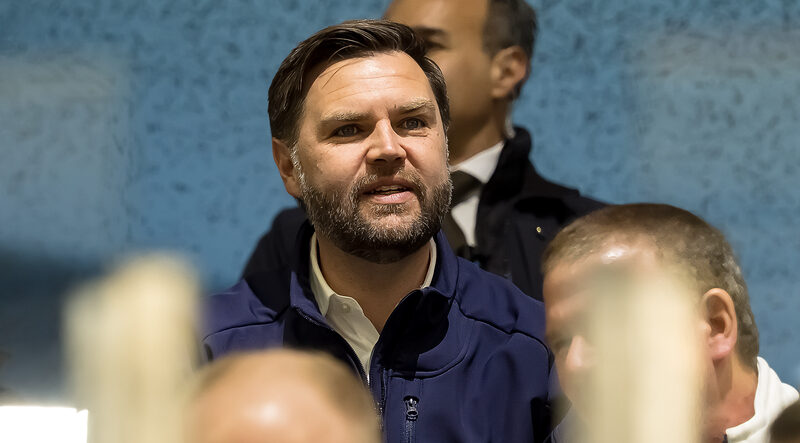
Vice President JD Vance appeared on “The View” on June 16, 2026, and faced sharp questioning from co-hosts Whoopi Goldberg and Sunny Hostin about the Trump administration’s handling of race and American history. What began as a book promotion for Vance’s new release, “Communion: Finding My Way Back to Faith,” quickly shifted to contentious policy issues that highlighted unresolved tensions over how the administration is reshaping public memory.
A Challenge Over Erased History
Goldberg noted that Vance has family members of color — his wife, Usha Vance, is Indian — and asked him directly how he feels watching the administration remove Emmett Till commemorations and other tributes to Black historical figures from public spaces. When Vance responded by asking what, exactly, she was referring to, the audience groaned audibly. Goldberg clarified her point, arguing that museums across the country are stripping out the actual documented history of slavery and the contributions of Black Americans. She said the administration is removing the true historical record of slavery and other difficult chapters while also denigrating Black Americans who have pursued the American dream.
Hostin said Black history was being erased, voting districts dismantled, and Black leaders sidelined, and she asked where Americans of color fit into the administration’s plans.
Vance Denies Erasure, Points to D.C. Crime Drop
Vance attempted to reframe Goldberg’s accusations into a cleaner question, asking whether she was alleging the administration is anti-minority or anti-Black. Goldberg immediately cut him off, insisting that was not what she said and joking that he was about to get her in trouble. The exchange drew laughter from the audience.
Vance pushed back, stating flatly that Black history is not erased from public spaces and insisting the administration celebrates Black history and all American history. He also argued that everyone is welcome in the Republican political coalition, regardless of whether they voted for President Donald Trump. As a counter-example of the administration’s commitment to Black communities, Vance pointed to Washington, D.C., describing the city as one of the most Democratic and one of the most heavily Black cities in the country. He cited what he called a radical decline in violent crimes, sexual assaults, and murders — a drop he attributed in part to the administration’s belief that every American deserves to live in a safe neighborhood. Trump had sent more than 2,100 National Guard personnel to the capital last August as part of the city’s crime reduction efforts.
Court Orders Contradict the Vice President’s Claims
Vance’s denial is noteworthy, since it came just four days after a federal judge on June 12, 2026, ordered the Trump administration to reinstall slavery and climate-related exhibits it had removed from national parks and monuments, ruling they did not align with the administration’s ‘preferred narrative.’ It was the second such court order — in February 2026, a separate judge had ordered the restoration of a slavery exhibit connected to enslaved people once owned by President George Washington. Both rulings directly contradicted Vance’s claim that Black history had not been erased from public spaces.
An executive order signed by President Trump directed the Department of the Interior to remove exhibits deemed to “inappropriately disparage Americans.” Trump himself criticized museums in a Truth Social post, claiming they had become bastions of “WOKE” ideology. Critics argue that framing has provided the justification for removing exhibits and signage specifically related to slavery and Black American history, including Emmett Till materials. The redrawing of maps in predominantly Black voting districts has added a separate but parallel dimension to the controversy, with opponents charging that the administration is systematically reducing the political power of Black communities alongside its changes to public history.
The on-air confrontation reflects a broader and ongoing dispute over how the Trump administration is reshaping the presentation of American history at federally managed institutions. The administration has been accused of altering slavery-related exhibits at Smithsonian museums and National Park Service locations, especially as those sites develop programming for America’s 250th birthday.
Warm Reception Despite Sharp Exchanges
When introduced, Vance received enthusiastic applause from the studio audience, a warmer welcome than anticipated given the show’s reputation as difficult terrain for Republicans. Despite the heat of the exchange, the overall atmosphere of the appearance was described as restrained and cordial, with Vance holding his ground without the confrontation escalating into open hostility. It marked Vance’s first time appearing on “The View,” and commentators observed that he emerged relatively unscathed despite being challenged. The audience’s initial applause indicated he had some support even in that environment. His book, “Communion: Finding My Way Back to Faith,” received far less attention than the heated policy discussion.
The debate over whether the Trump administration has helped or harmed Black Americans has been simmering since Vice President JD Vance claimed in 2025 that President Donald Trump had done more to protect Black lives than any leader in American history. On June 16, 2026, that unresolved argument resurfaced in one of television’s most combative studios — and this time, Vance had to defend it face to face.