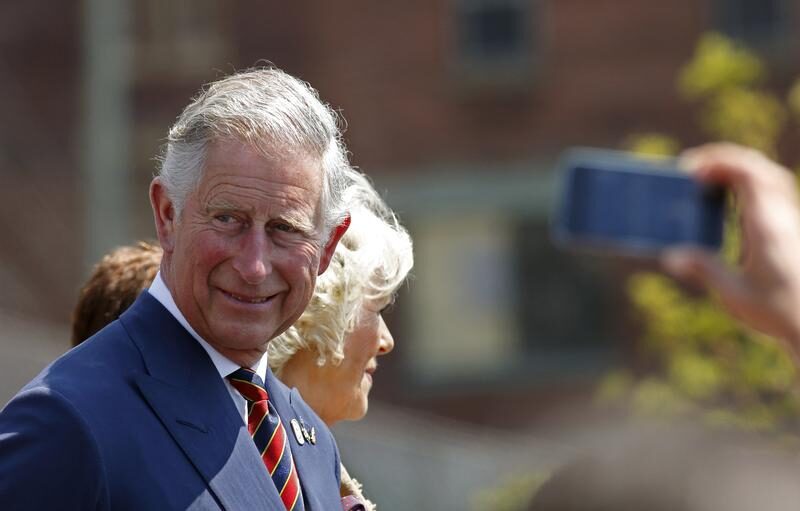
Since assuming the throne in 2022 after Queen Elizabeth’s death, King Charles III has consistently shown a readiness to depart from long-established royal customs, with his most recent announcement exemplifying this approach. In June 2026, Charles revealed he and Queen Camilla would continue living at Clarence House, their home since 2003, rather than moving into Buckingham Palace after its extensive restoration work concludes.
This choice to forgo the traditional monarch’s residence represents just one element of a broader transformation that has characterized the reign. Across multiple domains—from clothing choices to interfaith encounters—Charles has demonstrated comfort with revising protocols, some dating back half a millennium.
Historic Meeting With Pope Leo
Perhaps the most historically significant departure occurred during the October 2025 visit to Vatican City, when the king and Queen Camilla met Pope Leo. The two leaders prayed together in the Sistine Chapel, marking the first shared worship between a British sovereign and a pope since the 1500s. This moment carried profound weight given that England’s separation from the Catholic Church began in 1534, when King Henry VIII—unable to secure an annulment from Catherine of Aragon—severed ties with Rome and created the Church of England, declaring himself its Supreme Head. Nearly 500 years later, the current head of that institution joined the Bishop of Rome in prayer.
Personal Gestures Beyond Formality
Many changes have taken a more intimate form. At the June 2024 Trooping the Colour ceremony, the king positioned the Princess of Wales next to him at the Buckingham Palace viewing point—a spot traditionally reserved for the heir, Prince William. Both Charles and Kate were receiving cancer treatment that year, lending the arrangement symbolic resonance. Former royal butler Grant Harrold told OK! Magazine that balcony placement is deliberately planned: “I have a feeling the King said to Kate, ‘You stand next to me.'”
That warmth appeared once more in September 2025 when the Princess of Wales kissed the king on the cheek at Westminster Cathedral after the Duchess of Kent’s funeral—a public affectionate gesture uncommon at formal royal occasions. The king has additionally made headlines for embracing a fan during a Bradford visit, breaking established norms about physical contact with the public.
In late 2025, Charles granted William and Kate authority as Grantors of Royal Warrants, a power exclusively held by the sovereign and consort for 116 years. These warrants permit recipients to officially recognize businesses supplying the royal household, allowing those firms to display the royal warrant crest on their merchandise.
Simplifying Morning Meals
Even everyday routines have shifted. Tom Parker Bowles, Queen Camilla’s son who authored the 2025 book “Cooking and the Crown,” noted that Charles and Camilla have abandoned elaborate five-course royal breakfasts in favor of dried fruit and honey, calling it “a thoroughly modern, and healthy, start to the day,” expressing doubt that Queen Victoria would have found this acceptable.
A Different Kind of Coronation
The 2023 coronation ceremony showcased Charles’s willingness to adapt ancient ritual. While the event followed a structure outlined in the 14th-century Liber Regalis—a royal manual specifying coronation attire—the king made notable modifications. Instead of silk stockings and breeches worn by previous monarchs, he wore his Royal Navy trousers. He also reused garments from an earlier king’s coronation, invoking sustainability and efficiency in terms more typical of modern institutions than royal palaces.
Royal biographer Robert Hardman, who wrote “The Making of a King: King Charles III and the Modern Monarchy,” told PEOPLE in January 2024 that the king developed his leadership philosophy well before his accession. “He had his way of operating and he had his organizations and his charities, and there wasn’t a great rush to suddenly seize control,” Hardman said.
Unprecedented Public Access
In April 2024, the king opened previously private rooms at Balmoral Castle to public tours. Before this change, visitors could only tour the ballroom, grounds and gardens at the Scottish summer estate. Given that Queen Elizabeth died at Balmoral in 2022, the decision to expose its private quarters carried particular significance, reflecting a commitment to greater openness even regarding spaces laden with recent family history.
These accumulated choices—affecting residence decisions, ceremonial clothing, religious observance, and daily routines—reveal a sovereign who came to power with defined intentions about the role’s execution and has proceeded without significant hesitation.