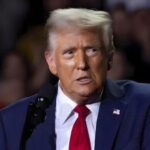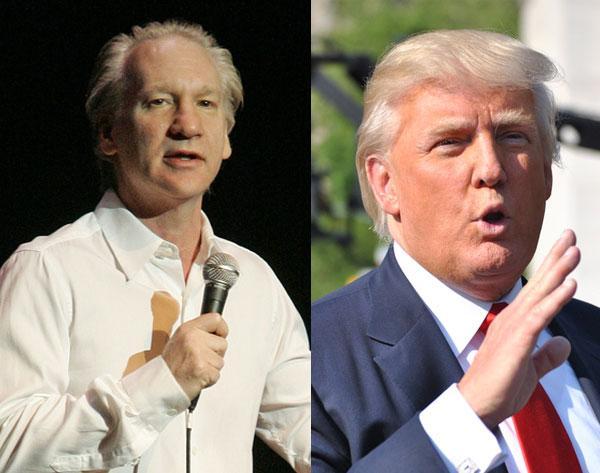
A text message from President Donald Trump was enough to make Bill Maher take it back on the air. The 70-year-old comedian, who hosts HBO’s “Real Time with Bill Maher,” gave over part of his August 28, 2026, program to retracting a claim he had made about the endorsement record of the 80-year-old president — who had picked up his phone and challenged it directly.
The offending line came seven days earlier, on his August 21 broadcast, when Maher told his audience: “Trump used to win all of his endorsements; now he’s winning almost none of them.” Of everyone watching, it reached the one viewer least willing to let it slide.
A viewer had taken serious offense at the remark and reached out to him personally, Maher told viewers — then wasted little time identifying that viewer as the president. He and Trump trade text messages, Maher said, and he is glad they do, because he would rather have communication. Trump’s reply arrived with charts and a pile of information, according to Maher, who had pledged to say so on the air if his own claim did not hold up.
It did not. The president was right, Maher concluded. “I did overstate it,” Maher said. His assertion from the week before was simply untrue, he told viewers, before wondering aloud whether avoiding being a jerk about everything was really so hard.
The Numbers Behind the Retraction
Trump’s own accounting supplied the statistics Maher recited on air. Only nine of the 260 candidates he has endorsed this election cycle have been beaten in their primaries, the president’s figures showed — a 97 percent success rate. Maher granted the point, telling his audience that Trump’s endorsements are still very powerful.
Broader tallies land in much the same territory. Ballotpedia, counting more widely, credits Trump with 313 endorsements overall and a 96 percent win rate. The president himself boasts of a perfect 100 percent record in Senate primaries and 98 percent in House races, and on Truth Social he has pushed the claim further still, asserting a 99 percent endorsement success rate and calling it the strongest endorsement record in political history.
Maher did not abandon his broader thesis altogether. His argument concerned the trend line, he said, and he sees it heading downward, pointing to five governorships Trump lost. Republican primary voters have rejected 10 Trump-endorsed candidates for statewide office or Congress this season, according to a CNN analysis built on endorsements compiled by Ballotpedia — as many as lost across the 2018, 2020 and 2024 primaries combined.
Maher weighed both sides of the ledger, too. Trump contends, by Maher’s account, that some of his defeats come from loyally backing candidates who were doomed anyway, and Maher said he does not doubt that part of that is true. Even so, the president inflates the figure by choosing easy winners, Maher argued — incumbents and contenders facing little or no opposition among them.
South Carolina and Oklahoma Wins
Two recent contests came up in Maher’s telling as proof that Trump’s political muscle remains intact where it counts. Sen. Darline Graham, 62, sister of the late Sen. Lindsey Graham, had taken the South Carolina seat after her brother’s unexpected death on July 12, and she went on to capture the Republican Senate runoff over Rep. Ralph Norman on August 25. Maher, blunt as ever, called her “Lindsey Graham’s know-nothing sister” — then conceded that Trump is still a star when he turns up in a place like that, and that voters come out for him.
In Oklahoma, the president’s pick, Mike Mazzei, squeaked out a primary victory. Maher closed out his revised stance with the observation that his original line had allowed for less complication than the full picture holds — but that, yes, he had overstated it. He delivered the correction during a roundtable discussion that featured Rep. Byron Donalds.
Trump Escalates With NBC
The president is waging a wider campaign against journalists who describe his endorsement record as anything short of dominant, and the apology amounts to one front in it. Trump has called for NBC “Meet the Press” host Kristen Welker to be rebuked or punished after she said, during a pre-show appearance on Washington’s local NBC station, that his endorsement results have been mixed. On Truth Social, Trump labeled her remark a “purposeful inaccuracy” and urged Federal Communications Commission (FCC) Chairman Brendan Carr to take seriously what he described as a threat to the country. Welker, who has anchored the program since 2023, has been publicly backed by NBC, which called her one of the best in the business. The Maher clip was circulating widely online as the president lodged his FCC complaint.
Years of volatility sit behind the Maher-Trump dynamic. A private dinner with Trump at the White House brought Maher criticism in March 2025, and he afterward described the president as gracious and measured. Since then the two have traded jabs on social media and television on and off, Maher alternating between praise and ridicule before he eventually raised a white flag on the feud. A ceremony at Washington’s Kennedy Center on June 28 saw Maher accept the Mark Twain Prize for American Humor.
Maher kept the last word despite all the concessions. He had granted the math, defended the open line to the president and delivered his correction on the air as promised, and he closed the segment with a one-line request aimed squarely at the White House: “Now, stop texting.”