President Donald Trump’s name now appears in large lettering on the headquarters of the US Institute of Peace in Washington, marking one of the most contentious renamings of his second term. The State Department announced Wednesday, Dec. 3, that the independent agency would now be called the Donald J Trump Institute of Peace, describing the president as “the greatest dealmaker in our nation’s history.”
The rechristening comes as the administration continues a months-long legal battle over control of the institution, which Congress established in 1984 to promote peace internationally and resolve violent conflicts globally. The timing of the name change appeared calculated to coincide with a peace agreement signing ceremony on Thursday between the presidents of Rwanda and the Democratic Republic of Congo at the newly renamed building.
Secretary of State Marco Rubio endorsed the decision on social media, saying Trump is the President of Peace, and it was time for the State Department to display that.
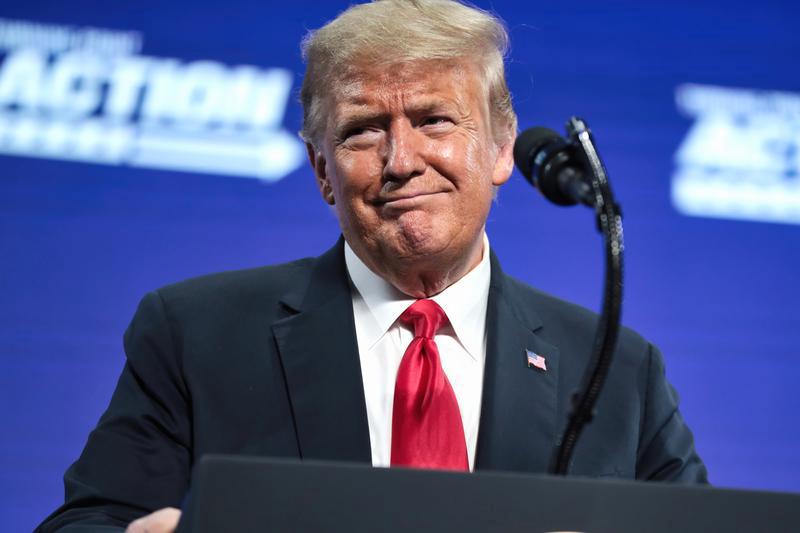
At Thursday’s signing ceremony, Trump acknowledged the renaming with evident satisfaction, noting that the announcement caused a significant reaction and calling it an honor to have his name displayed on the building.
The renaming represents the latest chapter in a turbulent year for the nonpartisan institution. In March, officials from the Department of Government Efficiency attempted to forcibly access the building, an incident that set off a cascade of legal challenges. The administration fired most of the institute’s board that same month, followed by employee terminations in July after initial notices went out in late March.
The legal battle has created a jurisdictional ping-pong game over the building and its assets. A federal district court overturned the administration’s takeover in May, temporarily restoring control to the institute’s leadership. However, an appeals court reversed that decision, allowing the government to maintain control while litigation proceeds. The building has since been transferred to the General Services Administration, which manages federal properties.
In June, a three-judge panel on the US Court of Appeals for the DC Circuit temporarily halted a lower court’s ruling that had stopped the administration from shutting down the institute. The appeals court concluded that the president would suffer irreparable harm by being prevented from fully exercising executive authority and indicated that the government is likely to prevail in its constitutional challenge. An appeals court hearing on the merits had been scheduled for this month, but has been postponed.
George Foote, an attorney representing former leaders and staff of the institute, strongly condemned the renaming. “Renaming the USIP building adds insult to injury.” He said that a federal judge has already found the government’s armed takeover to be unlawful, but that ruling is on hold during the government’s appeal, which is the only reason the government still controls the building. He also said the legitimate owners will eventually win and return both the U.S. Institute of Peace and the building to the roles and purposes set out in law.
The institute has maintained that it is an independent creation of Congress and therefore outside presidential executive authority. The research arm of Congress notes the agency has served as an intermediary among foreign governments, civil society, and US government officials, working in conflict zones with stakeholders at various levels. The administration, by contrast, argues the institute is an executive branch organization subject to presidential control.
White House spokesperson Anna Kelly defended the move, claiming the institute was once a bloated, useless entity that spent significant resources while delivering no peace. She maintained that the institute’s new name will serve as a strong symbol of how decisive leadership can promote international stability. Trump has asserted that he brought eight wars to a close while in office, though there is no clear agreement on how many conflicts actually ended during his presidency.
The Thursday signing ceremony between Rwanda’s President Paul Kagame and the Democratic Republic of Congo’s President Felix Tshisekedi marked the second time Trump hosted the leaders for a peace deal, having previously done so in June. High-ranking officials from several African nations and Middle Eastern countries attended the event at the renamed building.
The institute’s website remained largely unchanged following the announcement, though its lead item promoted the historic peace agreement signing. The renaming adds to a series of rebranding efforts during Trump’s second term, though this case stands apart due to the ongoing litigation over the very existence and control of the institution bearing his name. The legal battle is expected to continue in the federal appeals court, with a final decision on the institute’s fate still pending.
For now, visitors to the building near the State Department can see Trump’s name displayed prominently in large block capitals above the original building name, a physical manifestation of the administration’s contested claim to an institution originally designed to operate independently of executive control.