A tense confrontation on the White House lawn Saturday afternoon captured the gap between President Donald Trump’s declarations of total victory over Iran and the persistent reality that the Strait of Hormuz — the world’s most critical oil chokepoint — remained effectively shut down more than six weeks into the conflict.
The heated exchange came as American and Iranian negotiators were locked in marathon talks in Islamabad, Pakistan, that had already exceeded 21 hours and would continue into Sunday. The two nations remained deeply divided. Washington’s sole focus was reopening the waterway. Iran was insisting on terms that included its right to enrich uranium and an end to Israeli strikes in Lebanon — conditions the U.S. had rejected.
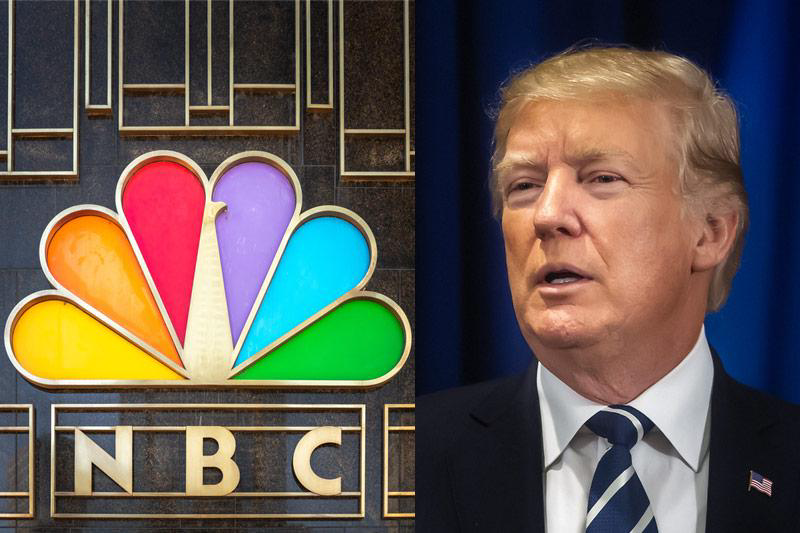
The incident occurred at approximately 5 p.m. ET on April 11, 2026, when Trump paused to take questions from the press before leaving for Joint Base Andrews. An NBC News reporter asked why the Strait of Hormuz still wasn’t open despite weeks of military action. Trump’s response was immediate and dismissive.
“Why do you say that? You don’t know anything!” Trump snapped at the reporter. He demanded to know her outlet. When she said NBC News, he called it “fake news.”
Instead of addressing the question about the stalled Strait of Hormuz, Trump launched into sweeping claims of military dominance. He said the United States had sunk 158 Iranian ships and completely destroyed Iran’s conventional forces. He declared that Iran had no navy, no radar, no air force, and that Supreme Leader Ayatollah Ali Khamenei was dead.
“We win, no matter what,” Trump told the gathered press. “We’ve defeated their military. They have no navy. They have no radar. They have no air force. Their leaders are all dead. Khamenei is gone. For many years he ruled; he’s gone. With all of that, let’s see what happens — but from my standpoint, I don’t care.”
Yet Trump’s victory speech sidestepped the core of the reporter’s question. The Strait of Hormuz — through which roughly 20% of the world’s oil flows — remained closed at the time. Reports indicated Iran could not even locate the mines it had placed in the waterway, creating an obstacle even after Iran’s conventional military had been neutralized.
The strategic problem was clear. Operation Epic Fury, which began February 28, 2026, with coordinated American and Israeli airstrikes, had killed Khamenei and destroyed Iranian military facilities, nuclear sites, and much of the country’s conventional capability. But Iran’s asymmetric countermove — mining and closing the Strait of Hormuz starting March 4 — proved far more difficult to reverse than the targets the U.S. had already destroyed.
Before the war, hundreds of ships transited Hormuz daily. Since the conflict began, fewer than 10 ships a day had been able to make the passage on most days. Iran had even begun charging vessels millions of dollars in tolls, turning the waterway into a wartime revenue stream.
The economic damage was spreading fast. Gas prices had climbed more than $1.20 per gallon since the war began, hitting a national average of $4.12 — a 38% increase. The International Energy Agency called the disruption the “largest supply disruption in the history of the global oil market.” The Federal Reserve Bank of Dallas compared its economic impact to the oil shocks of 1973, 1979, and 1990.
By Monday, following the failed talks in Pakistan, the U.S. Navy imposed a full blockade on Iran’s ports. Oil prices surged toward $100 per barrel. Brent crude for June delivery jumped more than 4% to $99.56, while U.S. crude futures climbed nearly 3% to $99.37 per barrel.
JPMorgan Chase analysts warned that the last tanker to clear Hormuz before the closure on February 28 was expected to reach its destination around April 20, marking the point when pre-closure oil barrels would be fully exhausted from the global supply chain.
The war had more than doubled the price of kerosene-based products like diesel and jet fuel. The 30-year mortgage rate climbed to 6.38%, and the 10-year bond yield jumped to 4.46% — its highest level since July 2025. Stock markets declined globally.
Fertilizer supplies were also disrupted. The Persian Gulf accounts for roughly 30% to 35% of global urea exports and up to 30% of internationally traded fertilizers normally transit through Hormuz. With the spring planting season underway, the disruption threatened to reduce U.S. corn yields and push global food prices higher well into 2027. Global fertilizer prices were projected to average 15% to 20% higher during the first half of 2026.
Gulf Cooperation Council states that depend on the strait for more than 80% of their food imports faced what was described as a “grocery supply emergency.” By mid-March, 70% of the region’s food imports had been disrupted, forcing retailers to airlift staples and triggering consumer price spikes of 40% to 120%.
Trump’s aggressive rhetoric toward Iran and the press had been escalating for weeks. On Truth Social, he had warned that “all US Ships, Aircraft, and Military Personnel” would remain in place around Iran until a “REAL AGREEMENT” was reached. He added that if the agreement was not honored, “the Shootin’ Starts bigger, and better and stronger than anyone has ever seen before.”
In interviews with Axios and ABC News, Trump said there was a “good chance” of a deal but warned that if talks failed, “we’re blowing up the whole country.” He had previously issued multiple deadlines for Iran to reopen the strait, extending them each time before escalating with new threats against Iran’s energy infrastructure and bridges.
Sen. Tim Kaine, D-Va., responded to Trump’s rhetoric a week earlier on NBC News’ “Meet the Press,” calling it “embarrassing and juvenile.” Kaine said, “People see this president as having blundered into a war with no clear rationale, and there’s no amount of cursing or boasting or tough talk that will cover up for the fact that this president didn’t have a rationale and he doesn’t really have a plan.”
Minutes after his confrontation with the NBC reporter, Trump boarded Marine One en route to Joint Base Andrews. His destination: Miami, where he attended UFC 327 at the Kaseya Center — his first appearance at a sporting event since the Iran war began.
Trump had been absent from the Super Bowl and the Winter Olympics in Italy earlier in 2026, skipping both as the military campaign consumed his schedule. The last major sporting event he had attended was the College Football Playoff national championship game on January 19. UFC 327, featuring Jiri Prochazka vs. Carlos Ulberg, marked his return to the public sporting scene. He was joined by Secretary of State Marco Rubio, UFC CEO and President, Dana White, and several of his children and grandchildren.
Before departing, Trump offered one more comment to reporters about the broader conflict: “We’re in very deep negotiations with Iran. We win regardless. We’ve defeated them militarily. Whether we make a deal or not makes no difference to me. And the reason is because we’ve won, whether you listen to the fake news or not.”
Trump’s insistence that the war was already won found little support among America’s traditional allies. European leaders from Berlin to London expressed reservations about Trump’s demands for military support to reopen the waterway. German Defense Minister Boris Pistorius captured the mood bluntly: “This is not our war, we have not started it.”
White House Press Secretary Karoline Leavitt pushed back, arguing that allied nations “are benefiting greatly from the United States military taking out the threat of Iran” and should do more to help reopen the strait. Iranian Foreign Minister Abbas Araghchi offered Tehran’s own spin, writing on Telegram: “From our perspective the Strait of Hormuz is open, and only closed to enemies.”
Against that backdrop, the NBC reporter’s question about why the strait still wasn’t open seemed less like “fake news” and more like the most pressing question anyone could ask. Trump’s answer — that the reporter knew nothing — left the actual question unanswered.