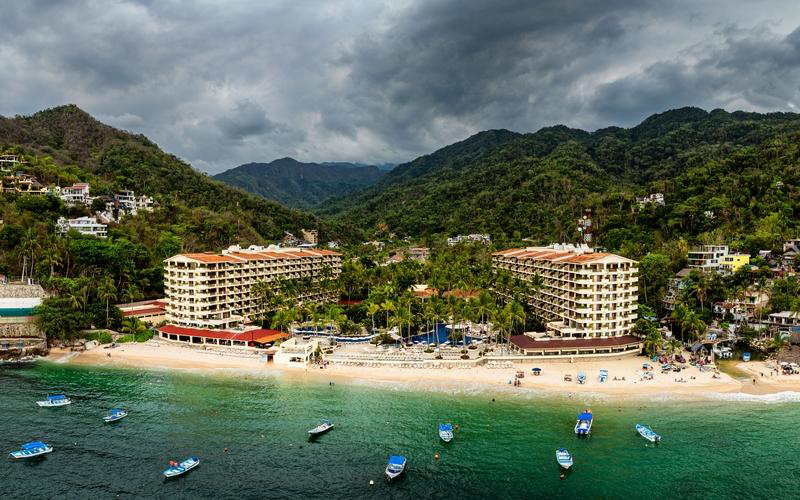
Authorities in Puerto Vallarta, Mexico, have formally rejected the serial killer theory after investigating the deaths of three women whose bodies were discovered in isolated areas over an 11-day span — even as the cases continue to rattle a beach resort city that draws millions of American tourists each year.
The grim sequence began on May 10, 2026, when the first woman’s body was discovered near Rancho El Piruli, a well-known viewpoint in Chimborazo. Five days later, a second victim was found at a roadside stop along the highway to Mismaloya. A third body was discovered on a dirt road in the Parque Las Palmas neighborhood on May 22, with tattoo markings around the neck, hand and arm — a skull, a woman with horns, and a name.
All three victims appeared to be in their 20s to mid-30s and were found partially undressed in isolated areas on the fringes of one of Mexico’s most popular travel destinations.
Serial Killer Theory Officially Rejected
The Jalisco State Prosecutor’s Office moved quickly to tamp down the most alarming interpretation of the cases. In a statement on Wednesday, May 27, officials declared there were “no objective elements or scientific evidence to establish the existence of a serial aggressor against women” in Puerto Vallarta.
The announcement did not close the investigations into the individual deaths, which remain active. Detectives are still reviewing surveillance footage from highways and outlying neighborhoods, examining forensic evidence, and conducting interviews.
Yussara Canales, representing Puerto Vallarta’s 5th district, claims officials are deliberately downplaying the connection to protect the image of the city before the World Cup.
Third Victim Tentatively Identified
The third woman — whose distinctive tattoos had driven speculation on social media — has been identified as Elizabeth Garlindo Martinez, a 22-year-old resident of the State of Mexico who went missing in late April. The identification, reported by El Occidental and OAN, has not been formally confirmed by authorities, who have not yet publicly released the names of the dead pending family notification.
If confirmed, the identification would introduce a significant complication to the original pattern theory: Elizabeth Martinez was 22 years old — not in her 30s as the cases’ supposed age similarity had suggested.
A Tourist Haven Under Strain
Before this month, Puerto Vallarta was synonymous with pristine Pacific beaches, all-inclusive resorts and a steady stream of American visitors. The city closed out 2025 with more than six million tourists, the bulk of them from the United States, according to local reporting.
That reputation has taken successive hits. In February, the broader region was rocked by an explosion of cartel violence after the death of Jalisco New Generation Cartel leader El Mencho in a military operation. Members of the cartel burned buses, looted shops and erected hundreds of roadblocks in retaliation, effectively shutting down Guadalajara. Terrifying footage captured tourists fleeing through the Guadalajara airport as armed cartel members stormed the travel hub. Thousands of tourists and locals bunkered down in homes and hotels as gunfire stretched on for hours.
Industry insiders say the convergence of cartel unrest and the homicide investigations is forcing a recalibration for American travelers eyeing Mexico’s Pacific coast. Paul Tumpowsky, CEO of Fora Travel, urged visitors to maintain “a heightened sense of awareness, not to the point of ruining your vacation, but being smart.” He told the New York Post that visitors should “think about and plan a little bit more about what’s the appropriate amount of risk you’re willing to take.”
World Cup Security Concerns
The timing could hardly be worse for Mexican officials. The country is gearing up to co-host the FIFA World Cup, with the tournament set to kick off June 11. Nearly 100,000 police, soldiers and guards will be deployed to protect fans across three Mexican stadiums — in Mexico City, Monterrey and Guadalajara — with the massive security footprint extending to fan zones, airports and transport hubs.
Whether the three deaths are connected remains under investigation. What is clear is that a city that built its global brand on safety and sunshine is now contending with a far darker story — and that, even without an official serial killer, the questions surrounding three women found dead in isolated areas over 11 days are far from answered.