Barry Blaustein, the comedy writer whose decades-long partnership with Eddie Murphy produced some of the most enduring sketches in “Saturday Night Live” history and a string of blockbuster films, died on Tuesday, May 12, 2026. He was 71.
His death was confirmed by Chapman University’s Dodge College of Film and Media Arts, where Blaustein had taught screenwriting since 2012. He had battled Parkinson’s disease for nearly a decade, having been diagnosed in 2017, and was told last month that he had stage 4 pancreatic cancer, according to reports.
Stephen Galloway, the dean of Dodge College, remembered him as a writer who understood comedy’s full emotional register.
“Barry understood what made comedy function better than anyone I know. He knew that it includes darkness as well as light. And yet it was the light that filled his last years. Even as he declined with Parkinson’s, he showed a positivity that always stunned me. He’ll be remembered as a wonderful writer, but an even more wonderful human being,” Galloway said in a statement.
A Partnership That Reshaped Late Night
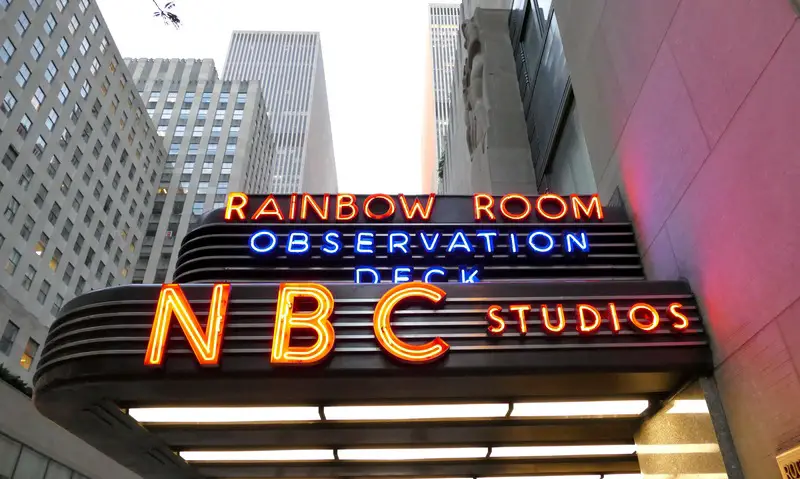
Born Barry Wayne Blaustein on September 10, 1954, he grew up on Long Island, New York, and graduated from W.T. Clarke High School before earning a Bachelor of Arts degree from New York University. An internship at NBC News in New York opened the door to the industry that would define his career.
Blaustein and writing partner David Sheffield were hired at “Saturday Night Live” ahead of its sixth season in 1980, the same year a young Eddie Murphy joined the cast. The trio clicked almost immediately. Blaustein and Sheffield began writing exclusively for Murphy, and together they built a roster of characters that would define a generation of sketch comedy: Gumby, Buckwheat, Mr. Robinson, Velvet Jones and James Brown’s Celebrity Hot Tub.
The Mr. Robinson sketches, a sly send-up of children’s host Fred Rogers, eventually drew a personal visit from the man himself.
“Mr. Rogers actually came up to the offices one day,” Blaustein told NPR’s Terry Gross in a 2000 interview. “He basically said, ‘You’ve had your fun, now stop doing the sketches.’ We were tired of doing them anyway.”
From Studio 8H to the Big Screen
The collaboration with Murphy expanded onto the big screen and stayed there for decades. Blaustein and Sheffield co-wrote “Coming to America” in 1988, the romantic comedy that became one of Murphy’s signature films, and returned more than three decades later for its sequel, “Coming 2 America,” in 2021.
In between came “Boomerang” in 1992, “The Nutty Professor” in 1996 and “Nutty Professor II: The Klumps” in 2000 — a run of studio comedies that placed Blaustein’s voice at the center of mainstream Hollywood for the better part of two decades. He later directed “The Ringer,” the 2005 comedy starring Johnny Knoxville and Katherine Heigl, and the 2010 ensemble feature “Peep World,” which he shot in 21 days for about $1 million.
The Wrestling Film That Became His Favorite
For all the marquee comedies, Blaustein often said the project closest to his heart was “Beyond the Mat,” the 1999 documentary he directed about the bruising realities behind professional wrestling. The film followed Mick Foley, Terry Funk and Jake “The Snake” Roberts through the physical toll and personal cost of life in the ring, and it remains one of the most respected works in the genre.
Blaustein called it the favorite thing he had ever done. He was able to make the documentary, he once explained, because he had accrued such goodwill with Imagine Entertainment partners Ron Howard, Brian Grazer and Michael Rosenberg, and was so passionate about the subject matter.
A Second Act in the Classroom
Blaustein joined Chapman University’s Dodge College of Film and Media Arts as a screenwriting professor in 2012, beginning a second career that he embraced with the same enthusiasm he had brought to “SNL.” Students and colleagues remembered him as a mentor who treated the craft seriously and his pupils as collaborators.
“I find teaching students really inspiring, and I hope to make them better writers, because I know they make me a better writer,” Blaustein said.
After his 2017 Parkinson’s diagnosis, he grew increasingly open about the disease, speaking publicly on behalf of the Parkinson’s Foundation and using his platform to demystify the illness for others living with it. Even as his health declined, those around him described a writer who refused to surrender his humor or his generosity.
Tributes from former students, comedians and longtime collaborators have poured in since the announcement of his death, a measure of a career spent making other people funnier — first a rising star at 30 Rock, then a generation of screenwriters who never got to share an office with him but absorbed his lessons all the same.