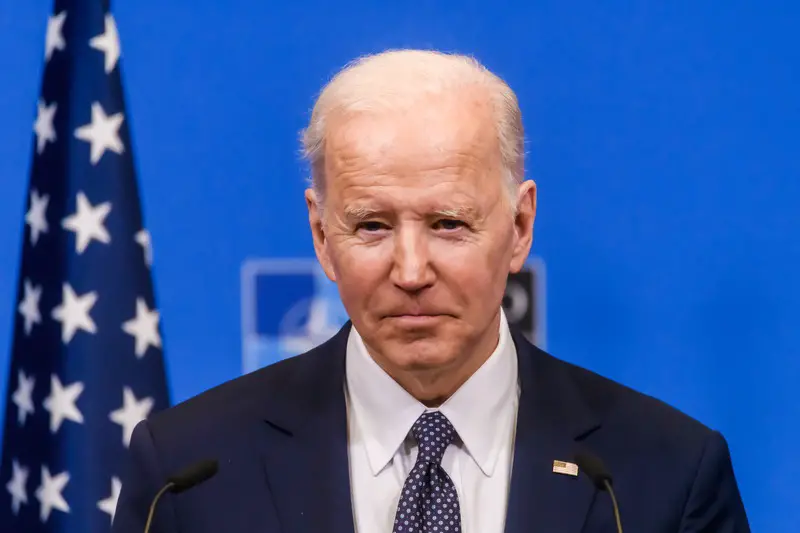
Joe Biden sued the Justice Department on Tuesday, May 26, 2026, in a sweeping effort to block federal officials from releasing audio recordings and transcripts of private interviews that captured the former president’s memory lapses and ultimately helped sink his 2024 re-election bid.
The lawsuit, filed in federal court in Washington, D.C., targets a planned June 15 disclosure of the materials to the Republican-led House Judiciary Committee and the conservative Heritage Foundation. Without judicial intervention, Biden’s attorneys warn, deeply personal recordings made during the preparation of his 2017 memoir will become public within weeks.
At the heart of the dispute are conversations Biden had between 2015 and 2017 with Mark Zwonitzer, the ghostwriter who collaborated with him on his memoir “Promise Me, Dad: A Year of Hope, Hardship, and Purpose.” Those tapes, recorded during and after Biden’s tenure as Barack Obama’s vice president, were later swept up by special counsel Robert Hur as part of his investigation into Biden’s handling of classified materials.
A Reversal Inside the Justice Department
For years, the Justice Department fought to keep the recordings sealed, arguing they were exempt from disclosure under the Freedom of Information Act. That posture has now collapsed. According to the complaint filed by Biden attorney Amy Jeffress, “the Department has reversed that position” under President Trump.
The shift began in February 2026, when the department notified Biden’s legal team it intended to hand over the audio and transcripts to the plaintiffs in the FOIA action brought by the Heritage Foundation. On May 5, the Office of the Deputy Attorney General delivered the final word: the materials would be released, with limited redactions, to the Heritage plaintiffs and to Congress on June 15.
Biden’s attorneys argue the about-face came without any formal explanation and tramples on basic privacy protections. “President Biden—like every American—has a right to privacy in personal conversations he had within his own home,” the lawsuit states, calling the planned release an “unwarranted invasion of President Biden’s privacy.”
The Hur Report and Its Fallout
Hur, a Republican appointed by Attorney General Merrick Garland, spent five hours questioning Biden in the days after the October 7, 2023, Hamas attack on Israel. His 345-page report, delivered in February 2024, concluded that Biden had “willfully retained and disclosed classified materials after his vice presidency when he was a private citizen,” including documents touching on military and foreign policy in Afghanistan.
Hur declined to bring charges. But his portrait of the then-81-year-old president as “a sympathetic, well-meaning, elderly man with a poor memory” detonated through Washington and accelerated questions about Biden’s fitness for office. Months later, Biden withdrew from the race and endorsed Vice President Kamala Harris, who lost to Trump and JD Vance in November.
Biden pushed back fiercely at the time. “My memory is fine,” he told reporters at a February 2024 press conference, noting his Hur interview unfolded as he was “in the middle of handling an international crisis.” A portion of the audio leaked last year, and White House officials had earlier denied the memory lapses the recordings appeared to confirm.
Heritage Foundation Pushed for Records
The Heritage Foundation filed its FOIA request in 2024, seeking the underlying records Hur leaned on for the most damaging passages of his report — sections that described the interview as “painfully slow, with Mr. Biden struggling to remember events and straining at times to read and relay his own notebook entries.” The transcript also showed Biden at times fuzzy about dates and details, and acknowledging he was unfamiliar with the paper trail for some sensitive documents he had handled.
Republicans seized on the report to argue Biden was being given a pass by his own Justice Department. The Republican-controlled House voted in 2024 to hold Garland in contempt of Congress after the White House asserted executive privilege to shield the audio from lawmakers.
A Justice Department spokesperson framed the new disclosure plan as a corrective. The previous administration, the spokesperson said, “tried to hide audio recordings that clearly demonstrate a significant decline in his cognitive abilities as far back as 2016.” Trump’s Justice Department, the spokesperson added, would “fight to ensure the American people can hear these recordings and draw their own conclusions about the former President’s mental acuity before he sought the presidency.”
An Echo of the Trump Documents Case
The legal clash unfolds against a backdrop laced with irony. Trump himself was investigated by special counsel Jack Smith over classified documents removed to his Mar-a-Lago estate in Florida — a case ultimately dismissed by Judge Aileen Cannon. Trump has repeatedly branded Biden “a Crooked Politician” over his own document handling.
Jeffress emphasized in the suit that the Zwonitzer conversations covered the period beginning at Thanksgiving 2014 — “among the most consequential of President Biden’s political life and the most painful of his personal life,” a reference to the death of his son Beau. The lawsuit notes the Justice Department obtained that material only because it conducted a criminal investigation.
Biden, 83, has kept a modest public schedule since leaving office, most recently delivering remarks at a Chicago tribute for civil rights leader Jesse Jackson on March 6. Unless a judge intervenes, the recordings he has spent years trying to keep private will be in the hands of his political adversaries in less than three weeks.