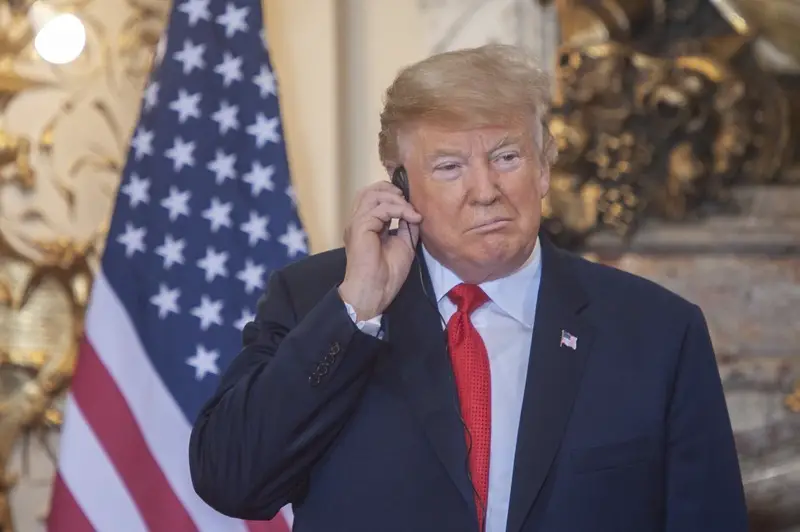
A massive U.S. bombing campaign against Iran could begin soon if nuclear negotiations collapse, President Trump warned Tuesday, May 19, 2026, revealing that he came within an hour of launching strikes before backing down under pressure from Middle Eastern partners.
“I was an hour away from making the decision to go today,” Trump said at the White House, claiming Iranian leaders are “begging for a deal” while threatening that American forces would launch a fresh assault in the coming days without an agreement.
Just a day earlier, on May 18, Trump had called off a Pentagon strike operation scheduled for Tuesday after leaders from Qatar, Saudi Arabia, and the United Arab Emirates urged restraint. While stating that “serious negotiations” were in progress, the president directed the military to stand ready for a “full, large scale assault” at any moment.
A Ceasefire on Life Support
A tenuous ceasefire reached in mid-April has deteriorated over recent weeks. Trump characterized the truce as on “life support” last week following firefights between U.S. and Iranian forces. The conflict erupted nearly three months ago on February 28, when the United States and Israel launched coordinated strikes on Iran’s nuclear facilities, wreaking devastation across the region.
In recent days, Trump has held conversations with Israeli Prime Minister Benjamin Netanyahu and Chinese President Xi Jinping regarding the crisis. Turkey’s Foreign Minister Hakan Fidan, speaking in Berlin last week, said the immediate focus of U.S.-Iran talks was maintaining access through the Strait of Hormuz, although Iran’s nuclear program remains the core concern.
Fidan said the February strikes on Iran’s nuclear facilities left much of Iran’s enriched uranium that could be weaponized buried beneath collapsed tunnels. The U.S. has said it is closely monitoring any movements around the stockpile.
Oil Markets Shudder as Deadlines Loom
Each new Trump statement has sent energy markets into gyrations. U.S. crude oil prices surged from $112 to approximately $114 per barrel on April 6 when Trump spoke at a news conference, then retreated slightly. During that appearance, the president established an 8 p.m. ET deadline the next day for Iran to reopen the Strait of Hormuz and vowed to destroy Iranian energy infrastructure.
“We’re giving them till tomorrow, 8 o’clock Eastern time, and after that, they’re going to have no bridges. They’re going to have no power plants,” Trump declared, triggering Iranian warnings of a “more severe and expansive” response.
Israel’s recent strikes have already inflicted heavy damage on Iran’s energy sector. Heavy smoke and fires were observed at the South Pars Petrochemical Complex in Asaluyeh, Bushehr province in southern Iran. Israel’s defense minister, Israel Katz, said the facility accounted for approximately 50 percent of Iran’s petrochemical production. South Pars is located above the world’s largest gas field beneath the Persian Gulf.
Tehran’s Counteroffer and Suspicions
Tehran’s most recent peace proposal calls for ending hostilities on all fronts, including Lebanon, the exit of U.S. forces from areas close to Iran, reparations for destruction caused by the U.S.-Israeli attacks, the lifting of sanctions, the release of frozen funds, and an end to the U.S. marine blockade, Iranian officials say. Trump has publicly dismissed the proposal as “garbage.”
Deep mistrust persists in Tehran. Following an American operation to rescue a downed F-15E crew over Iran, Iranian Foreign Affairs Ministry spokesperson Esmail Baghaei alleged the mission in Kohgiluyeh and Boyer-Ahmad province may have been a front for an attempt to steal nuclear material. Iranian lawmaker Ebrahim Azizi and judiciary spokesman Kazem Gharibabadi have both warned of consequences for any new attack.
Political Pressure Mounts at Home
With congressional elections approaching in November, Trump is under mounting political pressure to secure an agreement that would reopen the Strait of Hormuz, a vital chokepoint for global oil supplies. The president’s approval rating has dropped sharply amid elevated gas prices.
Vice President JD Vance adopted a more cautious tone Tuesday, saying both Washington and Tehran had achieved significant progress and neither wanted the military campaign to resume. Vance noted the challenges of negotiating with Iran’s divided leadership and emphasized that one goal of Trump’s approach is to stop a nuclear arms race from engulfing the region.
Defense Secretary Pete Hegseth and Joint Chiefs of Staff Chairman Dan Caine have repeated warnings that Iran will face a decisive military response if negotiations fail. The world now watches and waits to see whether Trump will strike a deal or pull the trigger.