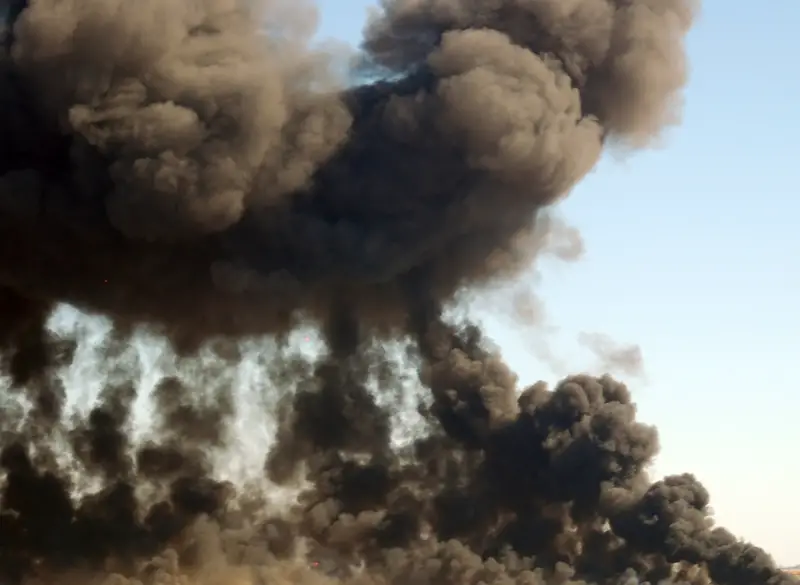
Ethnic armed group officials and witnesses on the ground confirmed that dozens were dead following an accidental detonation of mining explosives in a rebel-held village in northern Myanmar on May 31, 2026, which also destroyed hundreds of homes and sent a mushroom cloud of smoke into the sky.
The Ta’ang National Liberation Army (TNLA), which controls Kaung Tat village near the Chinese border, issued an official hospital tally on June 1, 2026, showing 39 dead and 75 injured. However, local media and witness accounts placed the death toll at about 55 people, with the discrepancy yet to be reconciled as rescue crews continue digging through the rubble.
Reports from the BBC and the Shwe Phee Myay News Agency said the dead included 25 women and 30 men, with dozens more wounded.
A Village Reduced to Rubble
The catastrophic blast struck Kaung Tat at noon local time, when the village was active, and residents were going about their day. The TNLA, which is currently observing a ceasefire with the Myanmar military, confirmed that the material that detonated had been stored “for use in mining operations.”
TNLA spokesperson Lway Yay Oo said more than 200 homes had been damaged in the blast, with local journalists reporting that over half of the village’s houses were destroyed outright, plus another 100 homes damaged in nearby Pan Lone village. Buildings near the center of the detonation were pulverized, with witnesses saying not even the wooden house posts remained standing.
“We deeply apologize for this accident, which has resulted in a tragic loss of lives and immense devastation,” Lway Yay Oo said, adding that the group would work to prevent any repeat of the tragedy and hold those responsible accountable.
The Palaung State Liberation Front/TNLA, as the group is also known, expressed condolences to the families of the dead and injured in a Telegram post. The explosion was being investigated, the group said, and relief, healthcare and rehabilitation services would be provided to affected families as soon as possible.
Witnesses Describe the Aftermath
Resident Moe Z, who was traveling with a group of friends on a road about 1.5 miles away when the explosion happened, said a massive cloud of smoke billowed into the sky almost immediately. The group initially thought the blast might have been an airstrike, but the absence of follow-up explosions made them wonder whether a large unexploded bomb had detonated.
“Based on the explosive force and the sound we witnessed, this was no small explosion; it wasn’t the scale of a drone-drop bomb,” Moe Z said, referencing a tactic that has become common in Myanmar’s civil war.
Amid the human carnage, residents and survivors were focused on finding anyone still alive when Moe Z’s group arrived at the site about an hour after the explosion. A massive crater marked the spot where the explosives had been stored, and limbs and bodies were scattered across the area, he said. Some victims were buried under huge amounts of rubble and debris, prompting rescuers to bring in backhoes to assist in the search.
Mining, Money and a Bitter Conflict
Myanmar’s mineral resources, including rare earth minerals critical to global technology supply chains, have become important sources of income for both the military-backed government and the rebel armies fighting in the country’s grinding civil war. The accidental detonation has cast a harsh light on the ethnic armed groups’ growing reliance on mining revenue.
The TNLA is one of several ethnic armed organizations operating along Myanmar’s northern frontier. Its territory, which includes mountainous areas rich in rare earth deposits, sits along key trade routes into China — a position that has allowed the group to dominate local mining operations during years of upheaval.
The ongoing conflict began in 2021, when Myanmar’s military staged a coup that ousted the democratically elected civilian government led by Nobel laureate Aung San Suu Kyi. In the years since, the country has fractured into a patchwork of competing armed groups, regional ceasefires and brutal military offensives. Civilians have borne the brunt of the violence, with hundreds of thousands displaced and entire towns flattened.
Although the TNLA is currently observing a ceasefire with the Myanmar military, the group has continued to expand its territorial control and economic operations in northern Shan State. The fact that such a large quantity of explosives was being stockpiled in a residential village underscores the blurred lines between civilian and armed-group infrastructure in rebel-controlled areas.
With more than half of the village destroyed, families have been left homeless, while emergency workers continue to sift through the wreckage in search of survivors and remains. The full scale of the catastrophe — and the final death toll — may not be known for days.