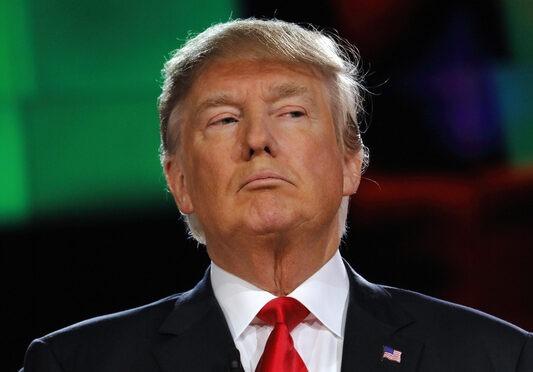
Preston Harp, the 38-year-old estranged brother of Natalie Harp, President Donald Trump’s 34-year-old executive assistant, has publicly criticized what he describes as a “very unhealthy” relationship between his sister and the 80-year-old president. Preston, who now lives in Nicaragua, characterized the president as a “national embarrassment” and expressed bewilderment that anyone in his family would take a White House position.
Love Letters That Alarmed the Secret Service
Before Natalie Harp secured an official White House role, she was leaving handwritten letters for President Trump in private areas of his residence. One such letter stated, “You are all that matters to me,” according to New York Times reporters Maggie Haberman and Jonathan Swan in their book “Regime Change: Inside the Imperial Presidency of Donald Trump.”
The intensity of her devotion unsettled future White House Chief of Staff Susie Wiles. Author Michael Wolff detailed similar incidents in his book about the 2024 Republican presidential race, noting that those around the president knew of Harp’s intense focus on him and that her notes portrayed her as “unworthy” of his support. Secret Service agents were sufficiently alarmed that they considered Harp a potential threat to the president before she formally joined his staff.
Early in his second term, the president told members of his team that she was the only person outside his immediate family who loved him as deeply as they did. He suggested to other aides that while they might eventually move on to pursue outside opportunities, Harp never would.
From Fan to Fixture in Trump’s Inner Circle
Natalie Harp’s journey to becoming one of the president’s most indispensable aides started at a 2019 event where she credited him with saving her life. She told the president that the Right to Try Act, which he signed into law, had given her access to experimental treatment for bone cancer.
She attached herself to the president’s orbit in 2022, initially without any formal title or defined responsibilities. Over time, she became a constant presence at his side and eventually assumed the role of executive assistant. She has earned the nickname “human printer” because she follows the president with a portable printer, creating hard copies of emails and articles for him to review.
Before formally joining his official team, Harp had been a host at the right-wing cable network One America News (OAN), a role she took on after working as a campaign surrogate and speaking at the 2020 Republican National Convention.
A Family Divided by Grief and Politics
The conflict between Preston and his sister extends far beyond political differences. The siblings grew up in very different corners of the same household. Natalie gravitated toward their mother, whom Preston describes as “extremely conservative” and “deeply religious,” while Preston was closer to their father, Robert Harp.
In July 2020, Robert Harp died by suicide, a fact confirmed by an Orange County coroner in California. Preston said his mother and Natalie wanted to characterize the death differently, which drove a permanent wedge between him and the rest of his family. He has had no contact with either his sister or his mother since then and said other relatives have also drifted away from the two women.
Preston only learned his sister had become a fixture in the president’s world in 2023, when a friend passed along a news article about her role as his new assistant. Preston said the discovery caused a kind of cognitive dissonance and that he could not understand why his sister — or anyone — would want to work for the president.
White House Stands Behind Harp
Described as a “long-haired hippie,” Preston cuts a striking contrast to his sister, who operates at the center of one of the most high-profile administrations in recent memory.
White House press secretary Karoline Leavitt pushed back against any suggestion that Harp’s role or conduct is problematic, calling her one of the most loyal and hardworking members of the president’s team. Leavitt did not, however, directly address the specific concerns raised about the nature of the relationship between Harp and the president.