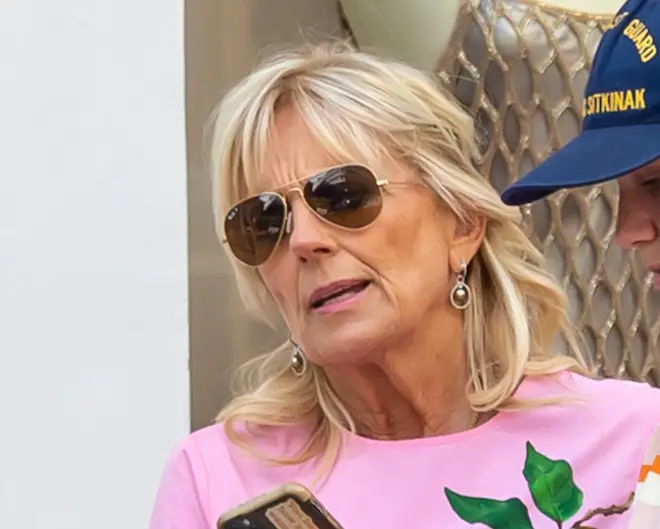
Jill Biden, the former first lady, delivered a pointed critique of the news media on June 2, accusing reporters of applying a “double standard” that treated her husband, former President Joe Biden, more harshly than it now treats President Donald Trump. The remarks, which resurfaced in a clip published by Fox News on July 16, came as the former first lady promoted her memoir, “View from the East Wing,” released June 2.
The comments landed during a Q&A session at the 92nd Street Y in New York City, moderated by “The View” co-host Whoopi Goldberg, who asked whether Biden believed her husband received fair treatment from the press. Jill Biden said reporters would have savaged Joe Biden for actions that now draw comparatively muted scrutiny.
A Charge of Uneven Coverage
Jill Biden did not answer directly at first. “You know, I think probably, well, I mean, seeing how things are now, I don’t know,” she told Goldberg. “I don’t know. I’d have to think about that.”
She went on to argue that the press held her husband to a standard it does not apply to the current administration. “You know, if Joe would have done any one of the things that are occurring now, I mean he would have been excoriated,” she said.
“But, you know, it’s just there, it’s like there’s a double standard. And that I don’t think is fair or was fair,” Biden added.
Regret Over the Relationship With Reporters
Yet the former first lady’s assessment was not entirely aimed outward. In a notable moment of self-examination, she acknowledged that the Biden administration might have handled its dealings with the press differently. She suggested the White House could have worked harder to build stronger, more durable relationships with the journalists covering it.
Jill Biden went further, saying she personally regretted not engaging with reporters as often as she could have. It was a candid admission from a former first lady who navigated the demands of the East Wing, and it complicated the picture she painted of an unfair media landscape. The suggestion implied that the strained dynamic she described may have been shaped, at least in part, by choices made inside her husband’s own administration.
The two threads — a grievance about coverage and a concession about access — sat side by side in her remarks, offering a more textured account than a simple complaint. Reporters have long noted that press engagement tends to shape the tenor of coverage, and the former first lady’s reflection touched on that reality without resolving the tension between the two ideas.
The Memoir and a Debate That Loomed Large
The comments arrive against the backdrop of Jill Biden’s memoir, which has kept her in public view and prompted a fresh round of reflection on her husband’s presidency and its end. The book has already generated headlines for its intimate details about one of the most consequential episodes of the 2024 campaign.
In an NPR interview timed to the book’s release, the former first lady recounted that after her husband left the debate stage in 2024, doctors checked him over once the couple met up in their car and pronounced him fine — an account she gave after saying the performance made her wonder whether he was having a stroke. That debate performance became a turning point in the race, and the detail — disclosed in reporting published June 2, 2026 — underscored just how closely the campaign’s darkest hours have been chronicled from inside the Biden household.
That episode also helps explain the intensity of the media scrutiny the former first lady now describes as excessive. The debate and its aftermath dominated coverage in a way few political moments have. For Jill Biden, the question of whether that coverage was fair remains an open wound — one her memoir and her promotional appearances have kept from healing quietly.
Her decision to raise the double-standard argument before a friendly audience at the 92nd Street Y signals that the former first lady intends to press her case as she continues to promote the book. Whether her critique gains traction beyond her husband’s supporters is uncertain, particularly given her own acknowledgment that the administration could have done more to court the reporters she now faults.
For now, the remarks stand as one of the more direct assessments the former first lady has offered about the press since leaving Washington — a mix of frustration, reflection, and a lingering sense that the story of her husband’s presidency was not told on fair terms.