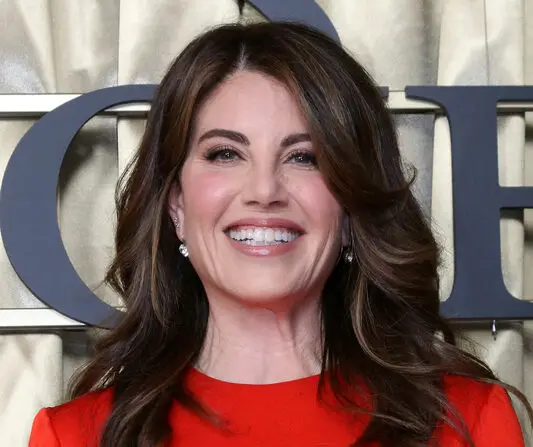
Monica Lewinsky, the anti-bullying activist whose name became inseparable from a 1990s presidential scandal, has a pointed request for the people who still trade on her past: come up with new material. In a wide-ranging reflection on the “All the Cool Girls” podcast on July 30, 2026, Lewinsky, 53, described how time has changed her perspective on the ordeal and expressed frustration with the stale mockery that has followed her for nearly three decades.
Speaking with co-hosts Laura Brown and Kristina O’Neill, Lewinsky said turning 50 brought a sense of freedom and relief from old anxieties. “I think that coming into my 50s was amazing and just the shedding of worries,” she told the hosts, adding that the feeling has deepened into a comforting sense of self-acceptance.
A Message to Longtime Critics
What Lewinsky has done, and what she said she hopes her critics might eventually manage, is move on. She has reclaimed not only her life but her own story, refusing to let the loudest voices define her in perpetuity. The jokes, though, have not aged as gracefully as she has. Nearly three decades of the same punchlines, she said, have worn thin — and she does not mind saying so.
“I wish they would get some new jokes because, I mean, 30 years of the same jokes, Jesus,” she said, before correcting herself: “Or 28 years. We’re not at 30 yet.” The exchange captured the tone of her recent public appearances — self-aware, faintly weary and unwilling to perform contrition for an audience that never let her leave the stage.
The events that made Lewinsky a household name unfolded when she was very young. At 21, she started working without pay at the White House in July 1995, celebrating her 22nd birthday that summer. Her involvement with then-President Bill Clinton, 49 years old at the time, started in November 1995. It might have stayed private but for Linda Tripp, a Pentagon co-worker in whom Lewinsky confided. Tripp secretly recorded their conversations, and those recordings were later used in Paula Jones’ sexual harassment lawsuit against Clinton — the thread that pulled the entire affair into public view and made it, for years afterward, a national spectacle.
Redefining What Power Means
Lewinsky has spent the years since building a second act as an advocate against public shaming, and her thinking about power — a concept that once flattened her — has shifted. In an interview earlier this year, she distinguished between two versions of it. One is the power a person wields over others, the kind that diminishes someone else’s standing. The other, she said, is quieter and internal, tied to a person’s relationship with themselves.
That second kind, in her view, resembles strength more than dominance. “Then there’s the power that someone has in connection to themselves and that’s a lot more like strength,” she explained. The reframing is a deliberate one for a woman who, at the height of the scandal, had virtually no control over how billions of strangers judged her.
She has been equally candid about the mechanics of recovery, pushing back on the notion that healing follows a straight line. Resilience, she has argued, is not a steady climb but something closer to a spiral — a series of advances and retreats rather than uninterrupted progress. The lesson she draws from that, she has said, is patience, the willingness to move backward without treating it as failure.
A Long Road to Self-Acceptance
Lewinsky has not shied from the bleakest chapters of that journey. In reflections shared this year, she has spoken about the very dark moments that followed the scandal and the punishing experience of surviving the judgment of millions. Time and patience, she has repeatedly credited, were her saving graces — the slow work of years rather than any single turning point.
Her public voice has not been without controversy in recent weeks. A tribute she offered to Sen. Lindsey Graham, R-S.C., who died on July 11, 2026, drew a split reaction, with some observers praising what they read as an instinct to place people over party and others sharply critical of the gesture. Lewinsky had credited Graham, one of the House managers in the 1998 impeachment, with working to expose what she described as a smear campaign against her run from inside the White House. Challenged by a critic who called Graham evil, she said she had not whitewashed his record but that his actions then had been healing for her and her family. It was a reminder that Lewinsky, decades on, still commands attention whenever she speaks — and that the scrutiny she has learned to endure has not disappeared.
If anything, her recent remarks suggest she has stopped waiting for that scrutiny to relent. The evolution she describes is not about persuading her detractors but about no longer needing their approval. She has done the harder work of forgiving herself and reclaiming a narrative that was, for a long stretch, written entirely by other people. Whether her critics ever update their jokes, she has made plain, is no longer her concern.