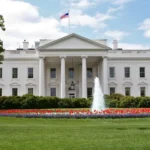
Press secretary Karoline Leavitt accused Democrats of allowing avowed communist candidates to rise to power during a July 23, 2026, briefing that also featured a vigorous defense of a Saudi Arabian nuclear agreement and deflections regarding connections between the Iran conflict and escalating consumer costs.
The session at the White House podium wove together economic arguments, foreign policy justifications, and campaign rhetoric in ways that an independent examination found revealing of administration strategy.
Nuclear Pact Justified Through Corporate Benefits
Leavitt faced pointed inquiries about the rationale for permitting Saudi Arabia to pursue civilian atomic energy while maintaining an uncompromising stance toward Iranian nuclear development. She began her response by reading a Truth Social message President Donald Trump had posted earlier that day—an unconventional approach to answering questions about delicate international diplomacy.
When challenged to explain the disparate treatment of the two Middle Eastern nations, the press secretary said American companies would receive preferential access under the Saudi arrangement, calling it an America-first policy. The defense essentially presented the agreement as an economic advantage for U.S. firms rather than addressing nonproliferation concerns.
What makes the arrangement particularly troubling is its practical effect. The Saudi agreements permit the kingdom to pursue nuclear expansion without international monitoring—a sharp departure from the administration’s absolute prohibition on Iranian nuclear progress. Tehran faces threats of military action to prevent any weapons capability, while Riyadh receives a commercially beneficial pathway forward.
Rising Costs Linked to Military Action
The conflict with Iran has contributed directly to higher prices that Americans face at stores and pumps. Fertilizer costs skyrocketed as a result of Trump’s war, pushing food expenses upward nationwide, while petroleum prices surged and sent gasoline costs climbing for drivers everywhere.
Leavitt promoted administration talking points about economic strength and opportunities for workers, but those messages sit awkwardly alongside household budgets strained by inflation. The gap between official optimism and kitchen-table arithmetic presents a persistent challenge for White House messaging.
The human dimension of the Iran war emerged through a disturbing claim. Without providing supporting evidence, Trump has asserted that deceased American troops told him Tehran must be barred from obtaining nuclear arms—a statement that transforms military casualties into policy arguments. The phrase “Iran must never have a nuclear weapon” has become a cornerstone of the administration’s Middle East position.
Regional instability has remained acute, with Iranian activity near the Strait of Hormuz and mass departures of American citizens from the area demonstrating how rapidly the fighting has altered conditions and international commerce. News summaries have documented these ongoing consequences.
Attacks on Democratic Victors
Leavitt declared that individuals who openly identify as communists now hold elected positions and claim leadership roles within the Democratic Party, cautioning that the nation risks becoming similar to Cuba. While Republicans have historically labeled Democratic policies as socialist or communist, the explicit use of “literal” and “self-proclaimed” represented an exceptionally forceful intensification of that rhetoric.
The accusation gains additional context from recent electoral outcomes. Progressive candidates including Democratic Socialist Zohran Mamdani in New York ran successful campaigns centered on cost-of-living concerns—precisely the topic the White House has sought to minimize. Trump previously dismissed affordability as a “hoax” and Democratic fabrication, and Leavitt continued that approach by criticizing what she termed the “Democrat solution to, quote, affordability.”
Yet dismissive language cannot alter financial realities. When voters reward candidates who pledge to reduce expenses, declaring the entire subject invented fails to comfort families watching their bills increase.
Vice President JD Vance has participated in broader administration efforts to defend its domestic and international track record. The July 23 briefing, however, left fundamental questions unresolved: whether the electorate will accept characterizations of affordability as fraudulent, and whether global observers should feel reassured about Saudi atomic ambitions proceeding without independent verification.
The session illustrated an administration attempting to redirect scrutiny. By labeling political adversaries as radicals, rejecting cost concerns as partisan theater, and portraying a nuclear deal as employment policy, the White House deployed messaging intended to reshape inconvenient truths. But the underlying realities—wartime inflation, contradictory nonproliferation standards defended through economic arguments, and unsubstantiated invocations of military dead—proved harder to explain away.