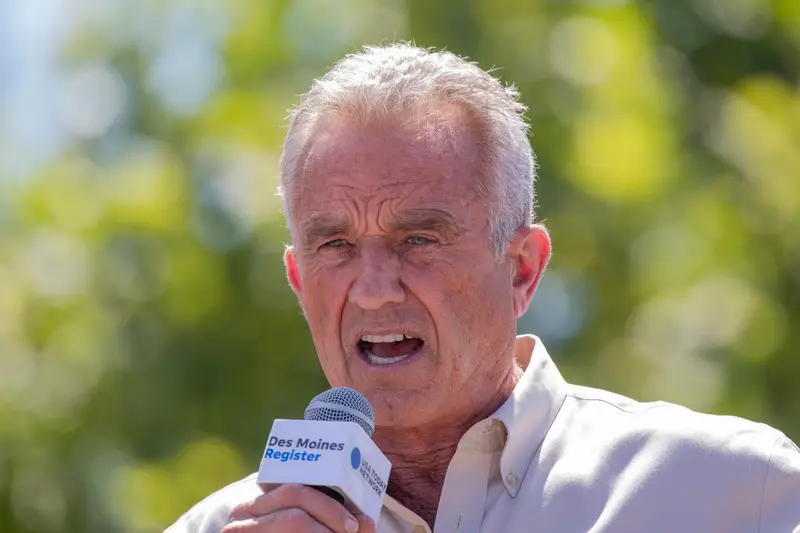
A letter that U.S. Health Secretary Robert F. Kennedy Jr. sent to Samoa’s prime minister on January 20, 2019, uses the words “vaccine” or “vaccination” eight times. Two children had died, and in the letter Kennedy — a prominent anti-vaccine activist at the time — put forward a study of what had gone wrong with the country’s measles, mumps and rubella (MMR) vaccines.
That is not the account he gave the senators who held his nomination in their hands at his confirmation hearings in January 2025. Vaccines, he said then, had nothing to do with a 2019 trip to Samoa that he took months before a measles outbreak swept the Pacific island nation and killed 83 people.
The letter turned up on Thursday, August 27, 2026, among newly obtained documents that cut against what he told Congress during a bruising confirmation battle — a stretch when he needed skeptical Republicans to advance his nomination to run the Department of Health and Human Services (HHS).
Two senators went after the same point on consecutive days at his Capitol Hill confirmation hearings. The journey was meant to deliver a medical informatics system to Samoa, Kennedy told Sen. Ron Wyden, D-Ore., at the Senate Finance Committee on January 29, 2025 — a system that would put health records into digital form and make care more efficient. The next day, before the Senate Health Committee, Sen. Edward Markey, D-Mass., circled back to the trip, and Kennedy said, “My purpose in going down there had nothing to do with vaccines.”
The Letter He Sent to Samoa
What Kennedy hoped to examine was spelled out plainly in his letter to Prime Minister Tuilaepa Sailele Malielegaoi. His opening line expressed the hope that Samoans might find his team of use, and a manufacturing flaw in the vaccine, he suggested, might explain the deaths of the two children. “I would propose my team conduct detailed health informatics assessment in Samoa of what happened with your MMR vaccines,” he wrote.
Kennedy was then chairman and top lawyer of Children’s Health Defense (CHD), the anti-vaccine group that had turned its attention to Samoa in July 2018 and started reaching out to the government there while the country’s immunization program was suspended.
What Happened in Samoa
A medical error set the crisis in motion. An MMR vaccine that had been mixed incorrectly killed two young children in Samoa in July 2018. A month after the children died, prosecutors filed criminal charges against the two nurses responsible; both women eventually admitted guilt to a manslaughter charge. Samoa’s government then froze every vaccination program for 10 months, a suspension that ran until April 2019, and immunization rates collapsed.
In May and June 2019, Kennedy traveled to the country, accompanied by his wife, actress Cheryl Hines, and CHD colleague Michael Graven. He shook hands with Tuilaepa on June 1, 2019, at the 57th Independence Celebration in Mulinu’u. Measles tore through the islands months later; the dead numbered 83 people, most of them children younger than five. The visit emboldened anti-vaccine activists in Samoa, critics said. The trip did not influence anyone’s decision about whether to vaccinate, Kennedy told senators, and he said he ended up in conversations with people he had never intended to meet.
His path to the Cabinet stayed in the outbreak’s shadow. Simulated gravestones memorializing the 2019 measles victims were arranged outside the U.S. Capitol on January 29, 2025, the day his confirmation hearings began.
The Response From Kennedy’s Department
Vaccines were unrelated to the 2019 visit, a spokesperson for HHS said, and the department called any claim or insinuation drawn from the letters that Kennedy lied under oath or to Congress both false and defamatory.
Neither of his two confirmation hearings placed Kennedy under oath. The distinction carries less weight than it appears to, however. Whether or not a witness has been sworn in, knowingly giving materially false testimony to Congress is a crime that can carry a prison sentence, though such cases are rarely prosecuted.
Why Congress Is Unlikely to Act
Hearings, an impeachment inquiry or other roadblocks are all options lawmakers could pursue on the strength of Kennedy’s statements, according to lawyers who specialize in Senate procedure. A Republican-led Congress aligned with President Donald Trump’s administration makes any of that improbable, in their assessment. The picture shifts, those attorneys said, should Democrats capture the House or the Senate in November’s elections: the documents would then supply a foundation for precisely that sort of scrutiny.
On August 27, the watchdog group American Oversight asked the Justice Department to investigate whether Kennedy knowingly made materially false statements to the Senate. Wyden and Markey have both said he misled them.
The letter also touches on a broader question that trailed Kennedy through his confirmation: whether his assurances matched his intentions. His anti-vaccine rhetoric had drawn criticism from lawmakers in both parties, and he spent the hearings working to convince them he supported childhood vaccination. The senators he won over included a physician, Sen. Bill Cassidy, R-La. Kennedy pledged during that process to preserve existing vaccine policies. He moved to change them once he was in office.