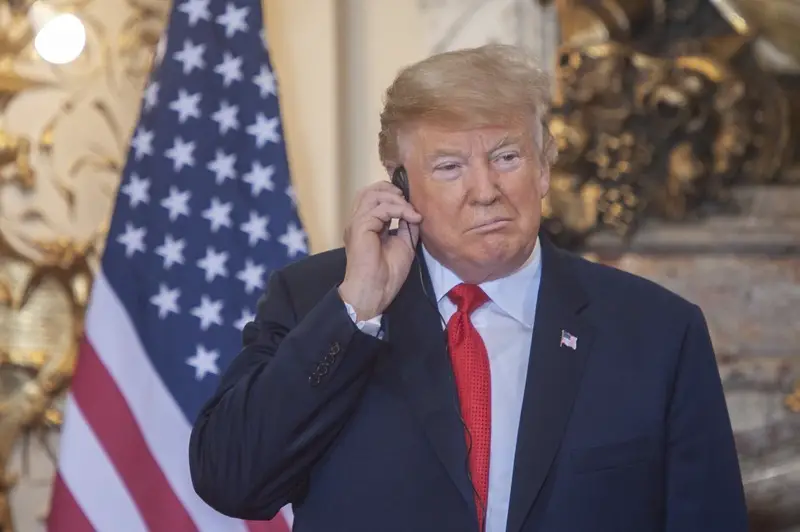
Defense Secretary Pete Hegseth faced a blistering confrontation from President Donald Trump during a Friday, July 31, 2026, Cabinet session at Camp David over weapons depletion that has limited America’s military capabilities against Iran, two sources with knowledge of the exchange told reporters.
The 80-year-old president expressed belief that ammunition supply problems “had been fixed,” those sources said — a characterization both the White House and Pentagon swiftly rejected. Hegseth, 46, who has taken on the informal designation “secretary of war” in his Pentagon role, pointed to his deputy Stephen Feinberg, 66, as responsible for not briefing Trump about the weapons gaps, according to the accounts. Feinberg previously led Trump’s Intelligence Advisory Board in the president’s initial term.
Munitions Crisis Sparks Emergency Session
Trump’s anger wasn’t confined to the Cabinet room. That Friday evening, July 31, the president telephoned Feinberg directly, venting frustration about the shortfalls and demanding answers about Pentagon plans to address the issue. During that exchange, Trump also reportedly threatened Feinberg with dismissal. Feinberg then assembled senior Pentagon leadership for an emergency session later that night.
Data released July 27 by the Center for Strategic and International Studies (CSIS) painted a grim portrait of American arsenal drawdown since hostilities with Iran commenced in late February. Initial inventories included 2,330 Patriot missiles and 452 THAAD missiles designed for terminal high altitude area defense. The July 27 analysis suggested remaining supplies ranged from 759 to 827 Patriots and from 234 to 278 THAAD missiles — a steep decline over several months. A separate inventory assessment reported by CNN concluded the Pentagon had burned through nearly 80 percent of its THAAD interceptors and about half its Patriots since the war began.
Among the most severely depleted categories are Army Tactical Missile Systems and Precision Strike Missiles, each costing more than $1 million, prompting concern from defense analysts about America’s capacity to handle simultaneous crises globally.
Casualties Mount as Costs Soar
With the conflict now in its sixth month, 18 American service members have died and hundreds sustained injuries. At a July 21 Senate Appropriations Committee hearing, Hegseth testified that military actions in Iran had consumed roughly $37.5 billion, while requesting Congress approve another $67 billion — partly to restore weapons inventories. He blamed inadequate Defense Department funding under the Biden administration for the shortfalls.
American sentiment toward the war has soured dramatically. Polling by Marquette Law School revealed 75 percent of Americans now view the conflict as “not worth the cost.” Pressure mounted when Trump announced on Truth Social late Saturday, August 1, that he had canceled what he termed the biggest American military operation since World War II. He stated he halted the strike after Iran and other Middle Eastern nations requested cancellation once potential agreement terms were established. Iranian authorities said Monday, August 3, that no such negotiations between the nations had been scheduled.
Officials Reject Story as Fiction
White House Press Secretary Karoline Leavitt branded the account “100% fake news” that “literally never happened,” maintaining Trump held “the utmost confidence in Secretary Hegseth.” Chief Pentagon Spokesman Sean Parnell escalated the pushback, saying Hegseth had not misled anyone about the munitions posture and had not blamed Feinberg, and asserting that the claims about depleted stockpiles and internal disagreements were “equally fictional.”
Before the Camp David revelations emerged, the former “Fox & Friends” Weekend host had already launched a counterattack. On Tuesday, August 4, Hegseth attacked a CNN broadcast graphic regarding interceptor depletion in the Iran war on social media, branding the assertion false and charging the network with peddling disinformation.
President Defends War Secretary Publicly
Notwithstanding the alleged tensions, Trump posted Thursday, August 6, on Truth Social defending his defense secretary, dismissing press accounts as false and unfounded while crediting Hegseth with removing diversity programs from the Pentagon and boosting military recruitment to levels Trump called historic. The president also highlighted the U.S. military’s January capture of former Venezuelan leader Nicolás Maduro as proof his national security apparatus was succeeding. Trump’s post asserted the military held “massive amounts” of munitions with substantial quantities currently in production and transit.
Trump further warned suspected leakers on Truth Social, declaring individuals supplying damaging information to the press were being “hunted down” and would face demands for extended prison terms. He labeled such disclosures treasonous, language that immediately captured civil liberties watchdogs’ attention. Whether the purported Camp David clash has truly been mended — or simply concealed for public consumption — stays unresolved as the administration’s Iranian campaign strains both American military capacity and domestic tolerance.