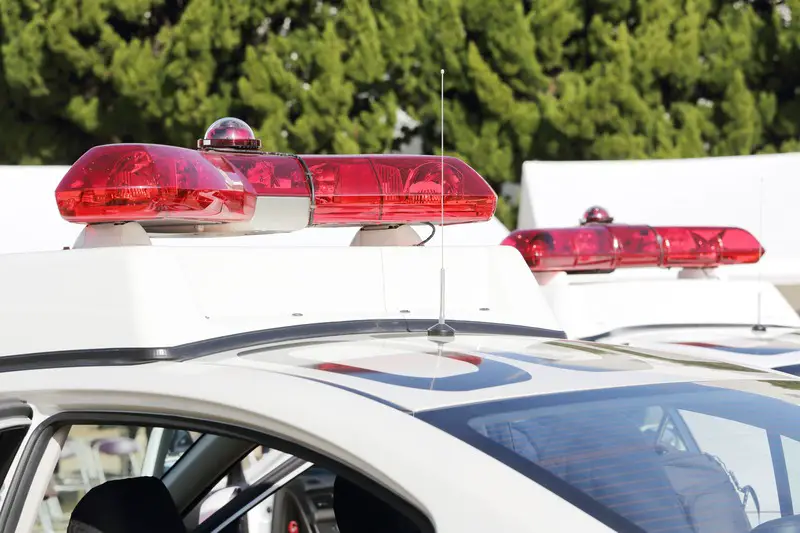
A widening police investigation into the deaths of women in and around Kempton Park, east of Johannesburg, took in an eighth case on September 15, 2026, when the body of a 35-year-old woman was found behind a club in KwaThema, Springs. The deaths have piled up over roughly two months.
Her body lay behind a row of shops near the KwaThema Centre, and she had not been identified when police announced the discovery. Decomposition has left the time of death unclear, and investigators believe the body was dumped at the site.
A ninth body turned up on Thursday, September 17, prompting police to lock down Kempton Park, a suburb that accounted for three of the bodies in one week. President Cyril Ramaphosa had already ordered police to treat the cases as a priority by the time of the earlier discovery, and police put up a R400,000 reward — about $24,500, or £18,000 — for information leading to a breakthrough.
Just four of the nine women have been publicly identified. Itumeleng Kekana, 32, disappeared in Kempton Park, where a missing-person report was filed on July 17; searchers recovered her body on August 3 in Pomona, near Great North Road and not far from the Max informal settlement. Elizabeth “Tsontso” Moselakgomo, 38, a mother and avid runner, set out for her usual run on September 9 and never came back, and her young daughter raised the alarm. A hotel in Rhodesfield, Kempton Park, near the R21, was where searchers found Moselakgomo’s body on September 12, and her family identified her at the Germiston mortuary on September 14. Fellow runners took up the hunt for her on social media, drawing wide attention to the case — an effort that ultimately led to more bodies being found.
The youngest of the victims has been identified as a 20-year-old woman, police said.
On September 21, police made an arrest in the series of murders of women in Ekurhuleni, on Gauteng’s East Rand, a development described as a breakthrough in the investigation.
What Police Say About a Link
Investigators have stopped short of concluding that one person is behind the deaths. Brigadier Athlenda Mathe, the National police spokesperson, has described the similarities between some of the cases as concerning, citing the condition in which the women were found and the way their bodies were left. She cautioned at the same time that it is too early to draw conclusions about a single perpetrator.
“For now, nothing tells us that we’ve got a serial killer,” Mathe told reporters. Detectives are keeping two further possibilities open: that a group of people carried out the killings, or that someone is copying an earlier crime. “It could be that it’s a copycat crime that is happening right here but so far, no linkages as yet,” Mathe said.
Gauteng provincial police commissioner Fred Kekana said: “Investigators are considering all possibilities, including the possibility of multiple suspects or separate perpetrators.” He added: “Police are comparing the evidence, timelines, locations, victim profiles and circumstances of each case.”
Decomposition and the absence of clothing marked several of the women when they were found, and police say a number of them were bruised or assaulted before they died. Detectives have followed that thread in pulling the cases together, working them collectively while trying to establish whether any are connected.
A man was arrested on July 17 in connection with the first death — an open field near the R21 in Kempton Park was where that woman was found, naked and restrained with cable ties. No charges have been filed against him. He is reported to have been the woman’s partner. Deputy national police commissioner Lt-Gen Tebello Mosikili told reporters on September 17 that the man was a foreign national according to preliminary information, a detail police could not confirm. The Department of Home Affairs and state security agencies are working with officers to verify his identity through fingerprint records, and no connection has been established between him and the eight other deaths.
Nine Cases Across Ekurhuleni
Kempton Park, Pomona, Clayville, Olifantsfontein, Rhodesfield and KwaThema, all in the Ekurhuleni district, are the areas the cases span. The country’s main international gateway lies just across the highway from Kempton Park. Olifantsfontein is about 24 kilometers (15 miles) north of Kempton Park, and KwaThema, in Springs, about 34 kilometers (21 miles) away.
A 32-year-old woman was the next victim after the July 15 case; her body turned up near the R21 in Kempton Park on August 24, and her identity has not been released. A river in Clayville, near Tembisa Mall, yielded the body of a woman believed to be in her late twenties on September 7, a case later folded into the wider inquiry. Another woman was found on September 10 close to where the R21 meets Voortrekker Road in Kempton Park; she was partially clothed, police said, and her family identified her on Thursday, September 17, as Gracious Nkomo, 28. A woman’s body was found beside a road in Olifantsfontein on September 14, and a cleaner from Homu 14-A village in Giyani, Limpopo, has since been named as the victim: Vutomi Mathebula, 28, last seen on 22 March 2026 after telling her family she was going shopping. Her hairstyle and clothing allowed her uncle to identify the decomposed body, and the family homestead in Giyani was where she was laid to rest.
Unknown callers demanded ransom money from Mathebula’s family in the months after she disappeared, threatening to kill her. Relatives borrowed and transferred cash, but the callers never let them speak to her. Investigators traced Withdrawals on her bank card to Kempton Park, among them a filling station in Chloorkop and a location in Glen Marais, and surveillance footage captured at least one person using the card. A five-year-old child survives her.
Officers have urged any family with a missing relative to come forward so the remaining women can be named.
A High-Level Government Response
In a statement, Ramaphosa said: “I have directed that these cases be prioritised and that no stone be left unturned in bringing those responsible to justice.” Agencies were moving with urgency to determine what happened, protect residents and see whoever was responsible answer in court, he said, adding: “As a nation, we must stand up for the rights, safety and dignity of women and girls.”
The South African Police Service (SAPS) has assembled a dedicated multidisciplinary task team of detectives, forensic experts, intelligence officers and specialized units, and as of September 16 had also brought in its Investigative Psychology Section to build a profile of the perpetrator. Acting Police Minister Firoz Cachalia, who called the discoveries deeply distressing, said SAPS was equal to the task. He cautioned the public against rumors and unverified claims circulating on social media and said it was premature to speculate about a pattern.
“The police will lock down this area in the coming weeks,” Cachalia said. “The community will see the presence of the South African Police Service.” SAPS also plans to expand police visibility through Operation Shanela.
Women in South Africa are killed at five times the global average rate, according to UN Women. Police recorded upwards of 27,600 murders nationally in the 12 months ending March 31, 2024, the most recent full-year figures available; 5,578 of the victims were women. Between April and July 2026, the country recorded 5,427 murders — an average of 45 a day. Ramaphosa labeled gender-based violence a national crisis in November 2025, a step that followed a demonstration by hundreds of women in Johannesburg the day before the G20 summit opened there. Specialist officers investigating the Ekurhuleni cases have told women in and around Kempton Park not to walk or run alone in isolated areas — advice that drew a sharp response from the advocacy group Women For Change. “We are tired of being told to be vigilant when women are already doing everything possible to stay alive,” the group said.