Thousands of people surrounded the John F. Kennedy Center for the Performing Arts on the evening of Friday, September 18, 2026, linking hands into a chain around the Potomac River landmark in defiance of President Donald Trump’s threat to tear it down.
They arrived by subway in such numbers that they spilled into the streets of the Foggy Bottom neighborhood and brought traffic to a halt, converging on the building for a rally billed as “Hands Around the Kennedy Center.”
The placards did most of the talking. One read “You’re No Jack Kennedy.” Another read “Hands Off the Arts.” A third riffed on the musical “Wicked” with the line “Wicked: Starring DJT.” One man wore a hat reading “Make America Intelligent Again.” Another, in a crown and a Trump mask, carried a sign written in the president’s imagined voice: “Restore my name in gold, you sycophants.”
A Ring of Hands Around the Center
Hands Off the Arts, the coalition behind the gathering, planned musical performances, testimonials and speeches on the center’s steps before the chain took shape. Actor Lynda Carter, a vocal critic of the president, addressed the rally. Placards reading “hands off Kennedy Center” bobbed above the crowd, and demonstrators sang near the facade where workers stripped Trump’s name in June under a court order. Then they encircled the building, joined hands and raised them overhead, demanding that Trump be removed as chairman for failing to protect and manage the institution.
Chalkboards, Hearts and Lost Opportunities
Bud Wilkinson, a member of the local arts community, brought a chalkboard covered with Trump’s name hundreds of times over. Protesters took turns rubbing the names out and chalking hearts in their place. Wilkinson said the fight is not only about whose name goes on the facade but about the censoring of performances and programming.
Laura Steinberg, a Kennedy Center volunteer for the last 10 years, reached for a starker comparison. “This reminds me of that picture from Tiananmen Square, where that young man stood in front of the tank,” Steinberg said.
Alina Baciu, a protester whose daughter attended the Duke Ellington School of the Arts, described what the school stands to lose. Students have performed on the center’s Millennium Stage, and the Washington National Opera lent costumes for their performances at Duke Ellington, she said; all of that has gone away. Kerry Kennedy, a niece of the late President John F. Kennedy, told the BBC that demolishing the center would be a tragedy.
A Judge Steps In
The demonstration capped a week of escalation. On Tuesday, September 15, the Trump-aligned Kennedy Center board voted to shut the venue down for repair work expected to last about two years — a decision that landed just hours after U.S. District Judge Christopher Cooper halted its effort to restore Trump’s name to the building. On Thursday, September 17, Cooper ordered the center to give 30 days’ notice before making any major physical change, including demolition, and to produce a detailed report on what it has called a temporary closure.
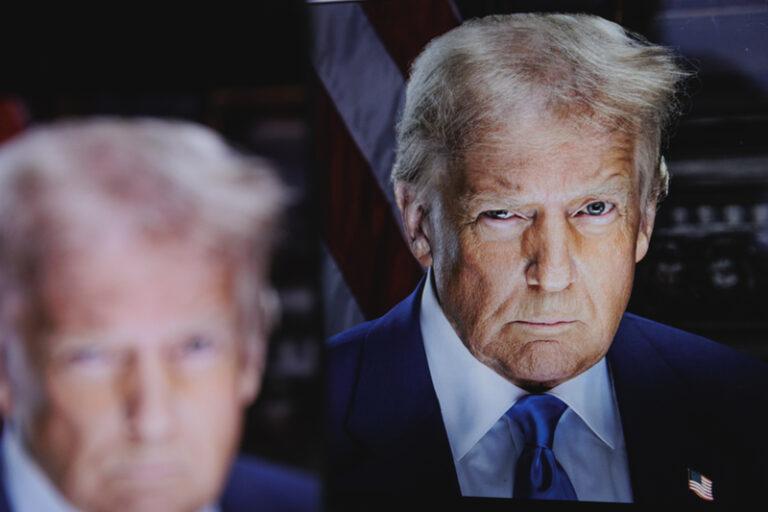
The judge acted at the urging of attorneys representing Democratic Rep. Joyce Beatty, who holds a seat on the board in an ex officio capacity. They pointed to the president’s warning that the center could be ripped down and filed photographs shot on Wednesday night through a cabin window of Air Force One, after the plane landed at Joint Base Andrews, Maryland, on September 16. In them, Trump appears to be studying a placard that appears to read “Kennedy Center DEMOLISHED.”
What the President Wants
Trump has said the center is in dangerous condition and losing hundreds of millions of dollars. Tax records show its revenue rose by millions in 2024, part of that a federal allocation. His administration blames the building’s finances and structural problems on conditions it says require extensive renovations; critics point instead to the performers and private funders who left after he took control.
Speaking to reporters in the Oval Office on Friday, hours before the crowd assembled, Trump said he could save the Kennedy Center easily, then questioned why he should keep raising money to sustain it without credit. “I think the Trump administration should be recognized as having saved the Kennedy Center,” he added.
The center, inaugurated in 1971 following the assassination of President John F. Kennedy, has been a focus of Trump’s remaking of Washington since 2025, when he removed its leadership, installed his own board and made himself chairman weeks after his second inauguration. That handpicked board voted in December 2025 to add Trump’s name to the institution’s official title – a change the White House shorthanded as the Trump-Kennedy Center – and Trump’s name went up on the building in December before a judge found it had been added illegally and ordered it removed. David Barrows, 77, one of the early protesters in that fight, took to the street shortly after Trump became chairman.
Chris Raleigh, a co-founder of Hands Off the Arts, said in an interview that he hoped the rally would show how many people are prepared to fight the president’s plans for the building. The coalition, formed after the leadership changes at the center, has staged repeated protests outside the venue this year and says its goal is to reclaim the building from what it calls authoritarian overreach. The center remains closed, and Cooper’s order stands: 30 days’ notice before anything comes down. On Monday, September 21, Trump backed away from the threat, telling reporters he is “not ripping it down” and will reuse the building’s steel and some of its marble in a renovation he said requires about two years of closure.