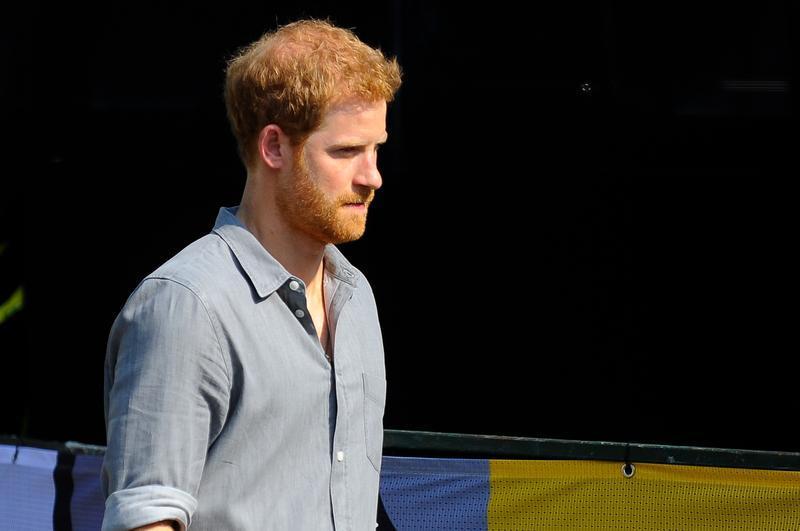
Prince Harry, the Duke of Sussex, said he slipped into a depression lasting about two weeks after arriving in Canada in late 2019, with the collapse striking within days of his leaving Britain.
Neuroscientist Mary-Frances O’Connor, a University of Arizona professor, recorded a MasterClass session on grief with Harry, and it was there that he made the remarks. The platform released it Thursday, Oct. 8, 2026, under the title “Redefining Grief: Building Resilience Through Loss.”
He traveled to Canada with his wife, Meghan, the Duchess of Sussex, and their infant son. The couple stayed on Vancouver Island after leaving the U.K. with their son, Prince Archie.
“Being in Canada, away from the stressful environment where presumably my body was just pumped full of adrenaline, within two or three days, I experienced this adrenaline crash, something that I’d never experienced before,” Harry said in the session.
“It was as if I needed stress in order to get the adrenaline to make my brain function because I became useless around the house. I actually slipped into depression for about two weeks and I felt like I couldn’t function without adrenaline.”
Harry said the family went to Canada seeking distance and room to think, and he characterized what they left behind as a stressful environment.
From Vancouver Island to the Cotswolds
A step back from royal duties was what the pair made public in January 2020. Los Angeles became their home by March of that same year, 2020.
Harry and Meghan returned to live in the U.K. in August 2026. They are now thought to be living in the Cotswolds, in a private residence outside London. Security concerns prompted the parents to switch schools for Prince Archie, seven, and Princess Lilibet, five, just two days after the term began.
MasterClass approached Harry last year about developing a segment on grief. He filmed it in California over the summer, though not at his Montecito house. Annual membership to the platform costs between £120 and £228 a year.
A Decade of Denial
Much of the session turned on the death of his mother, Diana, Princess of Wales. A high-speed car crash killed Diana at the age of 36 on Aug. 31, 1997, when Harry was 12 and his brother, Prince William, was 15.
His position as a prince, Harry said, left him with nowhere to put what he was feeling. The funeral broadcast on television came back to him, along with the hands he shook, the mourners who wept for a woman they had never met, and his awareness that everyone was watching to see how he was holding up.
“For 15 to 20 years, when I was being asked, ‘are you OK?’ my response was, ‘I’m fine,’” he said.
Numbness and emotional shutdown sat beneath that answer, he said, and adrenaline did the driving. Denial held him for a decade, he said, and with it a belief first set out in his memoir “Spare”: his mother had engineered an escape from the forces wrecking her life, and one day she would reappear in disguise and take him and his brother away.
The family-only burial was the first occasion on which he could cry, he recalled, and nearly two decades passed before he cried again. Joy felt like a betrayal for years, he said, so he kept himself numb, with sadness the only proof he could offer that he missed her. He said he had forgotten the sound of her laugh.
A therapist suggested he spray her perfume. Harry said it was a sensory key that opened feelings he had kept sealed away, and that it led him to conclude that what his mother had wanted was for him to be happy.
The brain does not register a loved one as gone but as lost, O’Connor explained, and it keeps searching until something teaches it otherwise.
Two Tours in Afghanistan
Harry served two tours in Afghanistan with the British Army. He said he had treated the military as a way out of his own head.
“In my 20s, I went to war twice thinking I could outrun my feelings. But that’s not what happened,” he said.
His body sounded the first warnings, he said: panic attacks, and a feeling of suffocation when he tightened a collar. Coming home from his second tour, he found no mission left in front of him and understood how much the adrenaline had been carrying him.
Harry said his post-traumatic stress was not rooted in Afghanistan itself, and that what he saw there appeared to trigger older traumas already stored inside him.
A Rule of 10 Days
One personal rule now governs his schedule, Harry said: he spends never more than 10 days away from Meghan, Archie and Lilibet.
Meghan was seen in London having afternoon tea with the human rights campaigner Malala Yousafzai at Claridge’s.
The 30th anniversary of Diana’s death is approaching in August 2027, and Harry is reportedly considering a documentary about his mother.