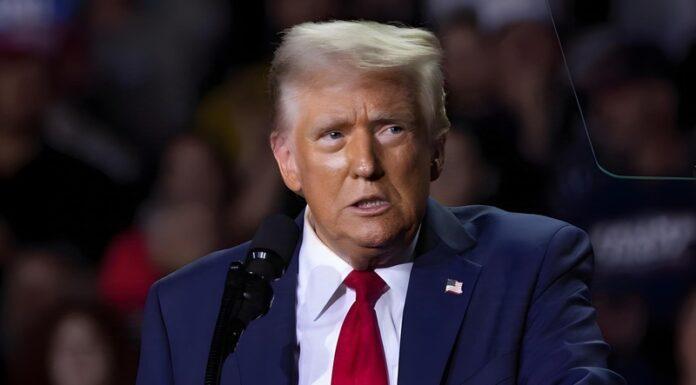
Ukraine’s president defied Donald Trump on the world stage, and Trump is now accusing him of probably never wanting the war to end.
President Donald Trump, 80, wrote in a Truth Social post on Sunday, Oct. 18, 2026, that Ukrainian President Volodymyr Zelensky “doesn’t want to end this war, and probably never did.” The post escalated his public attacks beyond what he had said days earlier on Newsmax.
Trump accused Zelensky of targeting Russian diesel refineries while knowing the strikes were “seriously hurting the world diesel markets, including those in the United States.” “Zelenskyy doesn’t care,” Trump wrote, adding, “He could have made a better deal two years ago than he can now.”
Trump told Newsmax on Thursday, Oct. 15, that he found Zelensky harder to deal with than Russian President Vladimir Putin. “No, I’m not a big fan of Zelensky. They’ve destroyed that country,” he said.
Trump said in the same interview, “Putin hates Zelensky, and Zelensky hates Putin.” He also said, “It should end soon. I think they actually both would like to see it end.”
Zelensky Tears Up Energy Ceasefire
On the same day as the Newsmax interview, Zelensky, 48, tore up the “energy ceasefire” that Trump had declared on Truth Social on Sunday, Oct. 11. He had held off on strikes on Russian energy sites for three days, under pressure from Washington.
Zelensky ended the block on hitting refineries in a Financial Times interview published Thursday, Oct. 15. “We’re done,” he said. Ukrainian forces struck an oil refinery in Russia’s western Ryazan region that same day.
Zelensky also attacked Trump personally in the same interview, over authoritarian leaders. “He speaks about it openly and loudly that he loves such people and he respects such people,” he said. Leaders who have held power for 20, 30 or 40 years strike Trump as very strong, Zelensky said.
The feud is the biggest rift between Kyiv and Washington since Russia’s February 2022 invasion, Reuters reported. It revives memories of February 2025, when Trump and Vice President JD Vance gave Zelensky an Oval Office dressing-down and accused him of not being grateful enough for American support. Putin has bombed Ukraine for more than four and a half years.
The Diesel Deal That Lit the Fuse
Trump announced a deal for Russian diesel on Friday, Oct. 9 — 300,000 tons immediately, with millions more promised. The deal suspended U.S. restrictions on Russian diesel. It was framed as a scramble to bring down fuel costs driven by Trump’s own war on Iran.
Trump defended his decision to waive Russian sanctions in the same Oct. 18 post. He said the move keeps Moscow at the negotiating table.
Trump said Saturday, Oct. 10, that it was “time for Ukraine to get a new president,” as a global backlash to the deal built.
Democrats hold an overall 9-point lead in the Nov. 3 races for the House and Senate, according to an NBC News poll.
Trump Loyalists Turn on Kyiv
Trump’s loyalists turned on Kyiv after the refinery strikes. Right-wing social media personality Mike Cernovich posted on X that taxpayers had handed Zelensky more than $250 billion, and that Trump only wants diesel prices down a dollar or two before the midterms. Conservative commentator Rogan O’Handley, who posts as DC Draino, shared the Cernovich post and urged Trump to retaliate.
Steve Cortes, a former Trump adviser, asked on X how much American taxpayer money had gone to the Ukrainian leader. Elon Musk, the owner of SpaceX and X, posted Wednesday, Oct. 14, that it was time for Zelensky to go. Musk was responding to a clip of Zelensky telling British journalist Piers Morgan that Ukraine is not for sale.
The war with Iran has wrecked fuel shipping through the Strait of Hormuz and the Bab al-Mandeb Strait. Iran-aligned Houthi rebels have declared a blockade of the Bab al-Mandeb Strait at the southern end of the Red Sea.
Starshield Slowed, Missile Warnings Lost
The order to slow Ukrainian access to SpaceX’s Starshield, the military-grade version of Musk’s Starlink service, came from inside the White House, Reuters reported, citing two U.S. officials and a Western official. A senior U.S. official told Reuters, “No such request was ever made by the president.” It is unclear which official made that call, and who passed it to the Pentagon.
Zelensky said the Trump administration threatened to cut off intelligence sharing unless Ukraine stopped striking Russian energy sites. Trump denied cutting off the intelligence supply. Zelensky said his forces then lost early-warning systems for incoming missiles, and that satellite coverage slowed. U.S. officials blamed bad weather for a missed warning, Politico reported. “It was not a technical problem, it was the will,” Zelensky said.
Musk said the U.S. government owns the network, and that the U.S. military and ultimately the president set limits on its speed and use.
Putin’s forces bombed energy facilities in Kharkiv and Kyiv after Trump announced the ceasefire. Russian attacks had killed at least 15 people in Ukraine by Thursday, Oct. 15. Drone strikes killed at least eight more people on Friday, Oct. 16, and temporarily cut power to about 370,000 people in the Volyn region alone.
A Ukrainian Defense Ministry source said Thursday that Starshield was working again, but only for drones moving slower than 100 mph. Zelensky announced Thursday that an overnight Ukrainian strike destroyed four Russian warplanes and hit two more. He vowed to keep attacking targets inside Russia.
Putin raised the idea of a three-way summit with Chinese President Xi Jinping and Trump during an Oct. 9 call, The Wall Street Journal reported on Oct. 18. The Kremlin said Monday, Oct. 19, that the subject was raised but no specific proposals were made. Zelensky said on NBC’s “Meet the Press” on Oct. 18 that Trump’s sanctions waiver “will hurt Ukraine.” Trump, in his Oct. 18 post, wrote of his peace push, “Great progress is being made.”