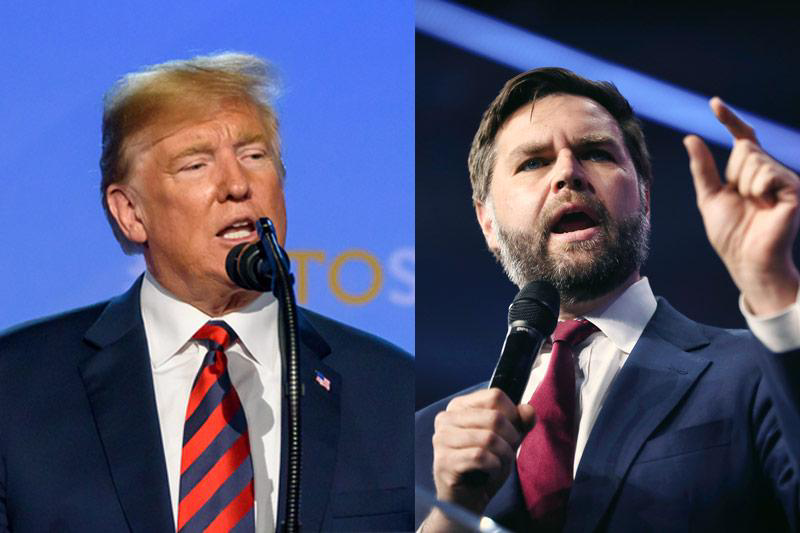
JD Vance blamed the Iran war for Republicans’ midterm losses — then, with the president beside him, a reporter asked whether it was worth it.
Vice President JD Vance declined to endorse President Donald Trump’s claim that Iran was so close to a nuclear weapon in February 2026 that the U.S. had to go to war, at a news conference in the White House briefing room on Friday, Nov. 20, 2026. Trump was flanked by two potential successors: Vance and Secretary of State Marco Rubio.
A reporter asked the vice president directly whether he would argue the war in Iran had been worth it. Vance talked about his job instead.
“I think the president is the one who makes the decision, and the president has said he would do it again,” Vance said.
“My view is that my goal is, and my job is, to support the president of the United States,” the vice president said.
He stopped short of backing Trump’s argument that the war was needed to keep Iran from building a nuclear bomb. Keeping Iran from obtaining one is absolutely what the country should be doing, Vance said, describing Iran as the biggest state sponsor of terrorism and saying a nuclear-armed Tehran would use the weapon as leverage or kill hundreds of thousands of innocent people.
The One Thing Trump Would Add
Trump had been asked minutes earlier about reporting that he was unhappy with Vance’s statement pinning the midterm losses on the war. He denied it. The statement was fine, Trump said, with one addition: if asked whether he would order the war again, the answer would be yes, because the U.S. cannot let Iran obtain a nuclear weapon.
Democrats won control of both the House and the Senate in the Nov. 3 midterm elections. The morning after the vote, Vance posted a statement on social media.
“The reason we lost is the war,” he wrote. Anyone who wanted to argue that surrendering the Senate for the next six years was a worthwhile cost should make that case, Vance added, because everyone knew why Republicans lost.
His Own Spy Chief Said Otherwise
Trump has made the nuclear argument dozens of times over the past nine months. At a campaign rally in Alaska in October, he said Iran had been two weeks from a nuclear weapon when he joined Israel in attacking it in February.
His own intelligence chief had told Congress something else. On March 25, 2025, then-Director of National Intelligence Tulsi Gabbard testified that U.S. agencies assessed Iran was not building a nuclear weapon, that Iran’s supreme leader, Ayatollah Ali Khamenei, had not authorized a restart of the program he suspended in 2003, and that Iran had not attempted to build one in more than two decades.
Three months after that testimony, on June 21, 2025, Trump ordered the U.S. bombing of Iran’s nuclear enrichment facilities and told the public that night the sites had been completely destroyed. Eight months later, in a video statement from Mar-a-Lago early on Feb. 28, 2026, he announced a full-scale war — one he said was needed to ensure Iran does not obtain a nuclear weapon.
Why Vance Calls Himself a Heat Shield
The Friday exchange was not the first time Vance had been pressed on whether he and the president were drifting apart. In an interview with Fox News host Laura Ingraham on Monday, Nov. 16, he said there was no daylight between himself and Trump, or between Trump and any senior member of the administration. The president makes the decisions, Vance said, and is owed a cabinet that carries them out.
He also defended the campaign’s results, saying the administration had destroyed Iran’s nuclear program and its conventional military, and criticized what he described as a category of people who want the war to go on forever.
Trump has kept the option of more strikes open. Asked by Salem News Channel on Thursday, Nov. 12, whether he would hesitate to order another attack, he said he would not, and that the U.S. is taking out more oil now than before the war started. The fighting had run at a rapid clip for three weeks, not seven months, he said, and as of that interview no American soldier had been killed in five months while the U.S. controlled the Gulf. He contrasted that with Russia and Ukraine, which he said are losing 25,000 people a month.
In a separate interview the same day with journalist Stephen A. Smith, Trump said American forces could eliminate Iran’s energy infrastructure, bridges and industrial capabilities within three days. He held back from ordering those strikes, he said, after several Middle Eastern countries asked for a more gradual approach.
Trump has been weighing whether to resume major military operations against Iran or keep pursuing a diplomatic solution. He may hold off on new strikes as long as neither Tehran nor Yemen’s Iran-backed Houthis stage fresh provocations, three people familiar with the discussions told Reuters.
Some of the criticism aimed at Vance has centered on his role in the memorandum of understanding negotiated between Washington and Tehran, which failed to produce a lasting agreement. Those critics go after him, he told Ingraham, because they will not confront the president himself.
“I’m happy to be a heat shield for the President of the United States,” Vance said.