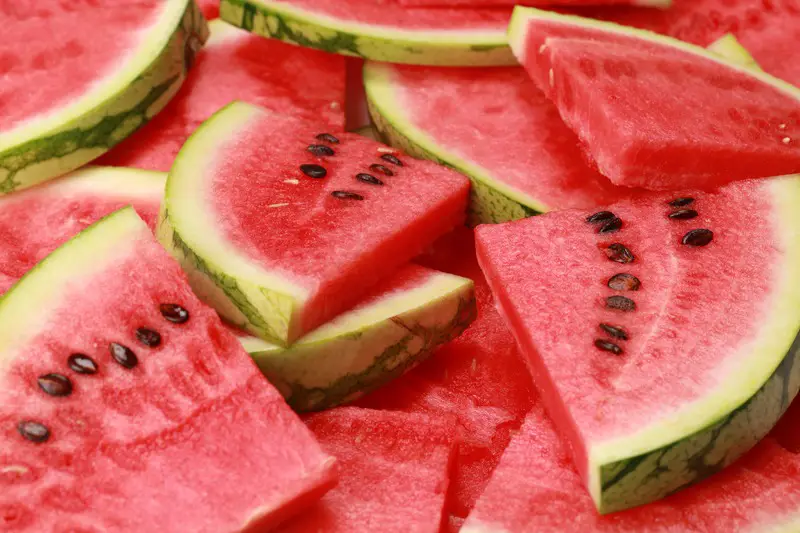
Investigators in Mumbai have identified zinc phosphide — a toxic compound used in rat poison — as the substance that killed a family of four in late April, but nearly a month later, authorities still cannot explain how the poison ended up in the watermelon that claimed their lives.
Abdullah Dokadia, 40, his wife Nasreen, 35, and their daughters Ayesha, 16, and Zainab, 13, died in the early hours of April 26, 2026, after eating watermelon at their Pydhonie apartment in south Mumbai. The Forensic Science Laboratory confirmed on May 7 that zinc phosphide was present in the viscera of all four victims and in watermelon samples recovered from the home, but no other food tested positive for the chemical.
The tragedy has sent shockwaves through Mumbai, crashing watermelon sales and leaving an entire fruit market in panic as residents question the safety of one of India’s most popular summer fruits.
A Late-Night Snack Turns Deadly
The Dokadia family had hosted relatives for a dinner of biryani at their home on the evening of April 25. After the guests departed around 10:30 p.m., the four family members ate watermelon between 1:00 a.m. and 1:30 a.m. — the last thing they would ever consume.
All four became violently ill within hours, suffering from vomiting and diarrhea. Dr. Zaid Qureshi, who lived on the fourth floor of the building, rushed to help after neighbors raised the alarm. He discovered Zainab, the youngest daughter, struggling to breathe and immediately began CPR.
“I noticed that the youngest of the four individuals was experiencing difficulty breathing. I administered CPR. However, as her condition did not improve, she was taken to a nearby hospital. She passed away,” Qureshi told BBC Marathi.
Zainab died at 10:15 a.m. on April 26. The other three family members were transferred to JJ Hospital in Mumbai for intensive treatment. Nasreen and Ayesha followed shortly after. Abdullah, the father, succumbed at 10:30 p.m. that same day. Doctors performed stomach wash procedures and provided intensive medical care, but the toxin had already done its work.
The Forensic Breakthrough
For 11 days, investigators struggled to identify what had killed the Dokadias. The Forensic Science Laboratory in Mumbai conducted 54 tests on samples seized from the home, including half-eaten watermelon rinds, spices, kitchen articles, and food items. The State Food and Drug Administration also examined the items for adulteration.
The FSL submitted its findings to the Mumbai Police on May 7. Zinc phosphide had been detected in the viscera of all four deceased — in their liver, kidney, spleen, stomach contents, bile, and abdominal fat — and crucially, in the watermelon samples as well. The chemical was not found in any other food item tested.
Deputy Commissioner of Police Pravin Mundhe confirmed that police had registered a case of accidental death, while the JJ Marg police station continues to record statements from relatives and neighbors. Post-mortem reports confirmed zinc phosphide as the cause of death.
How Zinc Phosphide Kills in Minutes
Zinc phosphide is an inorganic compound containing phosphorus and zinc, widely sold as rat poison and easily available across India. When ingested, the substance reacts with stomach acid to produce phosphine gas — an extremely toxic substance that spreads through the body, crosses into cells, and shuts down their ability to produce energy.
Symptoms typically begin within 30 minutes to an hour and include vomiting, dizziness, breathing difficulty, and convulsions. In severe cases, the poison causes liver and kidney failure, delirium, and coma. According to forensic experts cited in coverage of the case, treatment is only viable within a roughly one-hour window. After that, even aggressive medical intervention is unlikely to succeed.
Dr. Hemalata Arora, an internal medicine specialist, explained that stomach wash procedures are effective only within that narrow timeframe. Dr. Rukmani Krishnamurthy, a former FSL director, noted that zinc phosphide is usually sold in powder form, raising the possibility that the substance was applied directly to the cut watermelon. Forensic official Dr. Bhushan Rokade and Dr. Sanjay Surase have also weighed in, with experts suggesting the youngest child likely died first because her smaller body could not withstand the toxin.
Unanswered Questions and a City on Edge
Investigators say the building has a known rodent problem, but there was no indication that rat poison was kept inside the Dokadia home. That has left police considering every possibility — from accidental contamination to deliberate tampering. Two fruit sellers were arrested in connection with applying rat poison on fruits, though the link to the Dokadia case has not been formally established.
In the latest development, as of May 19, Mumbai Police sent additional salt samples from the Dokadia home to the FSL for fresh forensic testing. Investigators now suspect the zinc phosphide may have been mixed with salt and sprinkled directly onto the cut watermelon before the family consumed it, meaning they would likely have only noticed an unusual saltiness before falling ill. Police have recorded statements from more than 100 individuals in connection with the case, which remains registered as an accidental death report.
For now, the city of Mumbai is left with a chilling unanswered question: how did a household staple, eaten in the middle of the night, become the instrument of an entire family’s death? Until investigators can piece together the final hours before that fatal slice, the watermelon deaths will remain one of India’s most haunting forensic puzzles.