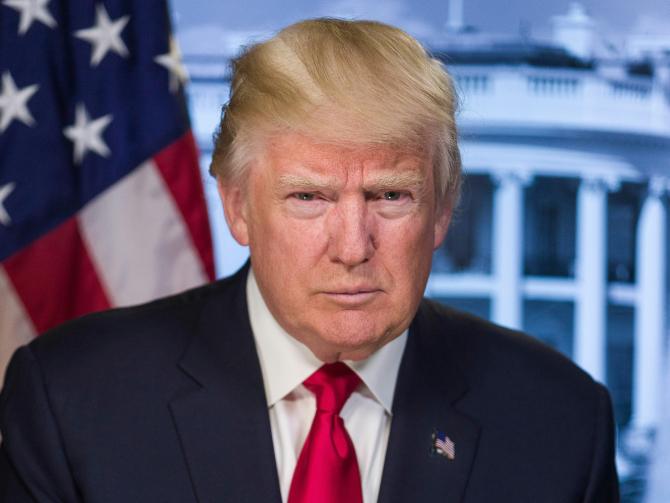
In a striking moment of candor that quickly became a political flashpoint, President Trump stated bluntly on May 12, 2026, that Americans’ financial struggles play no role in his calculations as he navigates the ongoing war with Iran.
“I don’t think about Americans’ financial situation. I don’t think about anybody. I think about one thing: You cannot let Iran have a nuclear weapon,” Trump told reporters as he prepared to leave for a high-stakes summit in Beijing.
When pressed directly about whether Americans’ wallets factored into his thinking, the president responded, “Not even a little bit.”
Days later, rather than softening his stance, Trump reaffirmed it. During a Fox News interview with anchor Bret Baier recorded in China and broadcast on May 15, the president was shown footage of his earlier remarks.
“That’s a perfect statement. I’d make it again,” he told Baier, dismissing the reporter’s original question as “a fake question.”
Democrats Pounce, Republicans Scramble
Democrats immediately seized on the president’s words as proof he’s out of touch with voters struggling to pay their bills. Republicans found themselves in damage control mode, rallying around Trump’s argument that stopping Iran from obtaining nuclear weapons justifies temporary economic hardship.
The timing couldn’t be worse for the GOP. With midterm elections looming in November and Republicans holding narrow congressional majorities in both chambers, a president who openly dismisses voter economic concerns represents exactly the kind of political vulnerability strategists feared.
But Trump showed no signs of backing down. “I’m not going to let the election determine what’s going to happen with respect to Iran, because they cannot have a nuclear weapon,” he signaled.
Gas Prices Soar Amid Strait Blockade
The president’s comments came at a moment of acute economic pain for American households. Gas prices have jumped roughly 50 percent since the United States and Israel began striking Iran in late February, with the national average climbing past $4.50 per gallon, according to American Automobile Association data.
Iran’s blockade of the Strait of Hormuz, a critical chokepoint for global oil shipments, has driven much of the price surge. The disruption has sent shockwaves through energy markets and intensified inflation pressures already burdening families.
A PBS News/NPR/Marist poll released in mid-May found that 63 percent of Americans blame Trump for the spike in gas prices. The president’s approval ratings have been sliding in tandem with prices at the pump.
Trump acknowledged he was “OK” with higher gas prices if achieving his goals in the conflict required it, characterizing the impact as fleeting. He forecast relief would come quickly once the blockade lifts, pointing out that Iranian vessels were already loaded with oil ready to flow back into global markets.
The president conceded there would be “short-term pain” during negotiations and while the strait stays blocked, but maintained the sacrifice was worth it. He highlighted his economic track record before the war, claiming inflation stood at 1.7 percent in the three months preceding the conflict. The latest government data tells a different story: the Consumer Price Index rose to 3.8 percent annually in April 2026 — the highest since May 2023 — driven largely by a 28.4 percent annual surge in gasoline prices. For the first time in three years, Americans’ wages are no longer outpacing inflation.
“My policies are working incredibly,” he said.
Beijing Summit Looms Over Iran Talks
Trump made his controversial statement about American finances ahead of his departure for a two-day summit with Chinese President Xi Jinping in Beijing, where Iran was anticipated to dominate discussions. Xi gave the American president a rare tour of a secret garden at Zhongnanhai, the heart of the Chinese government. Trump also visited the Temple of Heaven during the trip.
Xi opened bilateral talks with a pointed message: “We should be partners, not rivals.” Trump praised what he called a “fantastic relationship” between the two superpowers and touted the trade deals reached during the visit. Secretary of State Marco Rubio said U.S. policy on Taiwan remained “unchanged” following the meetings, though Beijing warned that tensions over the island could jeopardize the broader relationship.
Beijing residents interviewed during Trump’s arrival expressed skepticism about the summit’s outcomes, and the president’s invitation of top American CEOs to join the trip was widely viewed as posturing aimed at extracting a more favorable China deal.
On Capitol Hill, Defense Secretary Pete Hegseth and senior military officials testified about the state of the conflict. Trump has since declared the Iran ceasefire to be “on life support” after rejecting Tehran’s latest negotiating response as “totally unacceptable,” saying it failed to address Iran’s nuclear program adequately.
Trump departed China after the two-day summit concluded, returning to a Washington where his blunt assessment of American financial pain — and his refusal to retreat from it — promises to dominate the political conversation for weeks to come. On May 16, the president sent Iran a new nuclear proposal, warning that swift progress was necessary to avoid serious consequences.