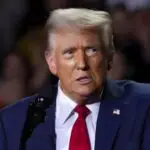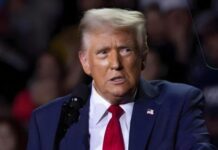
President Donald Trump overruled his own administration’s short-lived decision to bar Immigration and Customs Enforcement (ICE) agents from conducting most traffic stops, reversing course on Wednesday, July 15, 2026, after watching cable news coverage that framed the policy as a retreat, The Atlantic reported. The president took to Truth Social to insist that the practice would remain in place, and White House officials said the flip followed a wave of criticism from allies rather than any internal review of the deadly encounters that prompted the pause.
The Department of Homeland Security (DHS) had told federal immigration officers that vehicle stops would be temporarily suspended after ICE agents fatally shot two unarmed people within the span of a few days. That guidance did not survive the week. In his post, Trump declared that authorities must retain the ability to conduct roadside stops of suspected immigration violators, calling such enforcement among the agency’s most vital capabilities and warning that abandoning it would benefit criminals.
A Reversal Driven by the Screen
The account of how the decision unraveled points less to policy debate than to the president’s television habits. Trump moved to publicly overturn the suspension after absorbing what White House officials described as a “torrent” of criticism from conservative figures including those in right-wing media and former immigration enforcement leadership. Several prominent voices in Trump’s political circle reportedly portrayed Homeland Security Secretary Markwayne Mullin as “soft” and an “appeaser” of ICE’s opponents.
Sources said the “final straw” arrived when Trump watched negative coverage of the traffic-stop halt on cable news Wednesday morning. He concluded that pulling back would “make them all look weak,” one source said, according to a report. The framing captures the concern that appeared to override the operational one: not whether the stops were getting people killed, but how the pause would play with his base.
Two Killings That Prompted the Pause
Mullin had announced late Monday that ICE agents would temporarily stop pulling people over. The directive followed the fatal shooting of Joan Sebastián Durán Guerrero, who died during an encounter with federal agents in Maine that same day. That death followed the July 7 killing of Lorenzo Salgado Araujo, a Mexican motorist, by ICE agents in Houston. The suspension was issued hours after a senior ICE official told PunchUp, an investigative outlet, that immigration leaders should “shut down ops until we got a handle on s–t.”
The two deaths were not isolated. During Trump’s second term, 11 people have been shot dead by ICE officers, and five of those fatal shootings occurred while the victims were inside vehicles. Among them was Renee Nicole Good, a 37-year-old Minneapolis woman whom multiple administration officials, including Kristi Noem, then the homeland security secretary, sought to portray as a “domestic terrorist.” Officials had imposed the temporary halt to examine this emerging pattern of deadly roadside encounters before Trump reversed the decision.
Who Signed Off, and Who Blames Whom
Who authorized the suspension has become a contentious question within the administration. DHS and ICE officials said Mullin would not likely have announced such a halt without White House approval. “Not a chance,” one DHS official said, adding, “Someone got into the big boss’s ear. Three-ring circus.” A senior administration official disputed that version, insisting the president had been kept in the dark about the announcement entirely.
The finger-pointing has fallen heavily on Mullin. Multiple MAGA figures have faulted him for the confusion and, according to a report, saddled Noem’s replacement with the nickname “Kung Fu Plumber.” On Wednesday, Mullin said he and Trump “are on the same page” on immigration.
Mullin framed the reversal as a matter of officer safety, saying the administration wants ICE agents to have every option available while carrying out its mission of deporting as many illegal alien criminals as possible. That justification, however, sidesteps the reason the stops were paused in the first place: that unarmed people kept dying during them. The public record now shows a policy announced, criticized on air, and rescinded within days, with the president overruling his own department after watching how it was covered.
The whiplash underscores a broader dynamic in which major immigration decisions — ones that carry life-or-death stakes at the roadside — appear to hinge on the tenor of cable news segments and the reaction of prominent allies rather than on internal safety reviews.