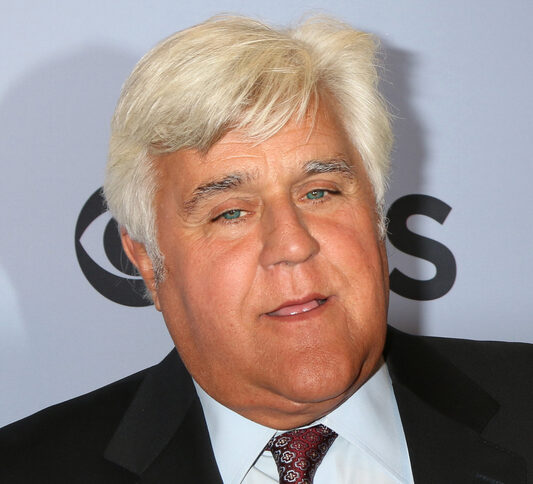
Former “The Tonight Show” host Jay Leno has said he views caring for his wife, Mavis Leno, as a fundamental expression of marital commitment, not a burden, more than two years after he secured legal authority to manage her affairs following her dementia diagnosis. The 76-year-old comedian has spoken candidly about tending to his wife of more than four decades, framing his role as the essence of a lasting commitment.
Leno’s decision to remain by Mavis’ side reflects a caregiving journey that has drawn attention because it stands apart from the more contentious guardianship battles that have dominated headlines in recent years. Rather than retreat from the responsibility, he has embraced it, stating that caring for his spouse is what love demands.
The Conservatorship That Started It All
In January 2024, Leno filed for conservatorship of his wife’s estate after Mavis, now 79, was diagnosed with dementia that left her unable to make important decisions on her own. He submitted the petition to the Los Angeles Superior Court in late January 2024, seeking authority to serve as conservator of her estate.
Court filings painted a stark picture of Mavis’ decline. According to the documents, she had been “progressively losing capacity and orientation to space and time for several years,” a condition that the filings said “renders her incapable of executing the estate plan.” Leno’s stated goal was to establish a living trust so that Mavis would have managed assets to support her care should he die before her. He pointed to his longtime role overseeing the couple’s finances as further reason for the arrangement.
The petition was supported by a neurologist’s evaluation dated Nov. 28, 2023, which recorded Mavis’ progressive cognitive impairment. That report concluded she lacked the mental capacity to understand court proceedings or to participate meaningfully in them. Her court-appointed attorney recommended approval, noting that Mavis “sometimes does not know her husband, Jay, nor her date of birth.”
Critically, Mavis did not contest the request. Through her attorney, Ronald Ostrin, she indicated agreement with Jay’s appointment as conservator of her estate. On April 9, 2024, Judge Brenda Penny of the Los Angeles Superior Court approved the arrangement after determining that clear and convincing evidence supported the need for conservatorship. The court determined that Mavis’ dementia prevented her from adequately managing her financial affairs.
A Different Kind of Guardianship Story
The word conservatorship has taken on a fraught reputation in recent years, thanks in large part to high-profile disputes involving pop star Britney Spears and television personality Wendy Williams. Those cases often made news for their controversy, fueling public skepticism about the legal mechanism and how it can be used.
Leno’s situation has been cast as a counterexample, an illustration of how the arrangement can operate as a genuine safeguard when the circumstances warrant it. Unlike the adversarial proceedings that drew widespread scrutiny, Leno’s petition moved through the court with the support of Mavis’ own attorney and a medical record that documented her needs. The court found him “suitable and qualified” to serve and concluded that the conservatorship represented the “least restrictive alternative” available.
What Leno Says About Staying
Leno has spoken openly about the personal toll and meaning of caregiving, expressing that remaining with Mavis reflects the true nature of marital devotion.
“I mean, that’s really what love is. That’s what you do. I mean, I’m glad I didn’t cut and run,” Leno said. He added that he would rather be with his wife than pursuing anything else, dismissing the idea of leaving her behind as silly nonsense.
In a January 2026 appearance on Maria Shriver’s “Life Above the Noise” podcast, Leno described Mavis’s condition as advanced dementia and framed his role around a promise: “You take a vow when you get married.” He added that making her laugh remains his focus — “I like taking care of her.”
The couple’s story unfolded in the public eye after NBC’s Stephanie Gosk reported on the conservatorship filing and Vicky Nguyen broke down the conservatorship process on Jan. 29, 2024. At the time, the news drew attention both for Leno’s celebrity and for the poignancy of an entertainer confronting his wife’s diagnosis.
An analysis updated on Jan. 13, 2026, by the Keystone Law Group, reviewed by partner Roee Kaufman and approved by managing partner Shawn Kerendian, examined the case as a study in how conservatorships can function when families face a loved one’s cognitive decline. The firm noted that such drastic legal measures might have been avoided with proper estate planning in place before Mavis lost the capacity to establish a plan herself.
For Leno, though, the legal machinery is beside the point. His focus remains on the woman he married. The conservatorship gives him the authority to protect her financial future, but his public remarks make clear that the deeper commitment was never in question.