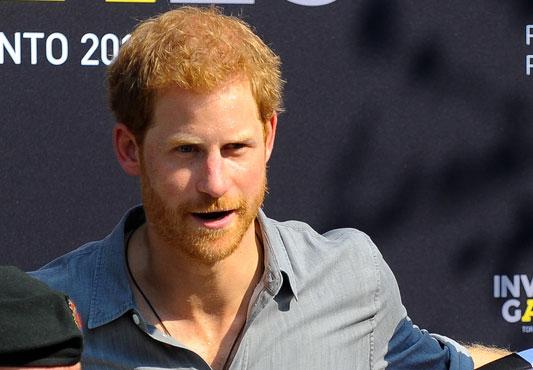
A London High Court judge on July 7 dismissed all 97 claims in the £50 million case brought by Prince Harry and six fellow claimants against the publishers of the Daily Mail and The Mail on Sunday, handing Associated Newspapers Limited (ANL) a sweeping legal victory after one of the most closely watched media trials in recent British history. The duke now faces potential liability for legal costs, with a costs hearing expected to begin by July 29.
In a defiant statement issued after the ruling, Prince Harry said, “It is a complete and obvious whitewash, but sadly not altogether unexpected… the lengths to which the court has gone to exonerate the Mail is as shocking as it is totally unwarranted.” Harry characterized the judgment as a cover-up, escalating his public criticism of what he and fellow claimant Baroness Doreen Lawrence called a whitewash in their joint statement.
The ruling, delivered by Mr Justice Nicklin in a 436-page written judgment at the Royal Courts of Justice in London, concluded that neither Harry nor any of the other claimants had proven their allegations of unlawful information gathering. The claimants failed to prove any article had been unlawfully sourced, a finding that cuts to the heart of what the claimants had spent four years trying to establish.
Settlement Attempts Rejected Weeks Before Trial
The claimants and their legal team reportedly tried to settle the £50 million privacy claim against ANL weeks before the trial began in January 2026, using a retired police detective and a former editor of The Independent on Sunday as intermediaries to create a “backchannel,” but ANL declined.
The claim form was first filed in October 2022, and the case took nearly four years to reach a verdict. The trial itself began in January 2026 and ran for 11 weeks, generating enormous public interest on both sides of the Atlantic.
Seven Claimants, 97 Allegations, All Dismissed
Harry, the Duke of Sussex, was joined in the action by Baroness Lawrence, Sir Elton John, David Furnish, Elizabeth Hurley, and two other high-profile figures, seven claimants in total who alleged ANL’s journalists had engaged in a range of unlawful methods to gather private information. Those alleged methods included tapping landline phones, placing listening devices in homes, cars and cafés, and obtaining personal details through deception. Some of the conduct complained of related to news stories more than 30 years old.
Judge Finds Claimants Failed to Meet Burden of Proof
Mr Justice Nicklin acknowledged in his ruling that Harry had sought to convey the personal toll the alleged intrusions had taken on his life, noting the duke “wished the court to understand the personal impact of the matters in issue” during his testimony in January. But acknowledgment of that intent did not translate into legal sufficiency. The judge made clear that the burden of proof rested entirely with the claimants, and that burden had not been met.
Nicklin wrote that grave accusations require stronger evidence, particularly when they are unlikely on their face. ANL’s journalist witnesses, the judge found, offered credible, lawful explanations for how each of the disputed news articles had been sourced, and the court accepted those explanations, including outright denials of any unlawful conduct.
In his executive summary, the judge said the allegations were serious and included claims of dishonesty, unlawful conduct and deliberately false evidence. He noted that accusations of greater severity and lower likelihood demand more persuasive proof to establish them in court. The claimants, in his assessment, did not clear that bar on any of the 97 charges.
ANL Hails ‘Magnificent Vindication’
The reaction from ANL was unambiguous. The company described the outcome as a “magnificent vindication of the Daily Mail’s journalism,” and Editor-in-Chief Paul Dacre went further still. Dacre said the judgment completely vindicated the newspaper’s journalism after the claimants had publicly accused it of serious unlawful conduct four years earlier.
Harry was not present at the Royal Courts of Justice when the judgment was delivered. He arrived in the UK on July 7 for Invictus Games 2027 planning in Birmingham, but was unable to stay at Buckingham Palace after responding past a non-extendable deadline required to coordinate personnel. He was attending an Invictus Games event at Chatham House at the time.
A Costly and Consequential Defeat
The dismissal marks a significant reversal for Harry, who has pursued litigation against British tabloid publishers as a central cause since stepping back from royal duties. Earlier legal battles produced mixed results, but the ruling in the ANL case, the largest and most complex of the group, represents his most consequential courtroom defeat.
For ANL, the outcome closes a chapter that has shadowed British tabloid journalism for years. The judge’s unambiguous acceptance of the publisher’s evidence, and his rejection of the theory that private information, simply because it was private, must have been obtained unlawfully, sets a marker for how future cases of this kind may be argued and judged.
Harry and Baroness Lawrence said, “We came to Court seeking justice and accountability. But we have received neither.” The pair argued the judgment ran contrary to earlier findings in the successful hacking cases brought against News Group Newspapers and Mirror Group Newspapers, and contended that findings from parallel claims, in which courts accepted that private investigators had carried out unlawful activity, were disregarded.