Authorities in Mumbai are still re-examining all four theories behind the deaths of a family who died after consuming watermelon in late April — murder, murder-suicide, mass suicide, and accidental death — as new forensic results have deepened rather than solved the mystery that has gripped India for months.
Laboratory testing reported in early June found no trace of zinc phosphide on the knife, plates, rice, chicken pulao, and herbal rat repellent collected from the Dokadia household, leaving investigators without a clear explanation for how the deadly poison reached the fruit. Police are still awaiting Zainab’s post-mortem report and cyber analysis of the family members’ phones, while a financial angle is also under investigation.
The April 26, 2026, deaths of the Dokadia family — 44-year-old father Abdullah, mother Nasreen, aged 35, along with their two daughters, 16-year-old Ayesha and 13-year-old Zainab — occurred at their first-floor apartment in the Pydhonie area. Initially believed to be a sudden illness, the tragedy was later confirmed by police to involve a rodenticide containing zinc phosphide, an extremely poisonous chemical substance.
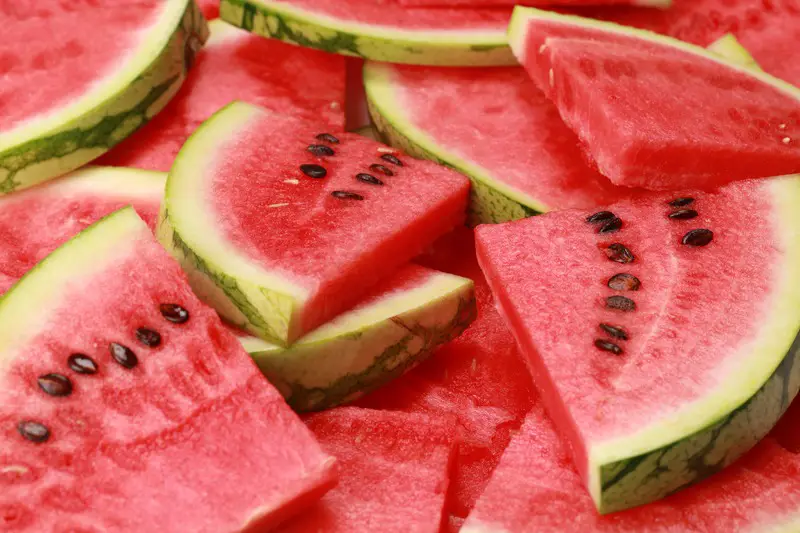
The incident — quickly labeled the “watermelon deaths” by Indian media — dominated national headlines for weeks and caused watermelon prices to plummet to Rs 5 to 7 per kilogram in Navi Mumbai, with traders experiencing immense financial losses as a result of media coverage.
From Dinner Party to Tragedy
The Dokadias had relatives over for a biryani dinner on the evening of April 25. After the guests departed around 10:30 p.m., the four family members ate watermelon in the early morning hours, around 1:00 to 1:30 a.m. — their final meal.
All four soon became violently ill with vomiting and diarrhea. Dr. Zaid Qureshi, a neighbor who lived on the fourth floor, rushed to assist and found Zainab, the youngest daughter, struggling to breathe.
“I noticed that the youngest of the four individuals was experiencing difficulty breathing. I administered CPR. However, as her condition did not improve, she was taken to a nearby hospital. She passed away,” Qureshi told BBC Marathi.
The other three were rushed to JJ Hospital in Mumbai for intensive treatment. Zainab died at 10:15 a.m. on April 26. Her mother Nasreen and sister Ayesha succumbed shortly afterward, while Abdullah died at 10:30 p.m. that same day. Despite stomach wash procedures and intensive medical care, doctors could not save any of them.
Forensic Testing and a Deadly Compound
For 11 days, the cause of death remained unknown. Mumbai’s Forensic Science Laboratory (FSL) conducted 54 tests on samples collected from the residence, including partially consumed watermelon pieces, cooking ingredients, utensils, and various edibles. The State Food and Drug Administration also examined the items for adulteration. On May 7, the FSL submitted its findings to the Mumbai Police. The rat poison component zinc phosphide had been found in tissue samples from all four family members — present in liver tissue, kidneys, spleen, stomach material, bile fluid, and body fat — and significantly, in the watermelon samples as well. No other food item tested positive for the chemical.
Police official Pravin Mundhe, a Deputy Commissioner of Police, stated that authorities had opened an accidental death case, with the JJ Marg police station gathering testimony from family members and those living nearby. Autopsy findings identified zinc phosphide poisoning as what killed the family.
A Poison That Works in Under an Hour
According to medical professionals, the chemical is an inorganic formulation combining phosphorus with zinc, marketed throughout India as a rodent control substance that is readily purchasable. When consumed, stomach acids convert it into phosphine gas — a lethal substance that travels throughout the body, penetrates cellular membranes, and disrupts energy production at the cellular level. Initial signs of poisoning manifest between half an hour and 60 minutes following ingestion, presenting as nausea, vertigo, respiratory distress, and seizures. Advanced poisoning results in organ failure affecting the liver and kidneys, mental confusion, and loss of consciousness. Forensic specialists cited in news reports indicate that successful medical response requires action within approximately 60 minutes of exposure, beyond which even intensive emergency care proves largely ineffective. Internal medicine physician Dr. Hemalata Arora indicated that gastric lavage works only during that brief initial period. Former FSL director Dr. Rukmani Krishnamurthy observed that the poison typically comes in powdered form, suggesting it may have been placed on the already-cut fruit. Dr. Bhushan Rokade and Dr. Sanjay Surase, both forensic specialists, have also provided analysis, with toxicology experts theorizing that Zainab, the youngest victim, succumbed first due to her lower body mass reducing her tolerance to the substance.
Investigation Continues Amid Market Turmoil
According to investigators, the residential building had ongoing issues with rodents, yet no evidence suggested that rodenticide was stored in the Dokadia residence. This fact has prompted police to examine all scenarios — whether the contamination happened accidentally or through intentional poisoning. Authorities apprehended two vendors selling fruit after they were found to have used rodenticide on produce, but no official connection to the Dokadia deaths has been confirmed.
On May 19, Mumbai Police forwarded new salt specimens from the Dokadia residence to the FSL for additional analysis. Authorities currently believe the poison might have been combined with table salt and scattered over the sliced fruit prior to consumption, which would mean the family may have detected only an odd salty flavor before becoming sick. More than 100 people have now provided statements to police regarding the incident, which continues to be classified as an accidental death.
More than three months after the family died, authorities continue to struggle with one of the most perplexing fatal poisoning cases in modern Indian history — a catastrophe that started with fruit eaten after midnight and concluded with four deaths, widespread fear throughout Mumbai’s produce markets, and unanswered questions for forensic scientists. The case remains open, and no further findings have been made public since the June round of testing.