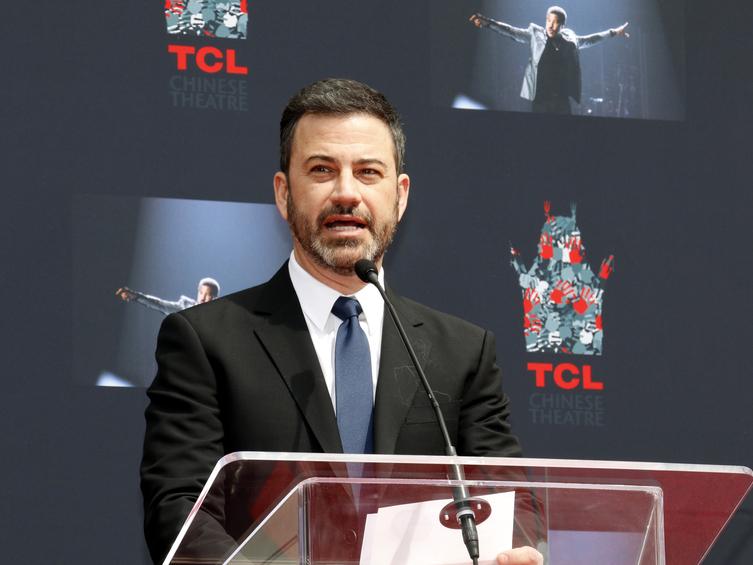
Tell the president that ChatGPT is about to release the Trump-Epstein files. That, according to late-night host Jimmy Kimmel, is the single message that would push President Donald Trump to treat artificial intelligence (AI) as an emergency — not job losses, not deepfakes, not killer robots. Delivering his monologue on Thursday, September 17, 2026, the ABC host pitched the line as a shortcut for White House staffers.
A run of grim warnings from inside the AI industry set up the bit on “Jimmy Kimmel Live!” Trump, who is 80, has branded those concerns “a hoax” and said his administration will not change course on the technology.
Inside Those Reported White House Meetings
A report Kimmel pointed to describes near-daily meetings among senior White House officials, all of them devoted to one problem: how to get the president to put more guardrails around AI. OpenAI’s Sam Altman, Anthropic’s Dario Amodei and Elon Musk, Trump’s ex-best friend, have all issued warnings, and those officials are said to be hunting for some way to make Trump heed them.
According to the host, the effort even has a nickname. “They’re calling it ‘Operation Take Away Grandpa’s iPad,’” Kimmel joked.
“Trump’s staff has reportedly given up on trying to convince him of anything, which to me is even scarier than AI,” Kimmel said.
How the Epstein Files Punchline Landed
Cheers followed the Epstein files joke, and the host put money on what would happen next. “I’ll bet a hundred bucks he’ll get Pandora’s stuff right back in that box,” he added. The implication: a president who has resisted calls for AI regulation would abruptly discover a way to shut the technology down.
Trump’s late friend Jeffrey Epstein was the hinge of the punchline. Friendly for years, the two men saw the relationship end sometime in the 2000s, and that chapter of the president’s past has trailed him through his second term while late-night hosts return to it repeatedly.
The construction is a familiar one in comedy: take the abstract, hard-to-dramatize risk of machine intelligence and pair it with something concrete and personal. In Kimmel’s framing, warnings from Altman, Amodei and Musk have not moved the president, so the joke supplies a threat scaled to the man rather than to the species.
A Year After the Suspension
For the program, the date the monologue aired carries its own weight. ABC pulled the show off the air exactly one year earlier, on September 17, 2025. Reporting later traced that call to Disney’s chief executive, Bob Iger, together with Dana Walden, who co-chairs Disney Entertainment. Kimmel has said the news reached him by phone around 3 p.m. at the El Capitan Entertainment Centre in Hollywood, where the show tapes; that night’s episode was set to begin taping at 4:30 p.m.
Same address, same president in the crosshairs — only this time the subject was artificial intelligence and the intended audience was the White House staff. The bank shot Kimmel suggested was, of course, written to get a laugh, not to serve as a policy proposal.
What the president says publicly is the foundation the entire bit rests on. Broad calls to regulate AI in the U.S. have been brushed aside by Trump, who has maintained that the country needs no additional guardrails and said his administration will stay the course on the technology — which leaves the aides described in that reporting to keep meeting, and the late-night host to keep offering his wager.
A new “AI Force” will be established by his administration, President Donald Trump announced Saturday, September 19, 2026, pushing back at the same time against efforts to slow the expansion of artificial intelligence and the data centers that support it.
Across a series of comments on Truth Social, the president said critics were seeking to undermine the rapidly growing AI industry and that his administration would resist policies that could restrict its development. Federal support for the technology was something he pledged, while he maintained that existing criminal and civil laws could be used to address harmful conduct involving AI.
How the proposed AI Force would operate, and where it would sit within the federal government, went largely unexplained. Trump said an AI coordinator, whom he referred to as an “AI czar,” would be named in the near future. The new group, he indicated, would seek to identify harmful actors while allowing AI companies to continue developing their technology.
Debate over the risks and benefits of increasingly powerful AI systems has been growing around the announcement. Stronger safeguards or a slower pace of development have been urged by some technology executives and researchers; Trump, for his part, has repeatedly dismissed some of the warnings surrounding AI as exaggerated.
The data centers themselves have become part of that argument, largely because AI systems consume such large amounts of electricity. Concerns about energy consumption, infrastructure and the effects of new data centers on surrounding communities have, in some areas, fed the opposition.
Trump, however, has argued that restricting the industry could weaken the United States in its technological competition with China. Expanding domestic AI capabilities is what his administration has emphasized, and it has resisted regulations it believes could hamper innovation.
Pressure on Washington to decide how rapidly advancing AI technology should be governed is mounting as the AI Force proposal arrives. For now, the president has not provided a timetable, organizational structure or detailed mandate for the new initiative.